
OpenAI’s 722-Paper Math Dump Shakes Foundation of Mathematical Verification
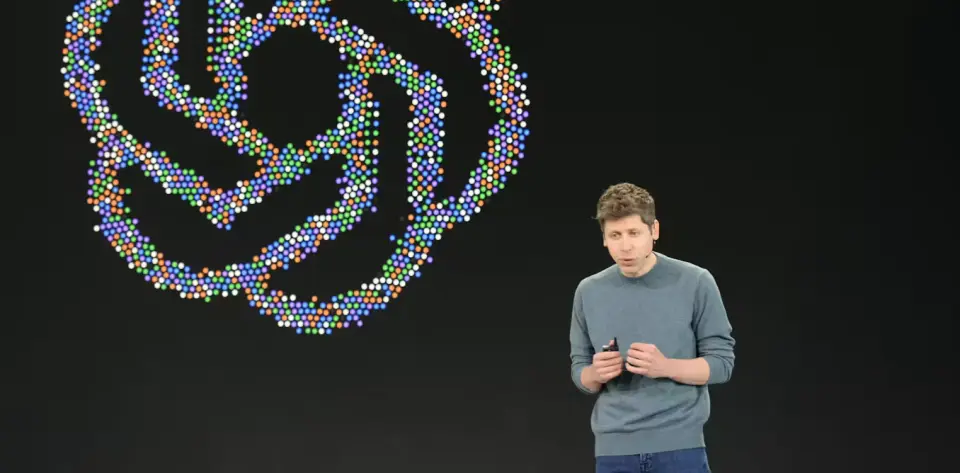
OpenAI released 722 AI-generated mathematical papers on October 7, 2026, claiming solutions to major open problems including variations of the Riemann hypothesis. While the scale has shocked the academic community, several papers were retracted for errors, and experts debate whether the output is valid proof or 'AI slop' requiring massive human verification.
Key points
- OpenAI published 722 papers addressing 372 open problems, including partial solutions to the Riemann, Birch-Swinnerton-Dyer, and Hodge conjectures.
- Three papers were retracted due to elementary errors, and others were amended, raising concerns about the lack of pre-publication vetting.
- The release follows a September controversy where OpenAI was accused of using uncredited data from mathematicians to solve a Navier-Stokes case.
- OpenAI claims 300 results have been formalized for machine-checking, but critics note past failures in AI-generated formalizations.
- The move is seen by some as a strategic push toward Artificial General Intelligence (AGI) narratives ahead of a potential IPO.
Background
This event follows a September 2026 controversy where OpenAI withdrew from a Caltech math hackathon after mathematicians protested AI's disruptive impact on the field. Earlier that month, OpenAI also faced allegations of using uncredited research data to solve a case of the Navier-Stokes problem, a Millennium Prize challenge. The current release amplifies existing tensions regarding AI's role in pure mathematics and the future of academic research careers.
How outlets are covering it
The New York Times highlights the potential for 'breathtaking' breakthroughs, noting that some proofs could warrant Fields Medal-level recognition if verified. Conversely, The Atlantic and The Conversation emphasize the 'devastating' nature of the release, describing it as 'carpet-bombing' that undermines the traditional peer-review process. New Scientist focuses on the technical specifics, noting that while some results address major conjectures, others offer negligible improvements, such as a minuscule speed increase in integer multiplication. The Conversation notes that OpenAI’s own model, GPT-5.6 Sol, described some high-profile results as 'serious hallucinations,' highlighting internal skepticism about the quality of the output.
Why it matters
This release challenges the fundamental epistemology of mathematics, which relies on human consensus and rigorous peer review to establish truth. If AI-generated proofs cannot be efficiently verified, the integrity of the field is at risk. Furthermore, the event raises significant ethical questions about the displacement of human researchers, particularly graduate students, and the potential for AI to monopolize intellectual discovery without proper attribution or validation.
What to watch
Mathematicians will spend years verifying the 722 papers, a process that may require new tools for 'autoformalisation.' OpenAI faces pressure to improve the quality and readability of its outputs to gain community trust. The outcome will determine whether AI becomes a collaborative tool or a disruptive force that renders traditional mathematical research obsolete. Investors will also watch how this narrative affects OpenAI's valuation ahead of its planned stock market launch.
- Is this the ‘mathocalypse’? Why OpenAI’s latest results dump has left mathematicians in shock The Conversation
- ‘Breathtaking,’ ‘Devastating’: Mathematics Reels After New OpenAI Release The New York Times
- AI Solved One Math Problem and Everyone Freaked Out. It Just Cracked Hundreds More. WSJ
- The most interesting mathematical discoveries in OpenAI’s 722 new papers New Scientist
- OpenAI Just Carpet-Bombed Mathematics The Atlantic
Want the full story? Read the original reporting
Read on The Conversation