
OpenAI’s ETH Refutation Sparks Debate on AI’s Role in Mathematical Discovery
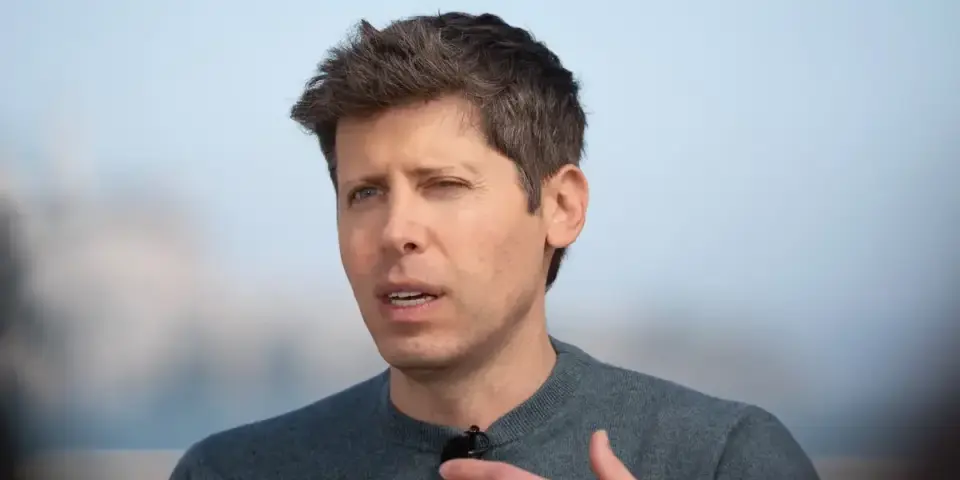
OpenAI announced on October 26 that its AI models have disproven the Exponential Time Hypothesis (ETH), a 30-year-old assumption in computer science. Hours later, Anthropic released similar findings. The breakthroughs, which also include proofs in quantum physics, have triggered a fierce debate among experts regarding the validity of AI-generated research and the integrity of scientific processes.
Key points
- OpenAI claims its internal models found a subexponential-time algorithm that refutes ETH, a core assumption about computational limits.
- Anthropic released its own refutation of ETH hours after OpenAI’s announcement, intensifying competition between AI labs.
- Independent experts, including Ryan Williams and Russell Impagliazzo, are reviewing the claims but have not yet certified them as definitive.
- The announcement coincides with a broader controversy over AI 'slop' and the potential erosion of trust in peer-reviewed science.
- OpenAI withheld the full proof for quantum chromodynamics, handing it to an external group led by Nobel laureate David Gross for verification.
Background
This development follows a series of high-profile AI releases in October 2026, including a 700-manuscript dump by OpenAI that sparked backlash over academic norms. The current ETH dispute is part of a larger trend where AI models are solving complex mathematical problems, raising concerns about the reproducibility and novelty of such discoveries.
How outlets are covering it
Reactions to the ETH refutation are divided. MIT professor Ryan Williams, part of the independent review group, noted that if true, the finding could lead to faster algorithms but emphasized that the P vs NP problem remains unresolved. Gary Marcus, an AI skeptic, called it a 'big deal if correct.' Conversely, Joshua Fonseca Rivera of Anthropic highlighted the 'bitter lesson,' suggesting humans underestimated AI capabilities. Timothy Gowers, a Fields Medalist, bluntly stated the hypothesis is 'false.' Critics like Magnus Wahlström warn of 'mathematics done by press,' fearing that proprietary models are overturning months of human work without proper scrutiny. BBC reports highlight fears that AI 'hallucinations' could undermine scientific trust, while Scientific American notes the competitive tension between OpenAI and Anthropic, where human researchers felt 'scooped' by AI agents.
Why it matters
If verified, the refutation of ETH would require a complete revision of algorithmic complexity theory, potentially unlocking new capabilities in AI and computing. However, the controversy underscores a growing crisis in scientific integrity, where the speed of AI discovery may outpace the ability of the academic community to verify and contextualize findings, risking the erosion of trust in peer-reviewed research.
What to watch
Independent groups led by Russell Impagliazzo and David Gross are currently examining the OpenAI proofs. The scientific community is expected to debate the establishment of new norms for AI-assisted research to ensure that human accountability and rigorous verification remain central to scientific progress.
- What smart people are saying about OpenAI's Exponential Time Hypothesis claim Business Insider
- Working with academic communities to build scientific understanding OpenAI
- A bust-up between mathematicians is fuelling fears that AI could undermine science BBC
- OpenAI just scooped mathematicians’ work on another million-dollar problem Scientific American
- AI refutes 30-year-old mathematical assumption in computer science New Scientist
Want the full story? Read the original reporting
Read on Business Insider