Tag

Ai In Science

All articles tagged with #ai in science

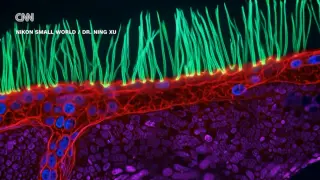
Nikon Revokes Top Microscopy Prize After AI Use in Cilia Video Confirmed
science-and-technology1 day ago

Nikon Revokes Top Microscopy Prize After AI Use in Cilia Video Confirmed

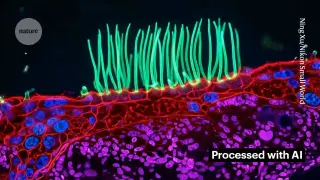
Nikon has disqualified the winner of its prestigious Small World in Motion competition after determining that the winning video violated rules prohibiting generative AI. The entry, submitted by optical engineer Ning Xu, depicted airway cilia in a child with a rare respiratory disorder. Following public scrutiny over biological inaccuracies and potential AI watermarks, Nikon confirmed the disqualification and promoted Vietnamese researcher Nguyen Nam Nhat to first place. The incident has prompted Nikon to revise its competition rules to address emerging AI challenges in scientific imaging.
Tech Giants Pledge $2.4B to Trump’s Genesis Mission for US Scientific AI
technology-and-policy4 days ago

Tech Giants Pledge $2.4B to Trump’s Genesis Mission for US Scientific AI

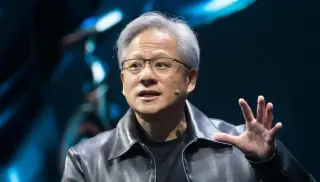
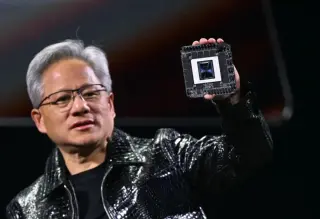
Nvidia has committed $1 billion to support US scientific computing over five years as part of the expanded Genesis Mission. This pledge is part of a broader $2.4 billion package from major tech firms, including OpenAI, Amazon, and Google, aimed at accelerating AI-driven research in medicine, energy, and quantum computing.

Tech Giants Pledge $2.4B to Trump’s Genesis Mission for AI-Driven Science
technology-and-policy4 days ago

Tech Giants Pledge $2.4B to Trump’s Genesis Mission for AI-Driven Science

Major technology firms have pledged $2.4 billion in computing resources and AI access to support the US government's Genesis Mission, a federal initiative aimed at accelerating scientific discovery through artificial intelligence. NVIDIA committed $1 billion over five years to support quantum computing, healthcare, and energy research, while Anthropic pledged $150 million over three years to provide its Claude AI to federal agencies. The announcements were made at the 'Science: A New Golden Age' summit in Washington, D.C., marking a significant expansion of public-private partnerships in scientific research.

Nikon Re-Evaluates Microscopy Prize After AI Watermark and Biological Errors Surface
science-and-technology10 days ago

Nikon Re-Evaluates Microscopy Prize After AI Watermark and Biological Errors Surface

Nikon is re-reviewing the 2026 Small World in Motion winner after scientists identified AI-generated artifacts and biological impossibilities in Dr. Ning Xu’s video of cilia. While Xu claims AI was only used for post-processing colorization, critics point to a SynthID watermark and structures that do not exist in human biology. Nikon has not yet confirmed if rules were violated, but the incident highlights the growing tension between artistic visualization and scientific integrity in microscopy.

AI Reshapes Scientific Workflow: Productivity Gains Meet New Verification Bottlenecks
science-and-technology15 days ago

AI Reshapes Scientific Workflow: Productivity Gains Meet New Verification Bottlenecks

A new study finds AI is rapidly adopted by scientists, saving nearly 7 hours per week, but shifts bottlenecks toward hypothesis verification. While AI excels at data processing and pattern recognition, its ability to generate novel hypotheses remains debated, with some experts arguing it lacks human-like abductive reasoning.

Fix the incentives to curb AI-driven fraud in scientific publishing
science-policy2 months ago

Fix the incentives to curb AI-driven fraud in scientific publishing

Generative AI accelerates the publish-or-perish pressure by enabling rapid fabrication of papers, with detectors often lagging behind increasingly convincing AI-made content. While disclosure norms and screening tools help, experts say the core fix is systemic: reward quality over quantity, adopt data attestations and provenance standards, and align funders, institutions, and publishers to slow AI-enabled fraud. Detection buys time, but meaningful reform requires changing the incentives that drive researchers to publish large volumes.

AI diffusion model maps multiple synthesis routes to speed up materials discovery
technology8 months ago

AI diffusion model maps multiple synthesis routes to speed up materials discovery

MIT researchers trained a diffusion-based AI, DiffSyn, on 23,000 material-synthesis recipes to map a target structure to multiple viable synthesis routes, enabling rapid exploration of temperatures, times, and precursor ratios. In tests with zeolites, DiffSyn suggested promising pathways and helped synthesize a new zeolite with improved thermal stability, reducing trial‑and‑error to a rapid initial search. This one‑to‑many approach better matches experimental reality and could extend to other materials, though high‑quality data remain a bottleneck; future work includes autonomous experiments and broader material classes.

AI and Biology: Pioneering the Future of Scientific Innovation
science-and-technology1 year ago

AI and Biology: Pioneering the Future of Scientific Innovation

AI is significantly advancing scientific research by enabling breakthroughs in protein structure prediction, brain mapping, materials science, climate forecasting, and fundamental physics, while also paving the way for autonomous laboratories and AI-driven hypothesis generation, despite some challenges in interpretability and understanding.

"2024: The Year of AI's Impact on Tech, Industries, and Customer Use Cases"
artificial-intelligence2 years ago

"2024: The Year of AI's Impact on Tech, Industries, and Customer Use Cases"

In 2024, three major AI trends to watch include the rise of small language models (SLMs) that are more accessible and powerful, the development of multimodal AI that can process various data types, and the increasing use of AI in scientific research to address global challenges such as climate change, energy crises, and diseases. These trends are expected to make AI more integrated into everyday technologies and help solve some of the world’s most pressing problems.