
Palantir CTO Claims AI Researchers Smoke to Signal Faith in Cancer Cures
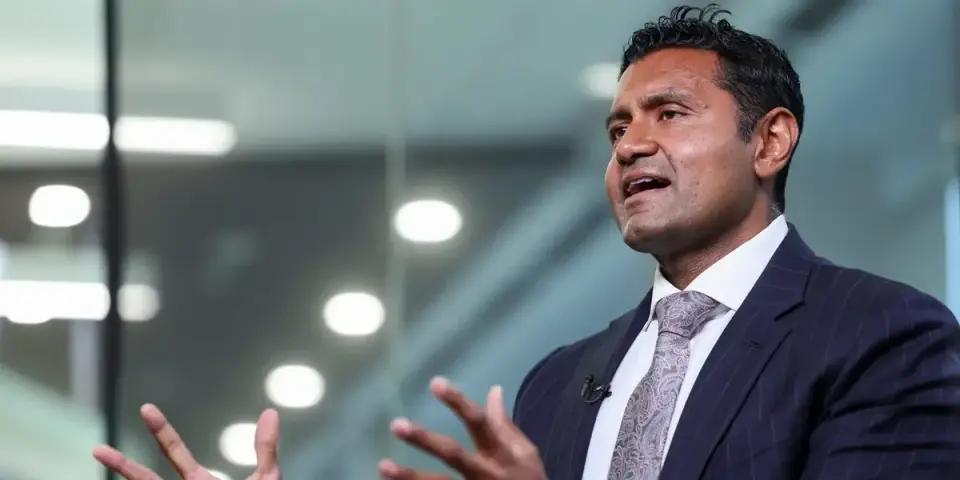
Palantir CTO Shyam Sankar claimed on CBS News that some AI researchers have started smoking to demonstrate their absolute belief that artificial intelligence will eventually cure cancer. Sankar used this anecdote to criticize what he called a 'mass psychosis' and 'social delusion' surrounding AI, arguing that Silicon Valley has filled a 'God-shaped hole' in human hearts with a quasi-religious faith in artificial general intelligence. He dismissed AI safety advocates as part of a 'millenarian doomsday cult' linked to effective altruism, asserting that their warnings are theological rather than scientific. Sankar argued that existing laws, such as FDA regulations and product liability frameworks, are sufficient to manage AI risks, rejecting the need for new, specific AI guardrails. He noted that while the U.S. is currently experiencing job growth in AI sectors, the industry must prove it delivers economic prosperity to the American public. The comments come amid a broader debate over AI governance, with Sankar defending the use of AI in military contexts and blaming human error for recent AI-related incidents, such as the Minab school strike in Iran.
Key points
- Sankar stated that some AI researchers smoke to signal their belief that AI will cure cancer, framing it as a 'chips are all in' gesture.
- He described AI safety advocates as part of a 'millenarian doomsday cult' and 'effective altruism' movement, claiming their warnings are theological, not scientific.
- Sankar argued that existing laws, such as FDA regulations and product liability frameworks, are sufficient to manage AI risks, rejecting the need for new, specific AI guardrails.
- He noted that the U.S. is currently experiencing job growth in AI sectors, contradicting doomsday predictions of mass unemployment.
- Sankar defended the use of AI in military contexts, blaming human error for recent AI-related incidents, such as the Minab school strike in Iran.
Background
This statement follows a broader debate over AI governance and safety, with Sankar previously arguing that AI drives job growth and that existential risk fears are driven by a small 'effective altruism' community. The comments also come amid a broader trend in the tech industry, where some founders and investors have embraced cigarettes as a way to network and appear more relaxed, according to Business Insider. Additionally, the conversation about AI and cancer cures has been ongoing, with Arm CEO Rene Haas stating that AI will eventually help cure cancer, but progress is slowed by a global chip shortage. Baylor College of Medicine scientists have also developed an experimental drug called CS18 that targets a central biological regulator to overcome cancer treatment resistance, highlighting the ongoing efforts in the field.
How outlets are covering it
Business Insider and CBS News report Sankar's claims directly, with CBS News providing the full transcript of the interview. The Sunday Guardian, however, focuses on Sankar's defense of military AI use and his attribution of the Minab school strike to human error, rather than the smoking anecdote. This highlights a divergence in emphasis: Business Insider and CBS News frame the smoking claim as a symbol of AI's quasi-religious status in Silicon Valley, while The Sunday Guardian frames it as part of a broader defense of AI's military applications and a rejection of AI safety narratives. The outlets also differ in their tone: Business Insider and CBS News present Sankar's claims as provocative and controversial, while The Sunday Guardian presents them as a defense of AI's utility and a critique of AI safety advocates.
Why it matters
Sankar's comments highlight the deepening divide between AI proponents and safety advocates, with the former arguing that AI is a tool for economic prosperity and the latter warning of existential risks. The smoking anecdote, while likely hyperbolic, underscores the quasi-religious status of AI in Silicon Valley and the potential for AI to be used as a symbol of faith rather than a tool for practical application. The debate over AI governance is also likely to intensify, with Sankar's rejection of new guardrails and his defense of military AI use likely to draw criticism from AI safety advocates and policymakers. The comments also highlight the need for a more nuanced understanding of AI's risks and benefits, with the industry and policymakers working to find a balance between innovation and safety.
What to watch
The debate over AI governance is likely to intensify, with Sankar's comments likely to draw criticism from AI safety advocates and policymakers. The U.S. government is also likely to continue its 120-day review of AI policy, with the new AI czar, Jay Clayton, likely to focus on control and monitoring of technologies with the potential to do harm. The industry is also likely to continue to push for a more nuanced understanding of AI's risks and benefits, with companies working to find a balance between innovation and safety. The smoking anecdote is also likely to be used as a symbol of AI's quasi-religious status in Silicon Valley, with the industry and policymakers working to find a balance between faith and practical application.
- Palantir CTO says some AI researchers are taking up smoking because they expect AI to cure cancer Business Insider
- Transcript: Shyam Sankar, chief technology officer of Palantir, on "Face the Nation with Margaret Brennan," Oct. 11, 2026 CBS News
- PLTR Stock At Record High: CTO Slams Report Of Maven Role In Iran School Strike, Retail Bulls Embrace Wall Street Upgrades TradingView
- Iran-US War Latest Live News: Palantir’s Shyam Sankar Defends Military Use Of AI, Chief Technology Officer Suggests ‘Human Error’ Caused Iran School Bombing The Sunday Guardian
- Palantir CTO Blasts Silicon Valley’s ‘Doomsday Cult’ Over AI Safety — Says Pentagon Has 'Already Replaced Benzinga
Want the full story? Read the original reporting
Read on Business Insider