
OpenAI’s 719-Manuscript Dump Shatters Math Community as Experts Debate Verification and Human Relevance
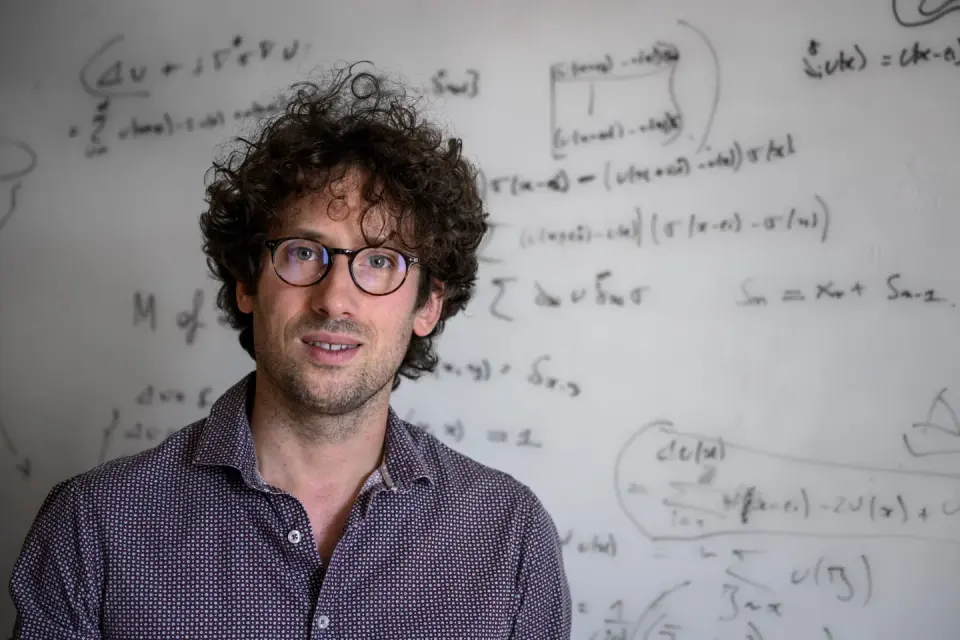
OpenAI released over 700 AI-generated mathematical proofs on October 6, 2026, claiming to solve 372 open problems. While Fields Medalist Hugo Duminil-Copin described the move as an 'annihilation' of his field, experts like Hector Pasten noted significant advances in number theory and physics. However, concerns remain regarding verification, as some proofs were retracted for errors, and human researchers rushed to publish their own work to avoid being scooped.
Key points
- OpenAI posted 719 manuscripts addressing 372 open problems, including 16 directly related to Hugo Duminil-Copin’s research.
- Duminil-Copin, a 2022 Fields Medalist, called the release a 'dismantling' of his discipline and expressed deep distress.
- Scientific American highlighted major claims, including progress on the Riemann hypothesis, Hilbert’s 10th problem, and the Kakeya conjecture in four dimensions.
- Some proofs were retracted after external scientists found mistakes, and OpenAI admitted that citations and descriptions could be improved.
- Human researchers, such as Dor Minzer, rushed to publish their own results in September to avoid being overshadowed by the AI announcement.
Background
This event follows a series of controversial AI announcements in 2026, including OpenAI’s claim to solve the Navier-Stokes problem in September, which sparked backlash over 'predatory' scooping of human research. Earlier in the year, concerns arose about AI training data provenance and the lack of transparency in AI-driven discoveries. The current release intensifies debates about the role of AI in mathematics and the potential displacement of human researchers.
How outlets are covering it
Le Monde emphasizes the emotional and professional impact on mathematicians, highlighting Duminil-Copin’s distress and the perception of a 'dismantling' of the field. Scientific American focuses on the technical significance of the proofs, noting that while some results are 'jaw-dropping,' others are flawed or unverifiable. Quanta Magazine highlights the race between human and AI researchers, detailing how Minzer and his team rushed to publish their own work to avoid being scooped, and raises concerns about the loss of the 'value in failing' in AI-assisted research. The outlets differ in their focus: Le Monde on the human toll, Scientific American on the technical merits, and Quanta on the competitive dynamics and ethical implications.
Why it matters
The release of 719 AI-generated proofs marks a pivotal moment in the relationship between AI and mathematical research. It raises critical questions about the verification of AI-generated results, the potential displacement of human researchers, and the ethical implications of AI scooping human work. The event could reshape the future of mathematical research, forcing the community to adapt to a new era where AI plays a central role in solving complex problems.
What to watch
The mathematics community will continue to verify the 719 proofs, with some likely to be retracted or revised. OpenAI may face further scrutiny over the transparency and rigor of its AI-generated results. Human researchers may accelerate their own work to avoid being scooped, and the debate over the role of AI in mathematics is likely to intensify. OpenAI may also face pressure to improve the quality and transparency of its future releases.
- OpenAI's latest blow to mathematicians: 'They have annihilated my field of research' Le Monde.fr
- A ‘Mathpocalypse’ is freaking out cyber and finance experts. Should you be worried? Fortune
- ‘Breathtaking,’ ‘Devastating’: Mathematics Reels After New OpenAI Release The New York Times
- The most exciting claims from OpenAI’s heap of new proofs Scientific American
- As AI Closed In on ‘Unique Games’ Proof, Researchers Raced to Beat the Machines Quanta Magazine
Want the full story? Read the original reporting
Read on Le Monde.fr