Palantir CTO Shyam Sankar argued on CBS that AI drives job growth and that existential risk fears are driven by a small 'effective altruism' community. He rejected new AI guardrails, citing existing laws, and blamed human error, not AI, for the Minab school strike in Iran.
Palantir Technologies (PLTR) reached an all-time high of $208.88 on October 9, 2026, rising 5% after bullish upgrades from major Wall Street firms. Goldman Sachs raised its rating to Buy with a $230 target, while Barclays initiated coverage with an Overweight rating and $265 target. Analysts cite a shift toward sovereign AI and customized applications as key growth drivers, suggesting the stock is poised for further outperformance into 2027.
Palantir Technologies shares rose more than 5% on October 9, 2026, following a new 'buy' rating from Barclays and a recent upgrade from Goldman Sachs. Analysts cite growing demand for sovereign AI and custom software solutions as key drivers for the company's future growth.
Internal documents reveal ICE attempted to integrate voter data from six states into Palantir’s ELITE surveillance tool, though the data was not entered. The agency has ingested nearly 100 million records to investigate alleged noncitizen voting, a move critics call an attack on democracy. Meanwhile, ICE has begun asking detainees about illegal voting during intake, expanding its pre-midterm enforcement push.
Goldman Sachs upgraded Palantir to Buy with a $230 target, citing demand for localized AI and custom software. The stock rose 1.8% to $197.53 despite a broader market decline.
A Bloomberg investigation reveals that U.S. military personnel relied too heavily on Palantir’s Maven AI system, which failed to flag outdated data identifying a school as a military target. This error, combined with thin staffing and rushed timelines, led to a strike killing over 150 people, including 123 children. While the UN calls it a war crime, legal experts argue the evidence for criminal recklessness is weak.
Tech giants such as Nvidia, OpenAI, Anthropic, Palantir and Anduril are selling limited-edition branded apparel and accessories that frequently sell out, using exclusive drops to boost brand image and fan loyalty. Experts say the strategy borrows from fashion to elevate desirability and reputation, not just revenue, though some items can become politically charged or controversial.
Michael Burry says he reduced risk in his portfolio by closing December 2026 put options on Nvidia and Palantir, preferring to hold cash while reassessing market conditions this fall. His largest longs remain Lululemon, Molina Healthcare and MercadoLibre, while his short positions remain focused on Oracle, Palantir, Nebius, Nvidia, and the SOXX ETF; he also noted currency weakness and warned about Palantir’s valuation signals as GuruFocus flagged warning signs.
A Wall Street Journal report alleges Corey Lewandowski, while Kristi Noem’s top aide at the Department of Homeland Security, sought to land outside work with foreign governments (Qatar and the UAE), offered influence over DHS matters such as visas, and helped place allies in DHS roles. The allegations include a DHS contractor paid up to $19,000 a week and a canceled meeting with Palantir amid a large DHS contract. DHS investigators are weighing a criminal referral, while Lewandowski denies wrongdoing and Noem’s tenure is noted for concentrating spending authority. Lewandowski left DHS in March after Noem was fired and now works as a consultant, with Bahrain among his clients.
Palantir Technologies’ stock dropped about 7% after the U.S. Army moved its TITAN program into production with a $192 million award involving Palantir and Anduril. The eight-system order (four advanced, four basic) assigns Palantir to lead overall production and software, while Anduril handles hardware and shelter integration. Deliveries are planned over the next 18 months. Despite the milestone, the market reaction was muted as investors weigh valuation and recent rally against defense-related growth.
Palantir stock slid about 7% after Google unveiled Gemini 3.8 Flash Cyber, an AI model aimed at government cybersecurity workloads with access limited to vetted government/defense users via the Fairwind program. The move signals rising competition for defense‑oriented AI, but Palantir’s government contracts aren’t doomed; investors will monitor whether Google broadens access and wins major defense work, which could curb Palantir’s edge.
Protests outside Peter Thiel’s Buenos Aires home shadow a six-hour congressional debate over Milei’s tech-friendly reforms, including a super RIGI investment regime with a 30-year regulatory guarantee for foreign firms and proposals to share vast data with state intelligence. Critics see these moves as aligned with Thiel’s libertarian tech interests and Palantir contracts, though Thiel has not publicly endorsed the laws and has only held private talks with Milei aides. The article portrays Argentina as a potential testing ground for libertarian tech policy and AI-led governance.
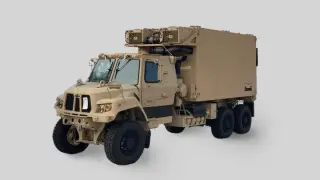
The U.S. Army awarded $192 million in production contracts to Palantir ($127M) and Anduril ($65M) to move the Tactical Intelligence Targeting Access Node (TITAN) to production. Eight systems (four basic, four advanced) will be delivered over 18 months, with Palantir leading overall production and Anduril supplying rugged hardware and integration. Basic variants will be vehicle-mounted for mobility on JLTV/ISV-U; advanced variants target corps-level theater intelligence. The Army will continue prototyping and incorporate soldier feedback to speed sensor-to-shooter timelines.
Palantir CEO Alex Karp will serve as the lead investor in a new defense-tech startup founded by former Ukrainian defense minister Mykhailo Fedorov, aiming to translate Ukraine’s wartime tech experience into products for Kyiv and its allies; the company’s name and specific technologies, as well as the investment size, have not been disclosed.
Palantir CEO Alex Karp is set to become the first major investor in a new defense-tech startup led by Ukraine’s Mykhailo Fedorov, expanding his exposure to military tech beyond Palantir. The venture, whose investment size isn’t disclosed, would apply Ukraine-war experience with drones, AI, and battlefield software to commercial defense markets, highlighting Ukraine as a proving ground for next‑gen military tech while navigating government procurement hurdles outside Ukraine.