
Palantir CTO Dismisses AI Doomsday Narratives, Blames Human Error for Iran Strike
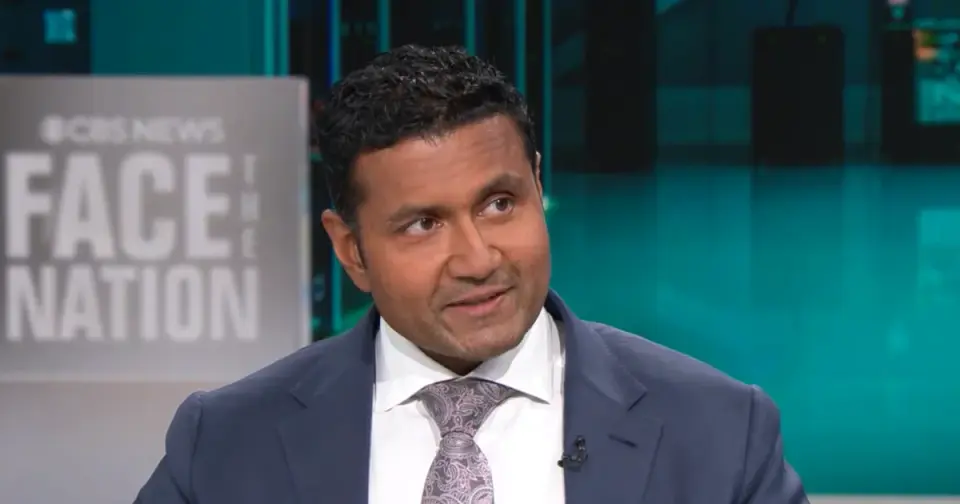
Palantir CTO Shyam Sankar argued on CBS that AI drives job growth and that existential risk fears are driven by a small 'effective altruism' community. He rejected new AI guardrails, citing existing laws, and blamed human error, not AI, for the Minab school strike in Iran.
Key points
- Sankar stated that 50% of Americans view AI negatively, but he believes the industry must prove tangible economic benefits like job growth.
- He criticized 'effective altruists' and researchers like Jacob Coxon for promoting doomsday scenarios, calling their views a 'theological critique' rather than scientific fact.
- Sankar argued that existing U.S. laws are sufficient for AI regulation, comparing AI liability to defective product cases rather than requiring new federal agencies.
- He denied Palantir’s refusal to sign a White House AI pledge was due to opposition to guardrails, stating Palantir was not asked to sign because it does not build models.
- Regarding the Minab school strike that killed 123 children, Sankar called Bloomberg’s report on AI reliance 'inaccurate,' attributing the incident to human error and outdated intelligence.
Background
This interview follows a period of heightened scrutiny on AI in military applications, including a recent Pentagon decision to cease using Anthropic products due to safeguard disputes. It also occurs amid a 120-day AI policy review launched by new AI Czar Jay Clayton. Earlier coverage noted tensions between defense contractors and AI developers over safety protocols, such as the dispute involving Anthropic’s Claude and the Maven platform.
How outlets are covering it
CBS News presented Sankar’s defense of AI’s economic benefits and his dismissal of the Minab strike as an AI failure. Yahoo Finance highlighted the stock market reaction, noting Palantir shares hit record highs despite the controversy, suggesting investors are prioritizing growth over regulatory risk. SaasRise focused on the business implications, interpreting Sankar’s comments as a signal for upcoming government SaaS contracts and a shift toward outcome-driven sales models. The Sunday Guardian emphasized the ethical conflict, framing Sankar’s 'human error' claim as a direct rebuttal to reports that AI systems were over-relied upon in lethal targeting decisions.
Why it matters
Sankar’s stance reflects a broader industry push to frame AI as an economic engine rather than a safety risk, potentially influencing the 120-day policy review. His dismissal of the Minab strike as human error challenges the narrative that AI is autonomous in military decisions, which could affect future congressional oversight and public trust in AI-driven warfare.
What to watch
The 120-day AI policy review led by Jay Clayton will likely determine whether new regulatory frameworks are needed beyond existing laws. Palantir may secure new government SaaS contracts as hinted by Sankar. The final report on the Minab strike is pending, which will clarify the role of AI versus human error in the incident.
- Transcript: Shyam Sankar, chief technology officer of Palantir, on "Face the Nation with Margaret Brennan," Oct. 11, 2026 CBS News
- PLTR Stock At Record High: CTO Slams Report Of Maven Role In Iran School Strike, Retail Bulls Embrace Wall Street Upgrades Yahoo Finance
- Iran-US War Latest Live News: Palantir’s Shyam Sankar Defends Military Use Of AI, Chief Technology Officer Suggests ‘Human Error’ Caused Iran School Bombing The Sunday Guardian
- Palantir CTO Defends AI, Hints at Gov SaaS Deals SaasRise
- Palantir CTO Says ‘Human Error’ Likely Caused Deadly Iran Strike That Killed 123 Children — Disputes Clai Benzinga
Want the full story? Read the original reporting
Read on CBS News