
US AI Strategy Fractures as G20 Summit Reveals Internal Policy Divides
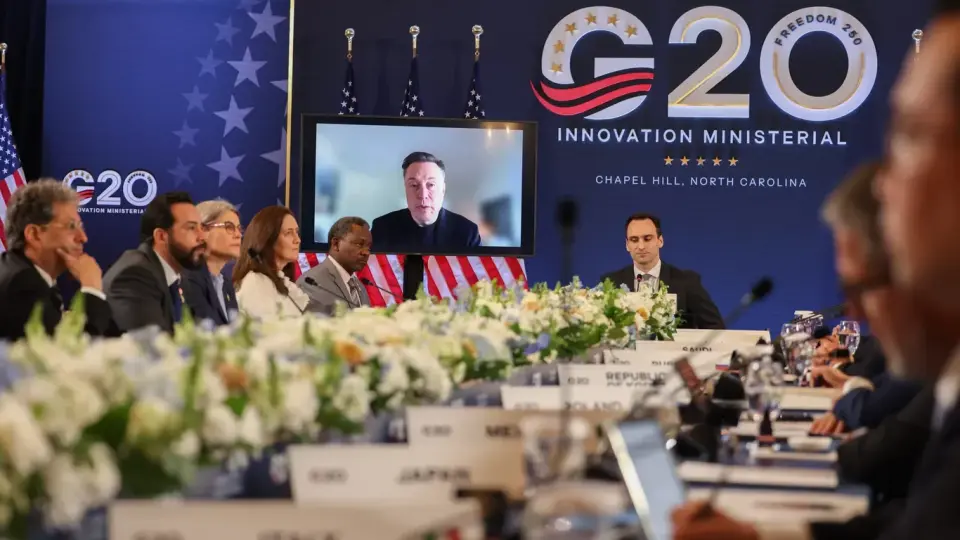
The US hosted the G20 Innovation Ministerial in Chapel Hill, North Carolina, to project unified leadership on AI, but internal tensions between the Commerce Department and the White House Office of Science and Technology Policy (OSTP) emerged. While officials promoted a light-touch regulatory approach to contrast with the EU, disagreements over data center messaging and coordination with tech leaders like Elon Musk highlighted unresolved domestic policy conflicts.
Key points
- The G20 Innovation Ministerial took place on September 1-2, 2026, in Chapel Hill, North Carolina, featuring leaders from the US, EU, and major tech firms.
- OSTP Director Michael Kratsios and Commerce Secretary Howard Lutnick led separate segments, with Lutnick hosting in-person sessions with Nvidia, OpenAI, and Anthropic executives.
- A messaging conflict arose over data centers, with Kratsios raising the topic despite internal plans to avoid it due to political sensitivity and Chinese audience presence.
- The US pushed for deregulation and the 'Carolina Principles,' while the EU simultaneously launched investigations into AI compliance under its new AI Act.
- Elon Musk participated virtually, a decision disputed by some administration sources who claimed better coordination could have secured his in-person attendance.
Background
This summit follows a period of intense debate over AI infrastructure and regulation, including recent public backlash against data center construction and the EU's implementation of its AI Act. Previous US efforts to streamline AI governance have faced internal friction, as seen in the unresolved status of a frontier model review framework and proposed regulatory bodies.
How outlets are covering it
Axios emphasizes the internal power struggle between Commerce and OSTP, noting a source described OSTP as 'thinkers' without regulatory authority, while a White House spokesperson denied the conflict. CNBC highlights the economic arguments made by Lutnick and Musk, focusing on tariffs, GDP growth, and data center benefits, while Al Jazeera contrasts the US deregulatory stance with the EU's active enforcement of its AI Act. Yahoo Finance provided limited substantive content, primarily technical error data, offering no distinct perspective on the policy debate.
Why it matters
The visible discord between US agencies undermines the administration's goal of presenting a coherent global AI strategy. As the US pushes for deregulation to attract investment, internal inconsistencies and public backlash over data centers risk eroding domestic support and international credibility, especially as the EU moves toward stricter enforcement.
What to watch
The administration must resolve its internal disagreements on AI regulation and data center policy to maintain a unified global stance. Upcoming decisions on semiconductor tariffs and the potential release of a frontier model review framework will test the administration's ability to balance innovation with public and international concerns.
- Trump's AI team fractures over strategy against G20 backdrop Axios
- G20 live updates: OpenAI's Altman says the use of AI is 'non-negotiable' CNBC
- G20 leaders meet in Chapel Hill to talk AI, tech cbs17.com
- US pushes looser approach to AI regulation, while EU pushes new law Al Jazeera
- Musk, Altman, Huang All Set to Speak at US-Hosted G20 Tech Meeting Yahoo Finance
Want the full story? Read the original reporting
Read on Axios