
Seniors and disabled drivers adopt Tesla FSD to maintain mobility, but experts warn of supervision risks
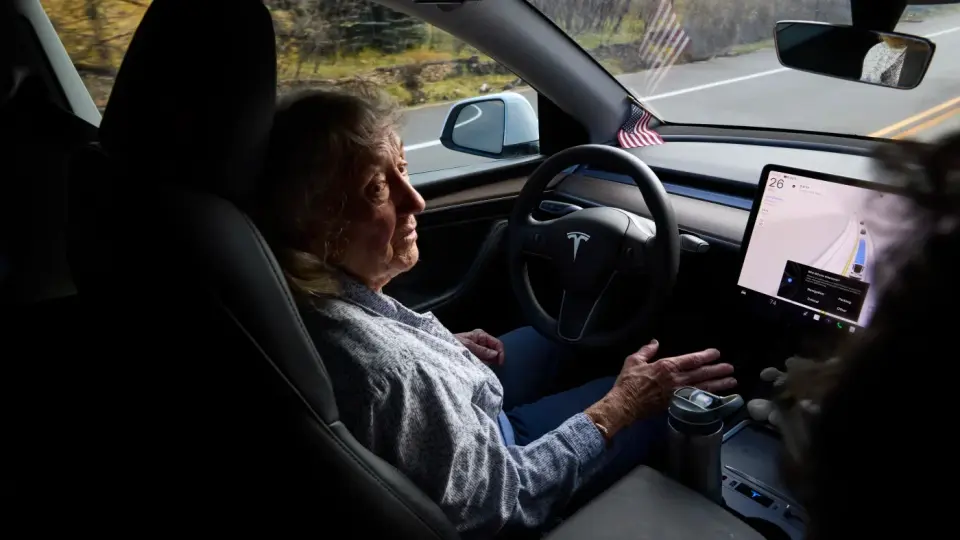
An increasing number of older and disabled individuals are using Tesla’s Full Self-Driving (Supervised) system to maintain independence as their driving abilities decline. While users like 89-year-old Joan Spalding report that the technology prevents accidents and allows them to remain in their homes, safety experts criticize Tesla for marketing the system as autonomous when it requires constant human supervision. The debate highlights a tension between the immediate benefits of mobility for vulnerable drivers and the long-term risks of relying on technology that cannot fully replace human judgment.
Key points
- Joan Spalding, 89, uses Tesla FSD to navigate steep Colorado roads, stating the system is safer than her own driving after a serious crash two years ago.
- Tesla reports over 1.7 million active FSD subscriptions, a 67% increase from the previous year, though it does not disclose how many are seniors.
- Elon Musk has publicly endorsed FSD for seniors, sharing a viral video of a 98-year-old driver praising the system’s reliability.
- Safety experts, including researchers at MIT and the Insurance Institute for Highway Safety, warn that FSD is not fully autonomous and requires drivers to remain alert, a difficult standard for those with age-related impairments.
- A recent CleanTechnica essay by Arthur Hasler demonstrated FSD V14 handling a full trip without human input, but the publication’s editor cautioned that users must still be capable of driving the trip themselves.
Background
This story follows recent developments in Tesla’s FSD rollout, including the launch of FSD v15 in late November 2026, which introduced 'Reality View' and claimed a 25-fold improvement in safety-critical handling. Prior coverage in our archive noted that while FSD v15 targets previous weaknesses like pothole detection, it remains a supervised system. The current debate extends earlier concerns about how marketing language, such as 'Full Self-Driving,' may mislead vulnerable users about the technology’s actual limitations.
How outlets are covering it
NPR emphasizes the personal freedom and safety benefits for seniors like Joan Spalding, highlighting how FSD allows them to avoid moving to assisted living. Futurism focuses on the ethical risks of Tesla’s marketing, arguing that the company exploits the vulnerability of elderly users who may not understand the system’s limitations. CleanTechnica and its editor present a nuanced view, acknowledging FSD’s potential to help disabled drivers while stressing that the system requires an 'unimpaired legal driver' who can intervene instantly. Dubin Law Group provides a broader legal context, noting that liability in automated vehicle accidents remains complex and that current systems still require human supervision, which complicates fault determination in crashes.
Why it matters
As the population ages and public transportation remains underfunded, FSD offers a potential solution for mobility, but its adoption by vulnerable groups raises serious safety and ethical questions. If Tesla’s marketing continues to blur the line between supervised and autonomous driving, it could lead to increased accidents among users who are less able to respond to system failures. Regulators and safety advocates are likely to scrutinize Tesla’s claims more closely, especially as FSD v15 expands and new incidents involving automated driving emerge.
What to watch
Tesla is expected to roll out FSD v15 more widely in December 2026, which may include further safety improvements but will still require human supervision. Safety experts and regulators will continue to monitor adoption rates among seniors and disabled drivers, potentially pushing for clearer labeling or stricter guidelines. The debate over liability and marketing practices may lead to new legal challenges or regulatory actions, particularly if incidents involving impaired drivers occur.
- Seniors embrace Tesla automated driving technology despite questions about safety NPR
- Elderly People Who Can’t Drive Safely Anymore Are Buying Teslas So They Can Careen in Self-Driving Mode Futurism
- Tesla FSD V14 and Disabled Drivers: 1 Test, 1 Warning shattered.io
- What are the pros and cons of self-driving cars? Dubin Law Group
- Who Needs Automatic Driving? You Love to Drive! However, for Many Handicapped, Tesla’s Full Self Driving Is the Only Option. It’s Use It, or Don’t Drive! CleanTechnica
Want the full story? Read the original reporting
Read on NPR