
SpaceX to Attempt Historic Dual Catch of Starship and Super Heavy on Friday
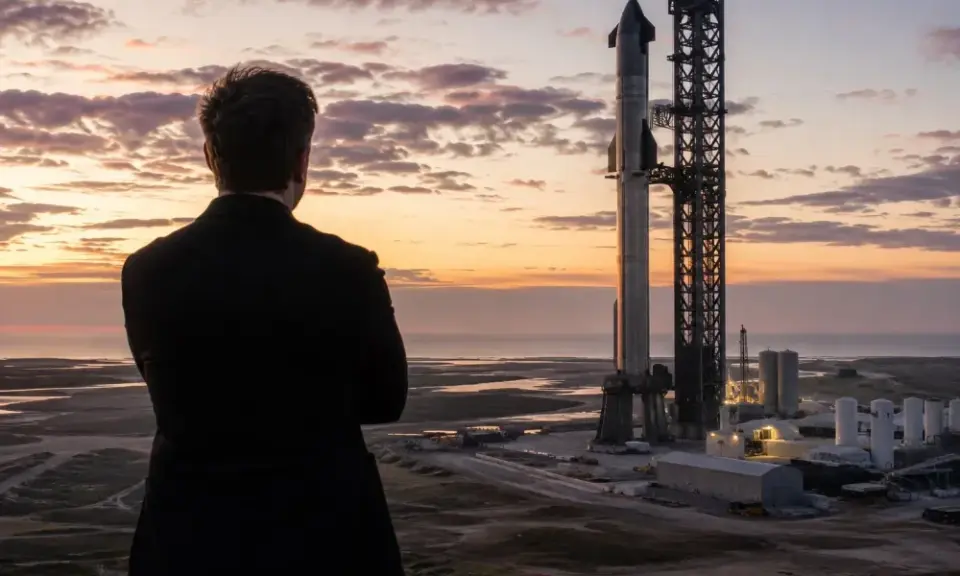
SpaceX is set to attempt a historic test flight on November 13, aiming to catch both the Super Heavy booster and the Starship upper stage using the Mechazilla launch tower. Elon Musk announced the dual-recovery plan on November 6, calling it a 'critical breakthrough' for making spaceflight fully reusable. While SpaceX confirmed the objective, specific flight details remain unverified by some outlets. The attempt follows a successful single-booster catch in October 2024 and precedes a period of intense scrutiny over SpaceX's AI agent costs and capital expenditure plans.
Key points
- Elon Musk announced on November 6 that SpaceX will attempt to catch both the Super Heavy booster and the Starship spacecraft during its next test flight.
- Musk described the potential success as the first time all parts of an orbital rocket return to Earth intact, labeling it a 'critical breakthrough' for multiplanetary ambitions.
- The recovery method utilizes the Mechazilla tower's 'chopstick arms' to catch the vehicles at the launch site, eliminating the need for remote landings or droneships.
- SpaceX previously demonstrated the concept by catching the Super Heavy booster during the fifth Starship flight on October 13, 2024, using Ship 30 and Booster 12.
- While some reports cite a November 13 launch date and specific hardware serial numbers, SpaceX has not officially confirmed the date, flight number, or the pairing of Booster 22 and Ship 42.
- The dual-catch attempt is distinct from the single-booster catch confirmed by SpaceX; catching the upper stage remains an unverified extension of the mission profile in some reports.
Background
This upcoming flight follows Starship’s first orbital flight on September 28, 2026, which deployed 26 Starlink V3 satellites but ended early due to an engine failure. SpaceX has been accelerating its transition away from Falcon 9 and Dragon, raising concerns about a commercial launch supply crisis. Additionally, SpaceX recently faced scrutiny over the unsustainable costs of its Grok Bot AI agent, with Musk acknowledging that serving the product was 'unsustainably high relative to revenue' despite rapid user growth. The company is also planning massive capital expenditures for orbital data centers, with Musk stating terrestrial compute will be 'peanuts' compared to future orbital capabilities.
How outlets are covering it
Teslarati and Qazinform emphasize the historic nature of the dual-catch attempt, highlighting Musk's announcement of November 6 as a pivotal moment for reusability. In contrast, Shattered.io provides a more cautious technical analysis, noting that while SpaceX confirmed the intent to catch the Super Heavy booster, the claim that the upper stage will also be caught is unconfirmed by official SpaceX statements. Shattered.io flags the November 13 date and specific hardware serial numbers as unverified rumors, whereas other outlets treat the dual-catch as a confirmed objective. This divergence highlights the gap between Musk's public optimism and the verified technical record, where only the booster catch has a clear precedent from the 2024 Flight 5 test.
Why it matters
A successful dual-catch would fundamentally alter the economics of spaceflight by enabling rapid turnaround times and reducing the need for new hardware. It validates the Mechazilla tower as a central hub for launch and recovery, potentially setting a new standard for reusability that rivals like Blue Origin and Rocket Lab are struggling to match. However, the risk profile is high; a failed catch could damage the launch pad, delaying future missions. The outcome will also influence investor confidence in SpaceX's ability to manage its massive capital expenditure plans for orbital data centers and AI infrastructure, as well as its capacity to sustain the growth of its Grok Bot service without prohibitive compute costs.
What to watch
SpaceX is expected to launch the test flight on or around November 13, 2026, though the exact date remains unconfirmed. The primary focus will be on the performance of the Mechazilla arms in catching both stages simultaneously. If successful, it will mark the first full recovery of an orbital rocket. If the upper stage is not caught, the mission will still be evaluated based on the booster recovery. Following the flight, SpaceX will likely release data on the structural integrity of the caught vehicles and any damage to the launch tower. Investors and regulators will also watch for any impact on SpaceX's upcoming capital expenditure targets and its ability to maintain the growth trajectory of its AI services.
Want the full story? Read the original reporting
Read on Teslarati