
Tao Urges Math Field to Pivot to 'Math 2.0' as AI Solves Century-Old Problems
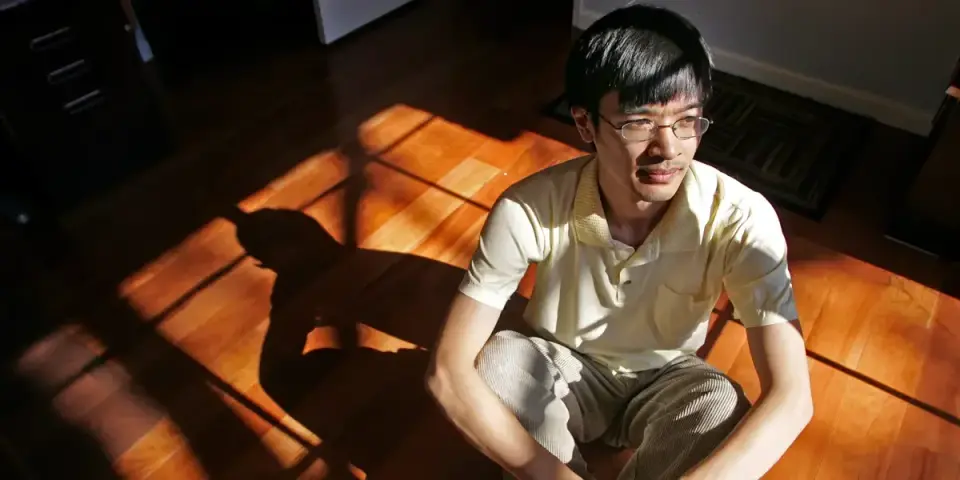
UCLA mathematician Terence Tao has called for a fundamental shift in how mathematics is practiced, arguing that the field must transition from 'Math 1.0' to 'Math 2.0' in response to rapid AI advancements. This call follows a series of breakthroughs, including an AI-assisted proof of the Riemann Hypothesis and OpenAI's release of hundreds of AI-generated proofs, which have disrupted traditional academic norms and sparked debate over the future of mathematical research.
Key points
- Terence Tao stated at Harvard that mathematicians must move away from prioritizing problem-solving alone, as AI can now tackle dense conjectures more efficiently than humans, and instead focus on explaining AI-generated solutions and extrapolating new problems.
- Tao argued that academic journal publications are losing value due to a flood of AI-generated research, suggesting that mathematicians should earn recognition by explaining their work to human inquisitors rather than relying on publication counts.
- Levent Alpöge, a mathematician at Anthropic, reported using Claude AI to prove the Riemann Hypothesis, a problem that has remained unsolved for nearly 170 years, marking a significant milestone in AI's capability to solve complex mathematical challenges.
- OpenAI released 722 AI-generated manuscripts in October 2026, dubbed the 'mathocalypse,' which included proofs for major unsolved problems, leading to widespread concern among mathematicians about the quality and understanding of AI-produced work.
- A panel discussion at MIT on November 23, 2026, featured mathematicians debating the impact of AI on the field, with some advocating for new metrics that value communication and exposition over speed and priority in proving theorems.
Background
The current developments follow a year of rapid AI progress in mathematics, including Google DeepMind's AI achieving gold-medal status at the 2025 International Mathematical Olympiad and OpenAI's September 2026 announcement of an AI-generated proof for the Navier-Stokes equation, a Millennium Prize Problem. These events have set the stage for the current crisis in mathematical research norms.
How outlets are covering it
Business Insider highlights Terence Tao's call for a transition to 'Math 2.0,' emphasizing the need to shift focus from problem-solving to explanation and the declining value of journal publications. The Guardian frames the AI breakthroughs as a 'shock-and-awe raid' on mathematics, expressing concern about the loss of human understanding and the aesthetic value of elegant proofs, while also questioning the motives of AI labs. MIT News presents a more balanced view, noting the excitement and fear among mathematicians, and highlighting the emergence of new norms that prioritize communication and human understanding over speed and priority. The sources differ in their emphasis: Business Insider focuses on Tao's specific recommendations, The Guardian on the broader implications for knowledge and power, and MIT News on the diverse reactions and potential adaptations within the mathematical community.
Why it matters
The rapid advancement of AI in solving complex mathematical problems challenges the traditional foundations of mathematical research, including the value of journal publications, the role of human understanding, and the pace of discovery. This shift could redefine the future of mathematics as an intellectual pursuit and raise questions about the nature of knowledge and the role of humans in advancing it.
What to watch
Mathematicians are expected to continue debating and adapting to the impact of AI on their field, with potential changes in how research is evaluated, published, and communicated. The verification of AI-generated proofs, such as the Riemann Hypothesis solution, will be a critical next step, as will the development of new metrics and norms that value human understanding and exposition over speed and priority.
- Terence Tao calls for a transition to ‘math 2.0’ in the wake of AI bombshells Business Insider
- AI will inspire a golden age of mathematics The Economist
- AI’s shock-and-awe raid on maths looks like pride before a fall | Rafael Behr The Guardian
- Following the “mathocalypse,” mathematicians consider the future MIT News
- AI has solved a host of big math problems—here's why this threatens the whole field of mathematics Phys.org
Want the full story? Read the original reporting
Read on Business Insider