
Tesla Robotaxis Face Nighttime Blind Spot as Musk Acknowledges Struggle to Detect Pets
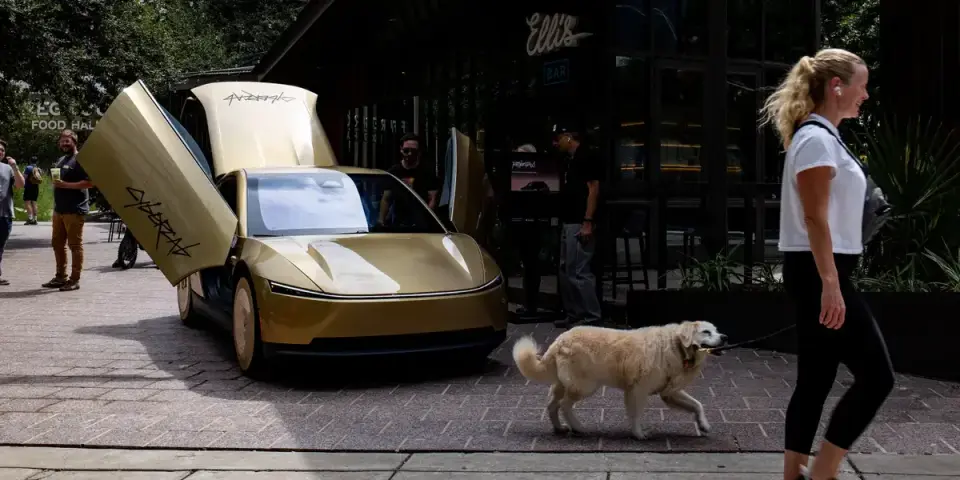
Elon Musk admitted that Tesla's camera-only robotaxis struggle to detect pets at night, specifically citing the difficulty of seeing 'grey kittens on grey tarmac.' While Austin operating hours have been extended to 11 p.m., critics argue that Tesla's refusal to use LiDAR or radar leaves its vehicles vulnerable in low-light conditions, a concern highlighted by recent fatal crashes and regulatory scrutiny.
Key points
- Musk stated on X that avoiding pets in the dark is the primary challenge for Tesla's robotaxis, noting that cameras require light and contrast to function effectively.
- Tesla extended robotaxi operating hours in Austin from 10 p.m. to 11 p.m., though this is still shorter than the initial 6 a.m. to midnight window at launch in June 2025.
- The National Highway Traffic Safety Administration is investigating Tesla's camera system for its ability to spot hazards in poor visibility conditions.
- Tesla dropped radar sensors in 2021 and ultrasonic sensors in 2022, and has never shipped LiDAR, unlike competitors such as Waymo which uses a multi-sensor approach.
- Two fatal crashes involving Tesla Model 3s occurred in the dark last October, with Tesla redacting software details from NHTSA reports, raising questions about system reliability.
Background
Tesla's robotaxi service launched in Austin in June 2025, initially operating from 6 a.m. to midnight. The company has gradually expanded availability to other Texas cities and Florida. In September 2025, a Tesla robotaxi struck a dog in Austin, which reportedly ran away uninjured. The company has faced ongoing regulatory scrutiny regarding its full self-driving capabilities and sensor limitations.
How outlets are covering it
Business Insider highlights Musk's direct admission that the main challenge is avoiding pets at night, framing it as a specific technical hurdle. The Next Web and The Verge emphasize the broader industry debate, contrasting Tesla's camera-only approach with Waymo's use of LiDAR and radar, which function without ambient light. The Verge notes that Musk has previously dismissed LiDAR as a 'fool's errand,' while The Next Web points out that Waymo's sixth-generation cars use 13 cameras, four LiDars, and six radars. Not a Tesla App provides operational details, noting the addition of 111 Cybercabs to the fleet. All sources agree that low-light conditions pose a significant risk for Tesla's current sensor suite, with The Next Web citing two fatal crashes in the dark last October where Tesla redacted software details from NHTSA reports.
Why it matters
The reliability of autonomous vehicles in low-light conditions is critical for widespread adoption and public safety. Tesla's decision to rely solely on cameras, despite known limitations in darkness, raises questions about the safety of its robotaxi service. Regulatory investigations and fatal crashes underscore the potential risks of this approach, while the extension of operating hours suggests a push for broader availability despite unresolved technical challenges. The debate over sensor technology (cameras vs. LiDAR/radar) will likely influence future regulations and consumer trust in autonomous driving.
What to watch
The EU's Technical Committee on Motor Vehicles is set to vote on October 6 on bloc-wide approval of Tesla's FSD Supervised software, which uses the same camera system. The outcome could impact Tesla's expansion in Europe. Additionally, the NHTSA investigation into Tesla's camera system may lead to further regulatory actions or safety requirements. Tesla may continue to expand robotaxi hours and fleet size in the US, but the company will need to address the nighttime detection issue to maintain public confidence and regulatory approval.
- Elon Musk say Tesla is working to prevent robotaxis from running over gray cats on the road Business Insider
- Musk says Tesla’s robotaxis still cannot reliably see pets at night The Next Web
- Someone should tell Elon about these really cool technologies called radar and lidar. The Verge
- Tesla Robotaxi's Nighttime Problem? Elon Musk Says It's 'Grey Kittens on Grey Tarmac' Benzinga
- Tesla Extends Robotaxi Hours in Austin, Adds 111 Cybercabs Not a Tesla App
Want the full story? Read the original reporting
Read on Business Insider