
IBM and partners establish trusted quantum advantage through three new verification methods
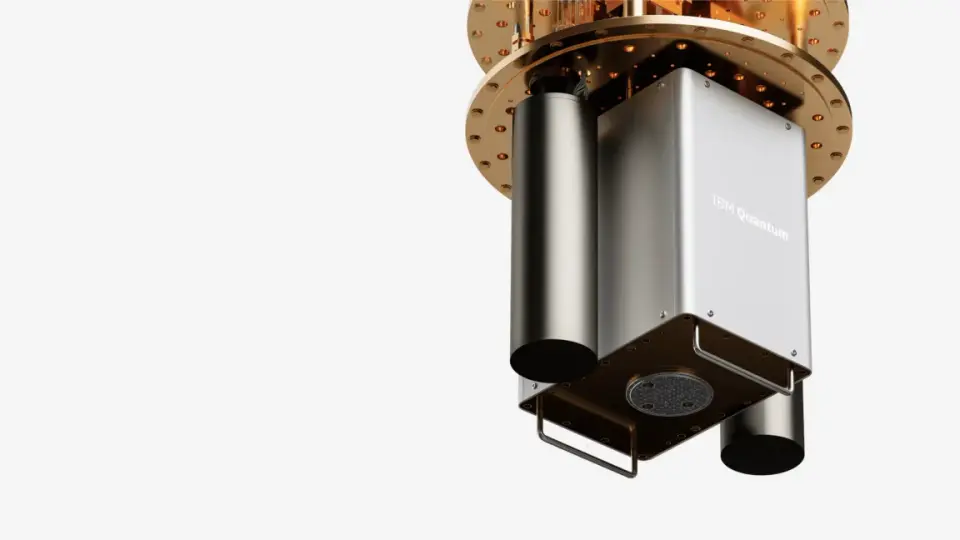
IBM, the University of Chicago, and other partners announced three new demonstrations of quantum advantage that prioritize result verification over raw speed. By using novel error-mitigation and validation techniques, these experiments produced results that classical supercomputers could not reliably reproduce, marking a shift toward trustworthy quantum computing.
Key points
- IBM and the University of Chicago demonstrated a 70-logical-qubit computation using 'doped Clifford sampling,' which outperformed classical simulations while allowing for rigorous error detection via spacetime codes.
- A collaboration between IBM, RIKEN, and Qedma modeled Floquet dynamics in a magnetic system, revealing oscillations that classical algorithms on the Fugaku supercomputer failed to capture consistently.
- Algorithmiq and IBM used a 'quantum echo' algorithm to estimate information scrambling, validating results by comparing outputs across multiple quantum processors with different noise profiles rather than relying on classical benchmarks.
- The Quantum Advantage Tracker now includes these three new entries, which are designed to withstand scrutiny from improved classical algorithms, unlike previous claims that were often invalidated by better classical methods.
Background
This development follows a 2026 theoretical breakthrough where researchers proved that certain problems have quantum proofs but no classical proofs, highlighting the growing gap between quantum and classical capabilities. Earlier claims of quantum advantage were often challenged when classical algorithms improved, leading to a focus on verification in current research.
How outlets are covering it
Ars Technica emphasizes the skepticism surrounding these results, noting that the algorithms are currently 'toy models' with no immediate real-world utility and that classical algorithms may still catch up. In contrast, New Scientist frames the achievement as a step toward quantum computers becoming useful scientific tools, highlighting the ability to trust outputs. IBM and the University of Chicago focus on the technical innovation of 'trusted computing,' arguing that the ability to verify results is more important than the specific problem solved. The University of Chicago press release highlights the scale of the error correction demonstration, while Ars Technica notes the limitations of the current hardware noise levels.
Why it matters
This marks a transition from proving quantum computers can run faster to proving they can run accurately. As quantum hardware scales, the ability to verify results without classical benchmarks is essential for using quantum computers in scientific discovery and industrial applications. These methods provide a foundation for trusting quantum outputs in the future.
What to watch
Researchers plan to apply these verification techniques to more complex, real-world problems, such as simulating actual materials and chemical reactions. The Quantum Advantage Tracker will continue to evaluate new claims, and the field will focus on developing algorithms that are both useful and verifiable on current noisy hardware.
- Quantum computers outperform classical ones, with results you can trust Ars Technica
- IBM, UChicago demonstrate ‘quantum advantage,’ outperforming traditional computers with a quantum computer University of Chicago News
- Researchers demonstrate quantum advantage through trusted quantum computation IBM
- Quantum computers are starting to become useful as scientific tools New Scientist
- IBM announces key quantum computing milestones (IBM:NYSE) Seeking Alpha
Want the full story? Read the original reporting
Read on Ars Technica