
Zoox Wins First Federal Clearance for Paid, Wheel-Free Robotaxis
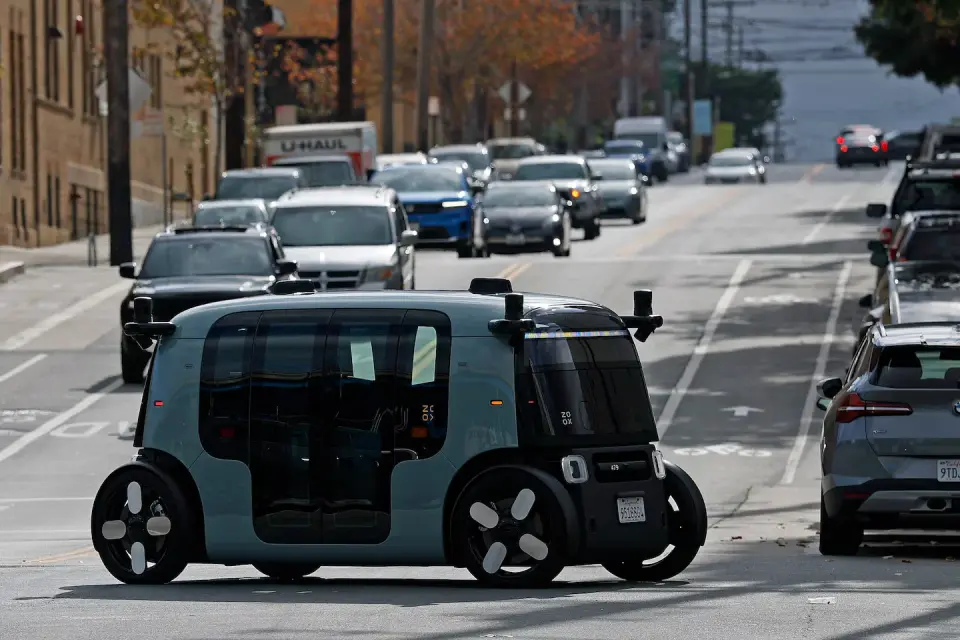
The National Highway Traffic Safety Administration (NHTSA) has granted Amazon-owned Zoox a temporary exemption, allowing it to begin charging for rides in its unique, steering-wheel-free robotaxis. This marks the first time a purpose-built autonomous vehicle has received commercial clearance without traditional driver controls. Zoox plans to launch paid service in Las Vegas next month, with expansion to other markets pending state approvals. The vehicles, which feature face-to-face seating and can drive forward or backward without turning, are subject to enhanced oversight and a cap of 2,500 vehicles annually for two years.
Key points
- NHTSA issued a temporary exemption to Zoox, the first for a vehicle lacking a steering wheel or gas pedals.
- Zoox will start charging for rides in Las Vegas next month, following free trials in San Francisco and Las Vegas.
- The exemption allows up to 2,500 vehicles annually for two years, subject to 'enhanced, adaptable' oversight.
- Zoox CEO Aicha Evans called the approval a major milestone for the autonomous vehicle industry.
- Critics argue the company lacked sufficient data to prove safety, while NHTSA emphasizes its role in monitoring emerging technologies.
Background
Zoox, acquired by Amazon for $1.2 billion, has been testing its distinctive, boxy robotaxis in Las Vegas and San Francisco since 2025. Previous archive coverage noted challenges with rider misbehavior and interior durability. This development follows a broader regulatory shift, with NHTSA proposing rules to eliminate requirements for steering wheels and brake pedals in autonomous vehicles. The company aims to eventually produce 10,000 robotaxis annually to compete with Alphabet’s Waymo.
How outlets are covering it
While The Washington Post and AP News focus on the regulatory milestone and public reception, CNBC highlights the competitive landscape and specific operational constraints. All sources agree on the NHTSA exemption and the Las Vegas launch. However, perspectives diverge on safety: NHTSA Administrator Jonathan Morrison expressed optimism about the technology’s potential, whereas the Advocates for Highway and Auto Safety criticized Zoox for lacking concrete data to support safety claims. The Insurance Institute for Highway Safety also noted difficulties in assessing safety due to inconsistent crash reporting standards. Additionally, CNBC pointed out that Zoox’s path to commercialization is more complex than rivals like Waymo, which use retrofitted cars with standard controls, due to the unique design of Zoox’s purpose-built vehicles.
Why it matters
This approval signals a significant shift in U.S. transportation regulation, moving away from standards designed for human-driven vehicles. It sets a precedent for future autonomous vehicle designs and could accelerate the adoption of fully driverless services. The outcome will influence how other companies approach vehicle design and regulatory compliance, potentially reshaping urban mobility and the automotive industry.
What to watch
Zoox is expected to begin paid rides in Las Vegas next month, with expansion to other markets contingent on state and local approvals. NHTSA will monitor the deployment under its 'enhanced, adaptable' oversight structure. The agency is also working on finalizing rules to allow robotaxis to operate without brake pedals. Zoox aims to scale production to 10,000 vehicles annually at its Silicon Valley plant, competing directly with Waymo.
- Self-driving vehicle without a steering wheel cleared to charge for rides The Washington Post
- EXCLUSIVE: Amazon's Zoox wins first US approval for paid robotaxis without human controls Reuters
- Amazon’s Zoox Gets Clearance to Start Paid Robotaxi Rides WSJ
- Amazon's Zoox to begin charging for rides in Las Vegas after clearing NHTSA hurdle CNBC
- Some robotaxis approved to operate without steering wheels and losing the brake pedal could be next AP News
Want the full story? Read the original reporting
Read on The Washington Post