
Trump Sets 150-300% Tariff Deadline for Foreign Firms to Build U.S. Plants
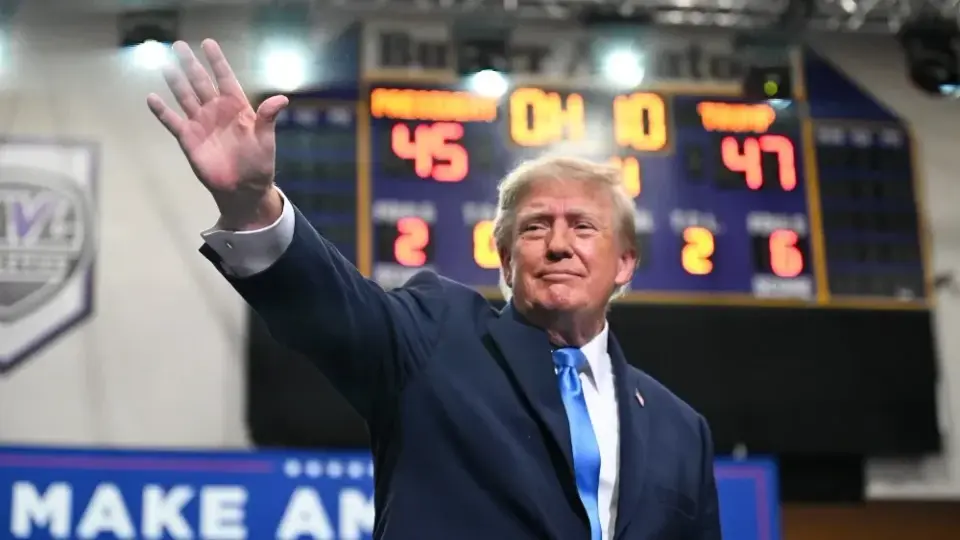
President Donald Trump has issued a new ultimatum to foreign nations, warning that companies from China, Japan, South Korea, and Canada face tariffs of 150 to 300 percent if they do not invest in U.S. manufacturing within 18 months. The threat, delivered at a campaign rally in Ohio, specifically targets South Korea’s delayed $350 billion investment commitment and Canada’s ongoing trade disputes. While Trump claims his strategy has attracted trillions in investment, officials in Seoul and Ottawa remain skeptical, citing unresolved issues over revenue distribution and retaliatory measures that have already disrupted billions in bilateral trade.
Key points
- Trump stated at a rally in Vandalia, Ohio, that foreign corporations must build U.S. operations within 18 months or face duty hikes ranging from 150 to 300 percent.
- The president specifically named South Korea, China, Japan, and Canada as targets, arguing that these countries have historically used tariffs against the U.S.
- South Korea is under pressure to fulfill a 2025 agreement to invest $350 billion in the U.S., including $150 billion for shipbuilding and $200 billion in strategic investments.
- Trump claimed his tariff strategy has already brought trillions of dollars in investment to the U.S., though he admitted to 'jumping the gun' regarding South Korea’s participation in the Alaska LNG project.
- U.S. Trade Representative Jamieson Greer expressed doubt at the G20 Trade Ministerial in Milwaukee, stating that resolving outstanding issues with Canada is 'quite difficult.'
- India’s trade negotiations with the U.S. remain stalled, with Finance Minister Nirmala Sitharaman confirming that recent talks encountered major setbacks and that concessions are currently 'very, very difficult' to secure.
Background
This escalation follows months of heightened trade tensions, particularly with Canada, where Trump previously threatened to ban $1 billion in Canadian products and demanded that Bombardier move production to the U.S. to retain market access. Earlier in 2026, Canada retaliated with tariffs on approximately $20 billion of U.S. exports, leading to a broader dispute involving machinery, metals, and textiles. The current 300% threat represents a significant increase in the aggressiveness of U.S. trade policy, moving from sector-specific penalties to a broad investment mandate for multiple major economies.
Why it matters
The 150-300% tariff threat signals a shift from traditional trade barriers to a direct demand for foreign capital and manufacturing relocation. For the fashion and sourcing industries, this creates extreme uncertainty for supply chains reliant on Asian and North American partners. The specific mention of South Korea and Canada, both key suppliers of textiles and materials, suggests that brands may face sudden, steep cost increases if these nations do not rapidly shift production to the U.S. within the 18-month window. Furthermore, the impasse in India negotiations indicates that the U.S. may not achieve a comprehensive trade framework with all major manufacturing hubs, potentially leading to fragmented and volatile global sourcing costs.
What to watch
Watch for South Korea’s response to the Alaska LNG investment opportunity and whether they meet the 18-month deadline to avoid the 300% tariff. Monitor the U.S.-Canada trade talks for any resolution of the $27.6 billion in bilateral tariffs, as well as any further moves by the U.S. to ban Canadian products. Additionally, observe whether India’s Finance Minister can secure concessions to revive the stalled trade agreement, as this will determine if the U.S. can expand its trade framework beyond its current limited agreements.
Want the full story? Read the original reporting
Read on WWD