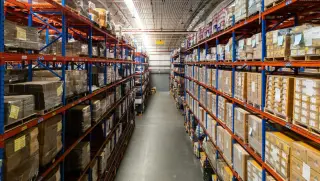
China’s push for economic self-sufficiency has drastically widened its trade surplus with Europe, creating a 6-to-1 container ratio in Beijing’s favor. This shift is intensifying pressure on European policymakers to address industrial overcapacity and protect domestic industries.
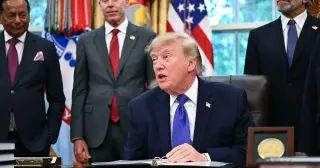
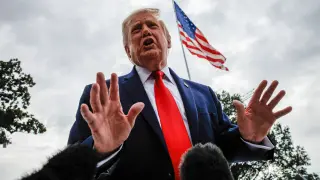
President Donald Trump has issued a new ultimatum to foreign nations, warning that companies from China, Japan, South Korea, and Canada face tariffs of 150 to 300 percent if they do not invest in U.S. manufacturing within 18 months. The threat, delivered at a campaign rally in Ohio, specifically targets South Korea’s delayed $350 billion investment commitment and Canada’s ongoing trade disputes. While Trump claims his strategy has attracted trillions in investment, officials in Seoul and Ottawa remain skeptical, citing unresolved issues over revenue distribution and retaliatory measures that have already disrupted billions in bilateral trade.
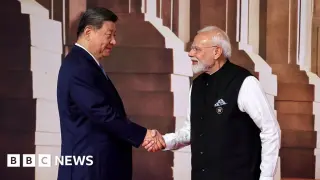
India’s trade deficit with China has ballooned to $112 billion this year, driven by a heavy reliance on Chinese industrial components rather than finished goods. While diplomatic ties have improved following the 2025 border de-escalation, economic dependence remains acute. Experts warn that without significant shifts in domestic manufacturing capabilities and reciprocal market access, India’s growing export sector may inadvertently deepen its vulnerability to Beijing’s supply chains.
Packaging Corporation of America (PCA) will close its corrugated packaging facility in Middletown, Ohio, by December 1, resulting in the layoff of 91 employees. The company cited a strategic move to consolidate operations into larger, more efficient sites, including a new $275 million plant recently opened near Columbus. While the closure affects unionized workers, PCA has pledged to assist affected employees with job transitions and dislocated worker services. This local shutdown occurs against a backdrop of broader manufacturing job losses in Ohio, though the state’s overall unemployment rate remains at a historic low of 3.3%.
Approximately 1,400 workers were laid off at the former Navistar truck plant in southwestern Ohio on Wednesday, just three days before President Donald Trump’s scheduled rally. The cuts effectively erased a year of job growth in the greater Dayton area. While the plant is being acquired by Canadian firm Roshel, which promises future expansion, local workers and Democrats argue that federal policies have failed to address rising living costs. Trump, whose approval on cost-of-living issues stands at 17%, is campaigning in the region as part of a 32-day tour, promising $5,000 checks if Republicans retain control of Congress.
A major truck manufacturing facility in Ohio has eliminated 1,400 positions just days before a scheduled presidential rally in the state. The layoffs, which occurred despite federal tax cuts and tariffs, have intensified local concerns about the cost of living and inflation. While the plant is being acquired by a Canadian firm that promises future expansion, the immediate loss of income has drawn sharp criticism from local politicians and workers who feel federal economic policies have failed to provide meaningful relief.
Apple’s first foldable smartphone, the iPhone Duo, launches on October 23, 2026, at a starting price of $1,999. While early reviewers praise the device’s potential to bridge the gap between phones and tablets, production is hampered by low assembly yields and hinge complexities. The device features a 7.6-inch inner display, slightly smaller than an iPad mini, and faces uncertain app compatibility as developers weigh the niche market against development costs.
The closure of a truck plant in Ohio has left 1,400 workers jobless just days before a major presidential rally. The shutdown highlights the disconnect between federal economic policies and local working-class realities, as former employees report that tax cuts and tariffs failed to provide meaningful relief. While the plant is being acquired by a Canadian firm that promises future expansion, the immediate loss of income has intensified concerns about inflation and the cost of living. Local politicians from both parties are framing the upcoming election around these economic struggles, with Democrats emphasizing the need for middle-class stability and Republicans pointing to recent infrastructure investments as evidence of progress.
Mike Rowe, Education Secretary Linda McMahon, and Defense official Michael Duffey argued at a Ford event that the U.S. faces a severe shortage of skilled tradespeople, with retirements outpacing new entrants. They proposed replacing the traditional college-versus-trades dichotomy with a 'purple' workforce model that integrates technical skills with intellectual learning, citing a need for 100,000 workers in defense manufacturing over the next decade.
BMW has confirmed it is evaluating a new, larger SUV for the US market to sit above the X7, driven by strong demand and capacity constraints at its Spartanburg plant. Simultaneously, the company is streamlining its global lineup by cutting less profitable models like the 2 Series Active Tourer and elevating Alpina to a standalone brand. This strategic shift includes a new electric 1 Series for Europe in 2028 and a push for localized production in China, aiming to restore EBIT margins to 8-10% by early 2027.
Apple’s first foldable, the iPhone Duo, is facing significant production hurdles ahead of its October 23 release. Assembly yields are currently just over 60%, with suppliers estimating it will take six months to a year to reach mature levels. Apple is targeting 6 to 8 million units for 2026, a fraction of the 20 to 30 million typical for standard Pro models. While the device launches with strict quality controls, analysts debate whether its high price and hardware compromises make it a viable alternative to buying separate slab phones and tablets.
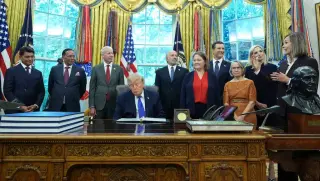
President Trump announced a $15 billion steel plant in Lee County, Iowa, to be built by Mesabi Metallics. The facility, expected to produce 10 million tons annually by 2030, will create 1,750 permanent jobs and 6,000 construction roles. While the White House frames it as a national security and manufacturing victory, Iowa Democrats demand transparency regarding state incentives and labor protections.
President Trump announced a $15 billion investment by Mesabi Metallics to build the largest steel plant in U.S. history in Iowa. The facility, expected to produce 10 million tons annually by 2030, aims to create 1,750 permanent jobs and bolster domestic manufacturing ahead of the November midterms.
President Trump announced a $15 billion investment by Mesabi Metallics to build the largest steel plant in U.S. history in Iowa. The facility aims to produce 10 million tons annually by 2030, creating 1,750 permanent jobs and 6,000 construction roles. The project uses iron ore from a new Minnesota mine, though critics note the long timeline and past delays in similar initiatives.
Pearson's Candy Company is permanently closing its St. Paul factory on Monday, citing rising production costs and ingredient prices. The decision results in approximately 80 layoffs and ends a 67-year presence in the city, prompting local grief over the loss of a cultural icon.