
Chicago unveils $2.25B private plan for 15-minute O'Hare express train
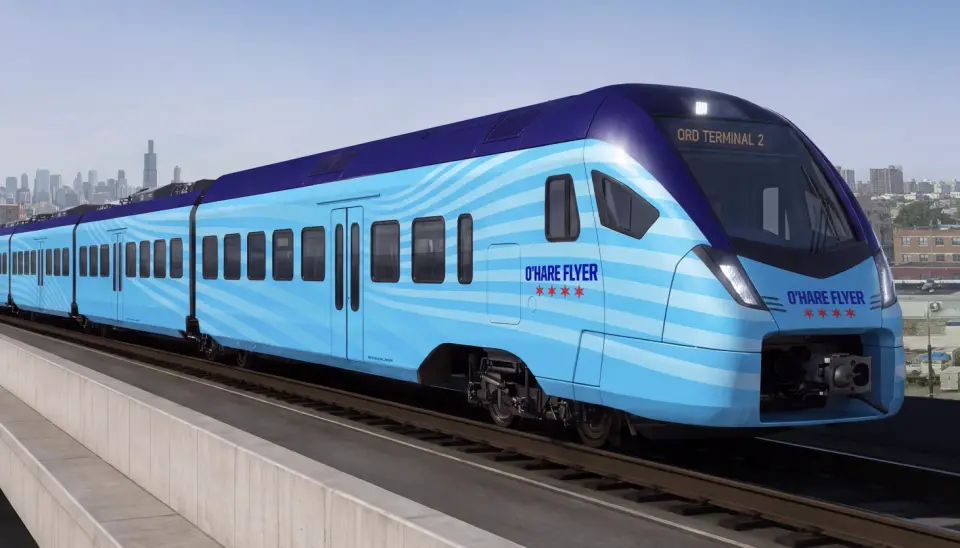
Chicago business and civic leaders announced the 'O'Hare Flyer,' a privately funded, $2.25 billion express train system designed to connect O'Hare Airport to the Loop in 15 minutes. The project utilizes existing freight rail rights-of-way and battery-electric technology, aiming for launch within five years without government subsidies.
Key points
- The O'Hare Flyer is a private initiative led by CEO Dave Lundy and co-founder Mark Walbrun, with a projected cost of $2.25 billion.
- The route uses existing freight tracks owned by CSX, Canadian National, and Union Pacific, requiring only new trackage for the final 1.5 miles to the airport.
- Service is planned to run every 15 minutes between O'Hare Terminal 2 and a new station at the Old Post Office on Van Buren Street.
- The project aims to begin operations within five years, potentially as early as 2030, and does not seek direct government funding, though it may utilize federal Railroad Rehabilitation and Improvement Financing loans.
- Ticket prices are expected to be higher than the CTA Blue Line but lower than ride-hailing services, which typically cost over $50.
Background
This proposal follows decades of failed attempts to create a fast airport connection, including a 2018 idea involving Elon Musk's Boring Company. The O'Hare Flyer is distinct from the CTA Blue Line, which takes approximately 45 minutes, and aims to provide a premium, high-speed alternative for business and leisure travelers.
How outlets are covering it
The Chicago Tribune editorial board supports the project, calling it a necessary 'economic development rocket fuel' and urging Mayor Brandon Johnson to appoint a dedicated official to streamline approvals and prevent bureaucratic delays. They argue the train will alleviate Kennedy Expressway traffic and compete with global airport transit standards. Conversely, the Chicago Sun-Times and Block Club Chicago note significant hurdles, including the need for city approval, potential union demands, and the risk of NIMBY opposition. While ABC7 Chicago highlights the speed advantage over the Blue Line, the Tribune warns that local aldermen and transportation boards could delay the project through regulatory interference. All sources agree on the private funding model and the 15-minute travel time, but differ on the likelihood of overcoming local political and bureaucratic obstacles.
Why it matters
The O'Hare Flyer represents a shift toward private, high-speed urban transit solutions in the U.S. If successful, it could reduce traffic congestion, improve airport connectivity, and set a precedent for private infrastructure development in major cities. However, its success depends on navigating complex regulatory and political landscapes in Chicago.
What to watch
Over the next few months, O'Hare Flyer representatives will meet with public officials and community groups to discuss the project. The team aims to finalize right-of-way agreements with the three railroad companies and secure necessary city approvals. If approved, construction could begin, with service potentially launching within five years.
- O'Hare to the Loop in 15 minutes? This company thinks it can finally bring fast rail to Chicago Chicago Sun-Times
- Plans unveiled for 15 minute express 'O'Hare Flyer' trains from airport to downtown ABC7 Chicago
- O’Hare Flyer Train Would Bring Visitors From Airport To Downtown In Just 15 Minutes Block Club Chicago
- Editorial: An express train from the Loop to O'Hare International Airport in 15 minutes? We're on board Chicago Tribune
- A 15-minute train to O’Hare? This group thinks it’s finally cracked the code. Crain's Chicago Business
Want the full story? Read the original reporting
Read on Chicago Sun-Times