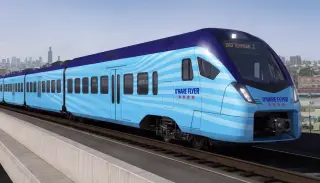
Chicago business and civic leaders announced the 'O'Hare Flyer,' a privately funded, $2.25 billion express train system designed to connect O'Hare Airport to the Loop in 15 minutes. The project utilizes existing freight rail rights-of-way and battery-electric technology, aiming for launch within five years without government subsidies.
Chicago business leaders announced the 'O'Hare Flyer,' a privately funded $2.25 billion express train project designed to connect O'Hare International Airport to downtown Chicago in 15 minutes. The battery-electric service would utilize existing freight right-of-ways and the old post office building as a downtown terminus, aiming to launch within five years without government subsidies.
A coalition of Chicago business and transportation leaders has unveiled the 'O'Hare Flyer,' a proposed private express train service designed to connect downtown Chicago to O'Hare International Airport in 15 minutes. The initiative, led by CEO Dave Lundy, aims to utilize existing freight rail rights-of-way to provide a faster, more comfortable alternative to the current 45-minute CTA Blue Line ride. The project is entirely privately funded, with an estimated cost of $2.25 billion, and is not seeking government subsidies. While the plan has garnered support from Mayor Brandon Johnson and local business groups, it faces significant regulatory and logistical hurdles, including the need to secure track usage agreements from multiple railroad companies and federal approvals. The service is expected to launch within five years, operating every 15 minutes from 4 a.m. to 10 p.m., with fares positioned between the CTA and rideshare services.
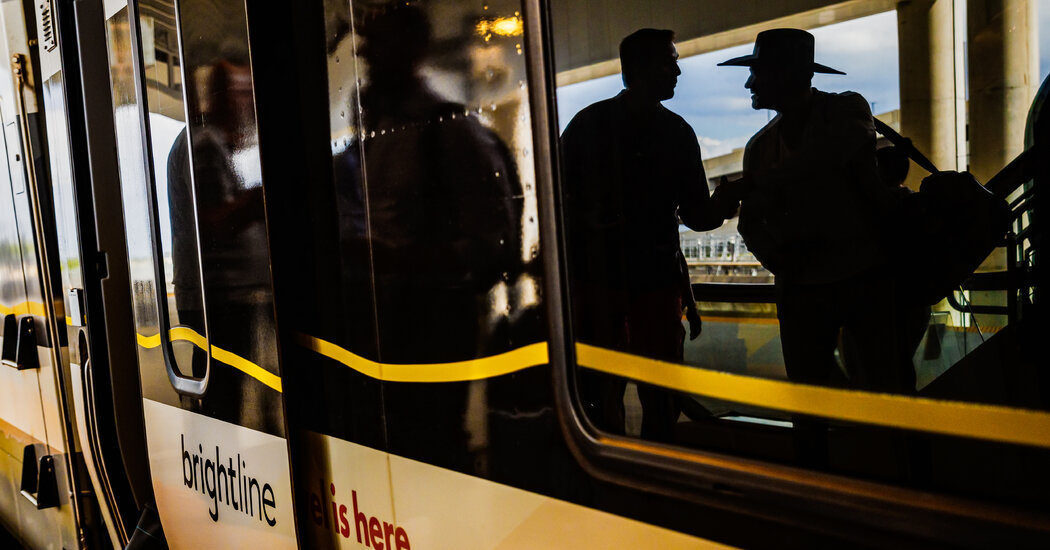
Brightline, the fastest train in the country outside of the Northeast, has launched passenger train service between Miami and Orlando, connecting two major cities in Florida. The three and a half hour trip is faster than driving, with round-trip tickets starting at $158. Brightline aims to prove that private passenger rail can thrive in the United States, and its success in Florida could mark a turning point for American passenger rail. However, the company has faced safety concerns due to a high number of pedestrian fatalities on its tracks.