
NHTSA Proposes Cyan Lights to Standardize Autonomous Vehicle Identification
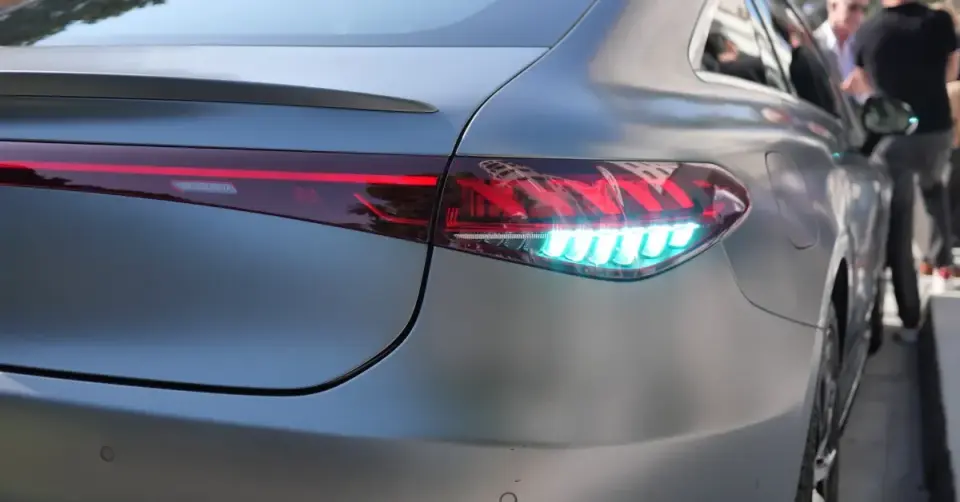
The National Highway Traffic Safety Administration (NHTSA) has proposed a new federal standard requiring cyan-colored marker lights to signal when a vehicle is operating autonomously. The draft rule, which updates Federal Motor Vehicle Safety Standard 108, aims to create a uniform visual cue for law enforcement and other road users, distinguishing driverless operation from human-controlled driving. While the lights are optional for manufacturers, the proposal also removes certain traditional safety requirements, such as physical turn signal levers and specific headlight configurations, for vehicles without steering wheels or pedals. This move follows similar regulations in China and precedents set by Mercedes-Benz, though it occurs alongside ongoing scrutiny of Tesla’s Cybercab certification.
Key points
- NHTSA proposed cyan marker lamps to indicate autonomous operation, visible from all angles and mounted at least 15 inches off the ground.
- The lights are optional but must turn on only when the vehicle is in fully autonomous mode, not when a human is monitoring the road.
- The proposal removes requirements for physical turn signal, hazard, and high-beam controls for vehicles without manual driving interfaces.
- China recently announced a similar draft standard using turquoise lights, effective in 2028, to standardize autonomous vehicle signaling.
- The rulemaking process includes a 30-day public comment period, with the final rule expected after late November 2026.
Background
This proposal follows the launch of Tesla’s steering-wheel-free Cybercab in Austin in September 2026, which faced immediate regulatory scrutiny and operational glitches. NHTSA has already opened an audit into the Cybercab’s safety certification, particularly regarding the absence of traditional controls like mirrors and pedals. Additionally, Mercedes-Benz tested similar turquoise lights for its Level 3 Drive Pilot system in California and Nevada between 2023 and 2025, providing a precedent for the current federal proposal. The broader context includes ongoing debates about the safety and reliability of camera-only autonomous systems, as highlighted by recent incidents involving Tesla’s robotaxis at night.
How outlets are covering it
Electrek emphasizes the necessity of standardized lighting for emergency response and public safety, while expressing concern about the political environment surrounding the Department of Transportation. The Verge highlights the practical benefits of cyan lights in avoiding confusion with existing vehicle signals and notes the precedent set by Mercedes-Benz. Not a Tesla App focuses on the technical specifications of the proposed lights and their relevance to Tesla’s Cybercab, while also noting the ongoing NHTSA investigation into the vehicle’s certification. Bloomberg Law frames the proposal as a reduction of regulatory burdens for autonomous vehicle manufacturers, emphasizing the removal of safety requirements that do not apply to driverless cars. All sources agree on the optional nature of the cyan lights but differ in their emphasis on the broader implications for vehicle safety and regulatory compliance.
Why it matters
The proposal establishes a potential national standard for identifying autonomous vehicles, which could improve safety and clarity for law enforcement and other road users. It also signals a shift in federal regulations to accommodate the unique design of driverless cars, potentially influencing future vehicle design and deployment. The outcome of the public comment period will determine whether these changes are adopted, impacting the industry’s approach to autonomous vehicle safety and compliance.
What to watch
The NHTSA will accept public comments on the proposed rule for 30 days, starting from the publication in the Federal Register on October 26, 2026. After the comment period, the agency will finalize the rule, which could lead to the adoption of cyan lights and the removal of certain traditional safety requirements for autonomous vehicles. The outcome may also influence the ongoing NHTSA investigation into Tesla’s Cybercab certification.
- NHTSA proposes cyan lights for robotaxis, following Mercedes/China Electrek
- Feds want robotaxis to signal ‘I’m driving’ with cyan-colored lights The Verge
- Green-Blue Lights on the Road Could Soon Mean a Driverless Car Bloomberg.com
- NHTSA Proposes Cyan Lights for Driverless Cars Like Cybercab Not a Tesla App
- Autonomous Cars Would Gain Safety Exemptions Under New Plan Bloomberg Law News
Want the full story? Read the original reporting
Read on Electrek