
Chicago Leaders Pitch $2.25B Private Express Train to O'Hare
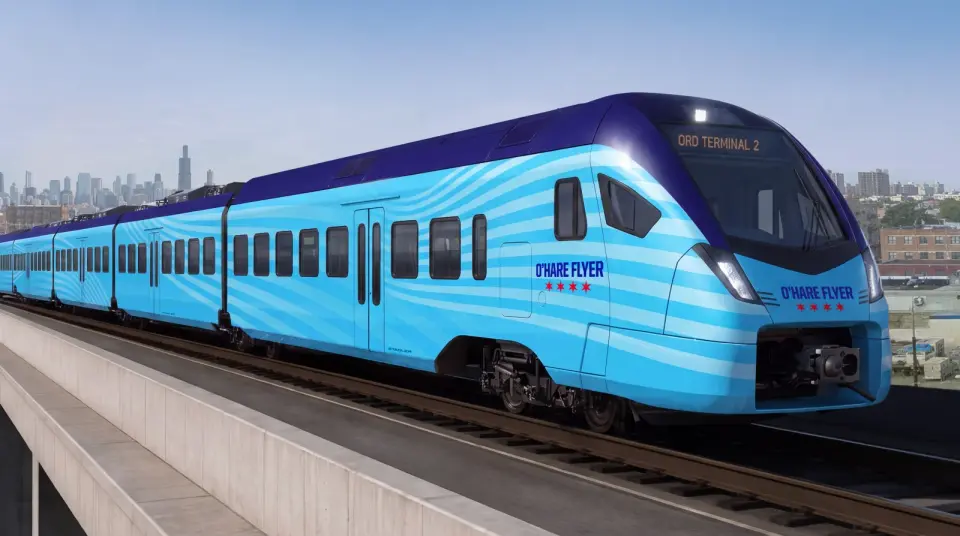
A coalition of Chicago business and transportation leaders has unveiled the 'O'Hare Flyer,' a proposed private express train service designed to connect downtown Chicago to O'Hare International Airport in 15 minutes. The initiative, led by CEO Dave Lundy, aims to utilize existing freight rail rights-of-way to provide a faster, more comfortable alternative to the current 45-minute CTA Blue Line ride. The project is entirely privately funded, with an estimated cost of $2.25 billion, and is not seeking government subsidies. While the plan has garnered support from Mayor Brandon Johnson and local business groups, it faces significant regulatory and logistical hurdles, including the need to secure track usage agreements from multiple railroad companies and federal approvals. The service is expected to launch within five years, operating every 15 minutes from 4 a.m. to 10 p.m., with fares positioned between the CTA and rideshare services.
Key points
- The O'Hare Flyer is a privately funded project estimated to cost $2.25 billion, with no request for government subsidies.
- The service would use existing freight rail tracks owned by CSX, Union Pacific, and Canadian National to run trains every 15 minutes between downtown and O'Hare.
- The trip is projected to take 15 minutes, significantly faster than the 45-minute CTA Blue Line journey, with fares higher than the CTA but lower than taxis.
- The project has secured a letter of intent with CSX but still needs final agreements from Union Pacific and Canadian National, as well as federal regulatory approvals.
- Mayor Brandon Johnson expressed support for the initiative, citing it as evidence of private investment confidence in Chicago's transportation infrastructure.
Background
This proposal follows a 2018 initiative by former Mayor Rahm Emanuel to partner with Elon Musk's The Boring Company for an express tunnel to O'Hare, which ultimately did not proceed. The current plan leverages existing freight infrastructure rather than new tunneling technology, aiming to address the long-standing lack of a direct, high-speed connection between Chicago's downtown core and its primary airport.
How outlets are covering it
The Chicago Tribune and Axios emphasize the project's private funding model and the significant hurdles regarding railroad agreements and federal approvals. ABC7 Chicago highlights the speed advantage and the 'first-of-its-kind' nature of the battery-electric train in the U.S. The Chicago Sun-Times focuses on the potential impact on CTA revenue, noting that while the Flyer is pitched as a premium service for air travelers, it could cannibalize fare revenue from the CTA, which recently stabilized its finances. All sources agree on the 15-minute travel time and the $2.25 billion cost estimate, but differ in their emphasis on the regulatory challenges versus the potential economic benefits.
Why it matters
The O'Hare Flyer represents a significant shift in how Chicago approaches urban transportation, moving away from public subsidies toward private, high-speed solutions. If successful, it could set a precedent for other cities looking to improve airport connectivity without relying on government funding. However, the project's success depends on navigating complex regulatory and logistical challenges, including securing track usage from multiple railroad companies and obtaining federal approvals. The outcome will also have implications for the CTA, which may face reduced ridership and revenue if the Flyer attracts a significant portion of air travelers.
What to watch
The O'Hare Flyer team is currently seeking an $18 million second round of funding and is in early-stage negotiations with Union Pacific and Canadian National for track usage agreements. The project also requires approvals from federal agencies, including the Federal Railroad Administration, the Surface Transportation Board, and the Federal Aviation Administration. The group aims to launch the service within five years, with trains running every 15 minutes from 4 a.m. to 10 p.m.
- A 15-minute express train to O’Hare? One group is making the pitch, but the proposal faces hurdles. Chicago Tribune
- Plans unveiled for 15 minute express 'O'Hare Flyer' trains from airport to downtown ABC7 Chicago
- O'Hare to the Loop in 15 minutes? This company thinks it can finally bring fast rail to Chicago Chicago Sun-Times
- Private group announces plans for new express train connecting downtown, O’Hare WGN-TV
- New train plan promises to take riders from downtown to O'Hare airport in 15 minutes Axios
Want the full story? Read the original reporting
Read on Chicago Tribune