
Cybercab Glitch Reveals Hidden Manual Controls Amid Federal Safety Audit
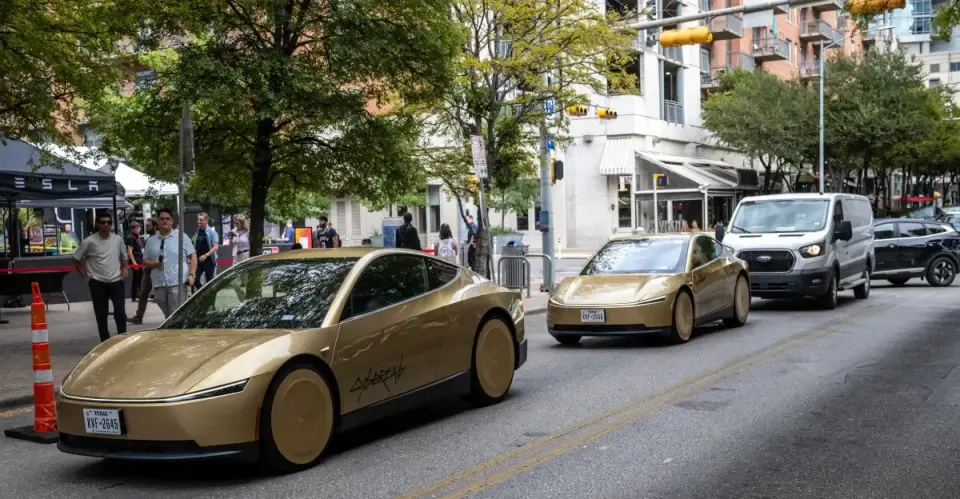
Tesla’s driverless Cybercab, which lacks physical steering and pedals, has been found with a hidden on-screen virtual joystick. This discovery occurs as the National Highway Traffic Safety Administration (NHTSA) investigates whether the vehicle complies with federal safety standards without a formal exemption.
Key points
- Riders in Austin, Texas, discovered a virtual joystick interface on the Cybercab’s central display, featuring controls for forward, reverse, stop, and horn functions.
- The interface appears to be a fallback tool intended for depot workers or emergency responders to maneuver vehicles in tight spaces, but it was accessible to the public during the initial launch.
- NHTSA has opened an 'Audit Query' to review Tesla’s self-certification that the Cybercab meets federal safety standards, despite the vehicle lacking traditional manual controls.
- Tesla claims the Cybercab complies with existing rules and does not require an exemption, unlike Amazon’s Zoox, which obtained a limited exemption for its driverless vehicles.
- The Cybercab launch in Austin has been described as muted, with only 45 vehicles currently in the Texas fleet, despite Tesla’s plans for millions of annual deployments.
Background
The Cybercab is part of Tesla’s transition from an automaker to a robotics and autonomous vehicle company. Previous reports indicate that Tesla’s Robotaxi network is expanding in Texas and Florida, but the company has faced scrutiny over its fleet-purchase model and financial promises to investors. The vehicle’s design, which removes traditional controls, was intended to signal a future without human drivers, but the recent discovery of manual overrides complicates this narrative.
How outlets are covering it
The Verge highlights the technical glitch, noting that riders attempted to use the virtual joystick without success, suggesting it may be an early bug. Ars Technica and WIRED emphasize the regulatory conflict, with former NHTSA administrator Ann Carlson calling Tesla’s refusal to seek an exemption 'gobsmacking' given the agency’s strict stance on driverless vehicles. Barron’s focuses on a separate but related issue, noting that Musk’s claim that the Cybercab motor uses no rare earth metals could impact the rare earth industry, though this is distinct from the safety audit. The outlets agree that the Cybercab’s deployment is fraught with regulatory and technical challenges, but they differ in focus: The Verge on the user experience, Ars Technica on the legal implications, and Barron’s on the economic impact of Musk’s statements.
Why it matters
The discovery of hidden manual controls and the ongoing NHTSA investigation highlight the tension between Tesla’s vision of full autonomy and the current regulatory framework. If NHTSA finds Tesla’s self-certification lacking, it could lead to enforcement actions, including civil penalties or required design changes, potentially delaying the Cybercab’s wider rollout. This case sets a precedent for how driverless vehicles will be regulated in the US, with implications for other companies like Zoox and Waymo.
What to watch
NHTSA will review the data and process Tesla used to certify the Cybercab’s compliance with federal safety standards. Tesla may need to seek an exemption or modify the vehicle to meet existing rules. The company will likely address the virtual joystick glitch in a software update, and the outcome of the audit could influence the pace of the Cybercab’s expansion beyond Austin and other Texas cities.
- Tesla Cybercab doesn’t have any manual controls — but it does have a virtual joystick The Verge
- Tesla’s Cybercab has been deployed, and it’s already under investigation Ars Technica
- An Under the Radar Rare Earth Comment From Elon Musk Could Upend Another Industry barrons.com
- Tesla Begins Offering Rides in a Car Without a Steering Wheel The New York Times
- Tesla Cybercab Has Much To Like As A Robotaxi For 2031 Forbes
Want the full story? Read the original reporting
Read on The Verge