
Premium Economy and First Class Expansion Reshapes Airline Revenue Strategies
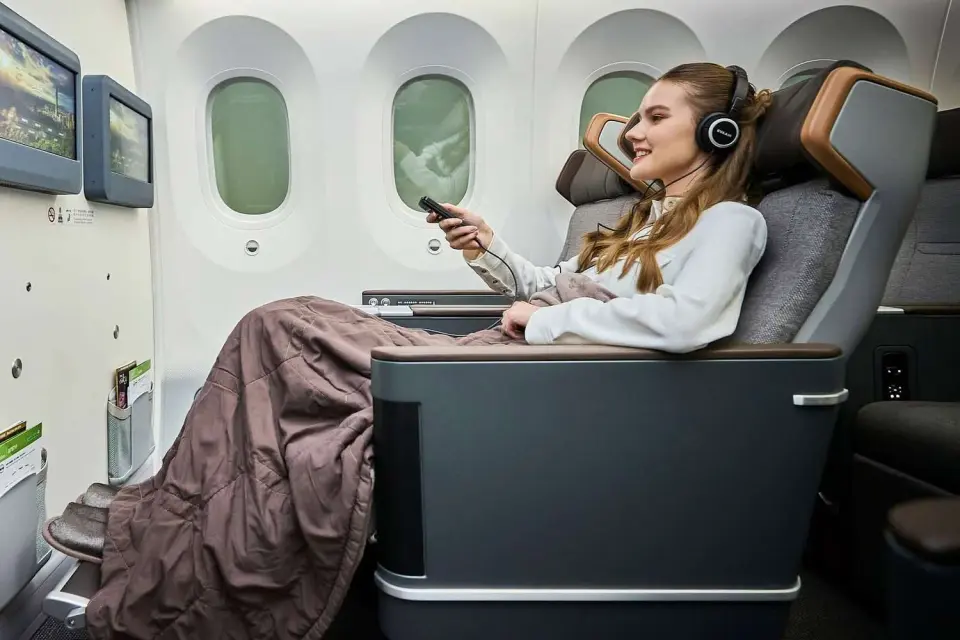
Airlines are aggressively expanding premium cabins to boost revenue, with major carriers like Delta and United leading in comfort, while budget carriers introduce first class. European and US airlines are seeing significant profit growth from premium passengers, though some carriers are eliminating first class in favor of business class to optimize space and costs.
Key points
- Delta Air Lines and United Airlines lead US premium economy experiences, offering 19-inch wide seats, 38-inch pitch, and enhanced dining.
- EVA Air, Emirates, Japan Airlines, and Air New Zealand are top international choices, featuring privacy dividers, fixed-shell seats, and 42-inch pitch.
- JetBlue, Frontier, and Allegiant are launching new first-class products in late 2026 and early 2027, offering 37-inch pitch and priority perks.
- Air France-KLM saw an 11.5% rise in business/first-class revenue in Q3 2026, while Lufthansa’s Allegris program yields 12% higher unit revenue.
- American Airlines generates 50% of ticket revenue from premium products, which account for only 30% of available seats.
- Some airlines, like Korean Air and Thai Airways, are removing first class to favor business class, citing better load factors and profitability per square foot.
Background
Recent developments show a broader industry shift toward premiumization. In October 2026, Alaska Airlines prioritized premium revenue by excluding screens from economy on new 737 MAX 10 aircraft. In November 2026, American Airlines restored fresh meals for domestic first class, and Singapore Airlines announced a S$2 billion overhaul for its premium cabins. These moves align with the current trend of airlines focusing on high-yield passengers to offset rising fuel costs and operational challenges.
How outlets are covering it
Travel + Leisure emphasizes the variability of premium economy, noting that seat quality depends heavily on aircraft type, with EVA Air and Emirates praised for their advanced features. USA Today highlights the entry of low-cost carriers like Frontier and JetBlue into the first-class market, arguing that budget travelers are willing to pay for comfort, though this reduces economy seat availability. Il Sole 24 Ore focuses on the financial impact, showing how premium cabins are driving profitability for European and US airlines, with American Airlines deriving half its ticket revenue from premium products. Avi-Go presents a contrasting view, noting that some airlines are cutting first class entirely because business class now offers similar comfort at a lower cost, and first class often has lower load factors. The sources agree on the growing importance of premium cabins but differ on whether first class or premium economy is the optimal strategy for maximizing revenue and passenger satisfaction.
Why it matters
The expansion of premium cabins is a critical strategy for airlines to maintain profitability amid rising costs. By offering enhanced comfort and services, airlines can attract high-spending passengers and increase revenue per seat. This trend is reshaping the industry, with some carriers eliminating first class to focus on business class, while others are introducing new premium products to compete for luxury travelers. The shift also impacts economy passengers, as the reduction in economy seats may lead to higher fares for budget-conscious travelers.
What to watch
Airlines will continue to refine their premium offerings, with JetBlue, Frontier, and Allegiant launching new first-class products in late 2026 and early 2027. European carriers like Air France and Lufthansa will expand their premium cabins, with Air France fitting out 20 aircraft with new first-class cabins by the end of 2026. The industry will likely see further consolidation of premium products, with some airlines eliminating first class in favor of business class, while others will invest in new technologies and services to attract high-yield passengers.
- The Airlines With the Best Premium Economy Seats, According to Experts Travel + Leisure
- ‘Demand is insatiable’: Airlines add more premium seats despite fuel crisis Financial Times
- Budget airlines are adding first class. But there's a catch USA Today
- Business and First Class: luxury soars to new heights – premium cabins are reshaping the balance sheets Il Sole 24 ORE
- Airlines Cut First Class as Business Cabins Match Its Comfort at Lower Cost Avi-Go
Want the full story? Read the original reporting
Read on Travel + Leisure