
US Air Travel Recovers After Router Glitch, But Critics Cite Decades of Neglect
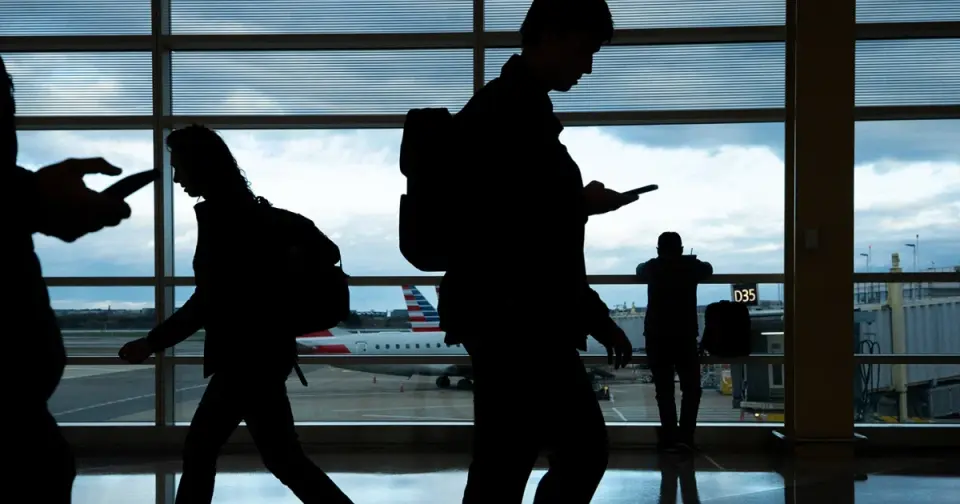
U.S. air travel is largely returning to normal after a rare nationwide ground stop on November 13, 2026, caused by a telecommunications failure. While flight cancellations dropped significantly by Monday, the incident highlights deep-seated issues with aging air traffic control systems. Transportation Secretary Sean Duffy blamed previous administrations for failing to modernize infrastructure, while critics point to years of warnings about the reliability of the current system.
Key points
- By 7 a.m. ET on Monday, 8,365 flights were delayed and 533 canceled, a sharp decrease from Sunday's 26,392 delayed and 2,858 canceled flights.
- The ground stop, which lasted until 8:15 p.m. ET on Friday, was the longest nationwide halt since the September 11, 2001, attacks.
- Officials attribute the disruption to a router issue in Amarillo, Texas, triggered by a copper-to-fiber optic line replacement in El Dorado, Arkansas.
- Transportation Secretary Sean Duffy declined to apologize, stating the current administration is moving quickly to modernize systems left in poor condition by predecessors.
- The FAA has replaced 3,500 of 5,170 planned communication lines, with the remainder scheduled for completion by 2028.
Background
This incident follows a series of disruptions in 2026, including a ground stop that affected college football schedules and sports travel. Previous coverage noted that the FAA had already requested $50 billion in emergency funding to address aging infrastructure, a demand that faced skepticism from some Democrats who pointed to unspent funds.
How outlets are covering it
NBC News emphasizes the rapid recovery of flight schedules and Duffy's defense of his administration's speed in modernizing the system. CBS News provides a critical perspective, highlighting years of government audits warning about the reliability of the L3Harris-managed telecommunications infrastructure. CBS notes that the FAA has spent billions on non-competitive contract extensions with L3Harris, which Duffy acknowledged was 'stuck with' until a new system is built. The New York Times focuses on the technical mechanism, describing how a router upgrade created a data flood that made the network 'unpredictable and unreliable.' While NBC frames the event as a singular failure of legacy systems, CBS frames it as the culmination of decades of mismanagement and inadequate oversight.
Why it matters
The incident underscores the fragility of the U.S. air traffic control system, which relies on aging technology and a shortage of controllers. It highlights the tension between the need for rapid modernization and the risks of poorly managed upgrades. The controversy over funding and contractor performance may influence future congressional decisions regarding infrastructure spending and oversight of federal agencies.
What to watch
Airlines are expected to fully recover their schedules by Tuesday, with only 68 flights scheduled for cancellation. The FAA is investigating the specific cause of the router malfunction. Congress is expected to debate further funding for air traffic control modernization, with the current $12.5 billion allocation facing scrutiny over its effectiveness and the need for additional resources to complete the transition to fiber optic systems by 2028.
- Air travel starts to normalize after ground stop caused weekend of unprecedented disruption NBC News
- How Could a Router Lead to a Nationwide Ground Stop? The New York Times
- Before air travel meltdown, federal transportation officials received years of questions and warnings, records show CBS News
- L3Harris: The Defense Contractor at the Center of the Ground Stop WSJ
- 'Baffling to me': Aviation expert says FAA's explanation that a router issue led to ground stop doesn't make sense 9News
Want the full story? Read the original reporting
Read on NBC News