
Vietnam-Linked Hackers Target Southeast Asian Governments in South China Sea Espionage Campaign
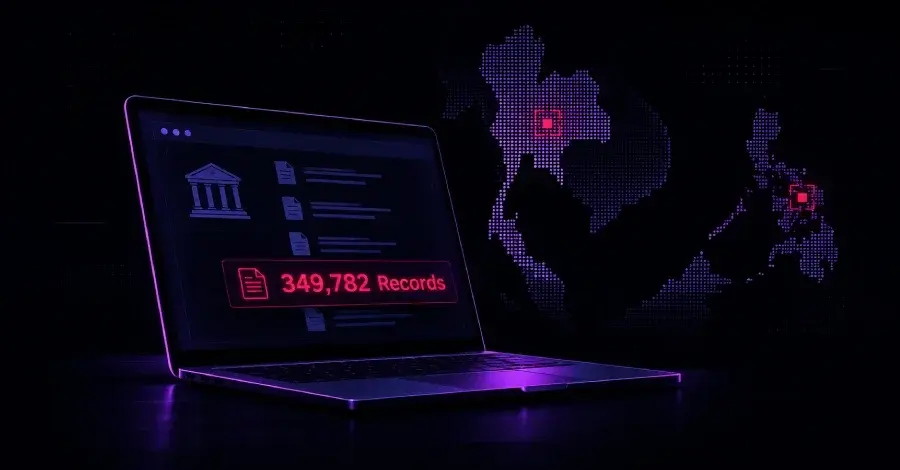
A suspected Vietnam-sponsored hacking group, codenamed WeaveLotus, conducted a cyber espionage campaign against government, military, and legislative organizations in Thailand, the Philippines, and Indonesia between August and September 2026. The operation, dubbed RedOps, aimed to gather intelligence on South China Sea defense and military agreements. According to SOCRadar, the attackers exploited web application vulnerabilities and default credentials to gain access, using reverse SSH tunnels for persistence and lateral movement. The campaign involved five confirmed intrusions in Thailand and the Philippines, with reconnaissance efforts against Indonesian targets. The attackers exfiltrated sensitive data, including records from Thai government and military systems, and conducted open-source intelligence gathering on military agreements involving the Philippines, China, and the U.S. The activity is assessed as state-directed intelligence collection, with no evidence of private-sector targeting.
Key points
- The campaign, codenamed RedOps, was observed between August and September 2026 and targeted government, military, and legislative organizations in Thailand, the Philippines, and Indonesia.
- According to SOCRadar, the attackers exploited web application vulnerabilities and default credentials in open-source software, including GeoServer, JasperReports, osTicket, and exposed Laravel debug mode configurations.
- The threat actor established persistent internal network access using reverse SSH tunnels and moved laterally into downstream networks and applications.
- The links to Vietnam are based on the presence of native Vietnamese-language code comments, operational activity aligning with UTC+07:00 working hours, regional strategic targeting, and custom scripting.
- The attackers conducted open-source intelligence (OSINT) by setting up automated Bing search scripts that scraped news and documents on military agreements involving the Philippines, China, and the U.S., with a particular emphasis on the South China Sea.
- In Thailand, the attackers exploited a critical GeoServer flaw (CVE-2024-36401, CVSS score: 9.8) to deploy a SOCKS5 proxy and open a reverse SSH tunnel, followed by hands-on reconnaissance, persistence, and unauthenticated access to Directus CMS API's file collection and asset download endpoints.
Background
The South China Sea has been a region of strategic and geopolitical importance, with ongoing tensions between China, the Philippines, and the U.S. In October 2026, US Secretary of Defense Pete Hegseth attended the ASEAN Defense Ministers’ Meeting-Plus in Cebu, Philippines, to reassure regional partners of Washington’s commitment following the US-Israel war on Iran. The summit addressed the South China Sea dispute, maritime security, and defense modernization. Additionally, in August 2026, Hunt.io disclosed details of another cyber espionage operation undertaken by a suspected Chinese threat actor targeting a nuclear research organization and a marine engineering and shipbuilding company to steal sensitive documents after gaining access through known security vulnerabilities.
Why it matters
The RedOps campaign highlights the growing threat of state-directed cyber espionage in the region, particularly in the context of the South China Sea dispute. The targeting of government, military, and legislative organizations in Thailand, the Philippines, and Indonesia underscores the strategic importance of the region and the potential for cyber operations to influence geopolitical dynamics. The use of web application vulnerabilities and default credentials indicates a lack of security hygiene in some government and military systems, which could be exploited by other threat actors. The campaign also demonstrates the use of open-source intelligence gathering to support state-directed intelligence collection, which could have implications for regional security and diplomacy.
What to watch
The RedOps campaign is likely to continue as long as the South China Sea dispute remains unresolved. The attackers may continue to target government, military, and legislative organizations in the region, particularly in the Philippines, Thailand, and Indonesia. The use of web application vulnerabilities and default credentials suggests that the attackers may continue to exploit similar weaknesses in other systems. The campaign may also lead to increased security measures and awareness in the region, as governments and military organizations seek to protect their systems from cyber espionage. Additionally, the campaign may prompt further investigation into the links between the attackers and Vietnam, as well as the potential for other state-sponsored cyber operations in the region.
Want the full story? Read the original reporting
Read on The Hacker News