
Met Museum Exhibition Reasserts Lee Krasner's Equal Status in Abstract Expressionism
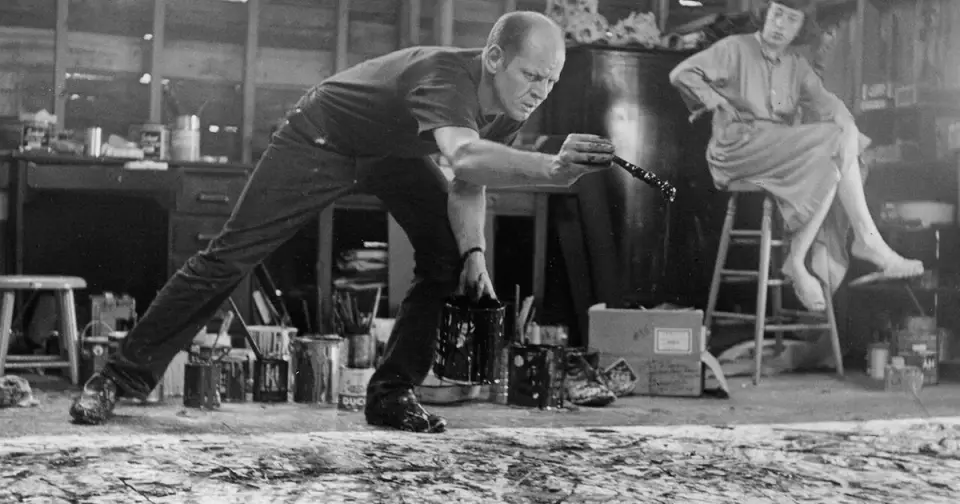
A new exhibition at the Metropolitan Museum of Art, titled 'Krasner and Pollock: Past Continuous,' presents the first comprehensive look at the parallel careers of Jackson Pollock and Lee Krasner. The show aims to correct historical narratives that overshadowed Krasner’s contributions, highlighting her evolution from a supporting figure to a major artist in her own right. It coincides with a visit to the Pollock-Krasner House and Study Center on Long Island, where the couple lived and worked from 1945 until Pollock's death in 1956.
Key points
- The exhibition 'Krasner and Pollock: Past Continuous' at the Met runs through January 31, 2027, and is the first to display their works side-by-side to illustrate 'creative adjacency.'
- Co-curators Brinda Kumar and David Breslin emphasize that Krasner was an equal partner, not just a muse, noting her 'sheer intelligence' and 'bravado' attracted Pollock.
- After Pollock's death in a 1956 car crash, Krasner moved into his barn studio, allowing her to paint on an unprecedented scale, including works like 'Through Blue' and 'Combat.'
- The Pollock-Krasner House in Springs, N.Y., remains largely unchanged since Krasner's death in 1984, preserving the physical traces of their artistic process, including paint-splattered floors and custom speaker systems.
- Krasner aggressively promoted Pollock's legacy after his death while simultaneously developing her own distinct style, a duality the exhibition seeks to honor.
Background
Jackson Pollock and Lee Krasner moved to a farmhouse in Springs, N.Y., in the winter of 1945. The location, now a historical site run by Stony Brook University, became the epicenter of Abstract Expressionism. Pollock, born in Cody, Wyoming, and Krasner, the child of Jewish immigrants in Brooklyn, developed a relationship that was both professional and personal. Their partnership was complicated by Pollock's heavy drinking and affairs, including a relationship with Ruth Kligman, which led to Krasner's temporary departure to Paris in the mid-1950s. Pollock died in a car accident in 1956, leaving Krasner to manage his legacy and continue her own artistic development for another 28 years.
Why it matters
This exhibition challenges the long-standing myth that Lee Krasner was merely a secondary figure in the history of American modern art. By presenting their careers in parallel, it offers a more accurate account of the Abstract Expressionist movement, recognizing Krasner's significant contributions and her ability to innovate on a large scale after Pollock's death. It also highlights the importance of preserving physical spaces like the Pollock-Krasner House, which serve as tangible connections to the creative processes that reshaped the art world.
What to watch
The exhibition 'Krasner and Pollock: Past Continuous' will remain on view at the Metropolitan Museum of Art until January 31, 2027. A companion catalogue by David Breslin and Brinda Kumar is available for purchase. Visitors can also tour the Pollock-Krasner House and Study Center in East Hampton, N.Y., to see the preserved studio and living spaces where the artists worked.
Want the full story? Read the original reporting
Read on CBS News