
Kusama’s Legacy: From Avant-Garde Protest to Global Immersive Phenomenon
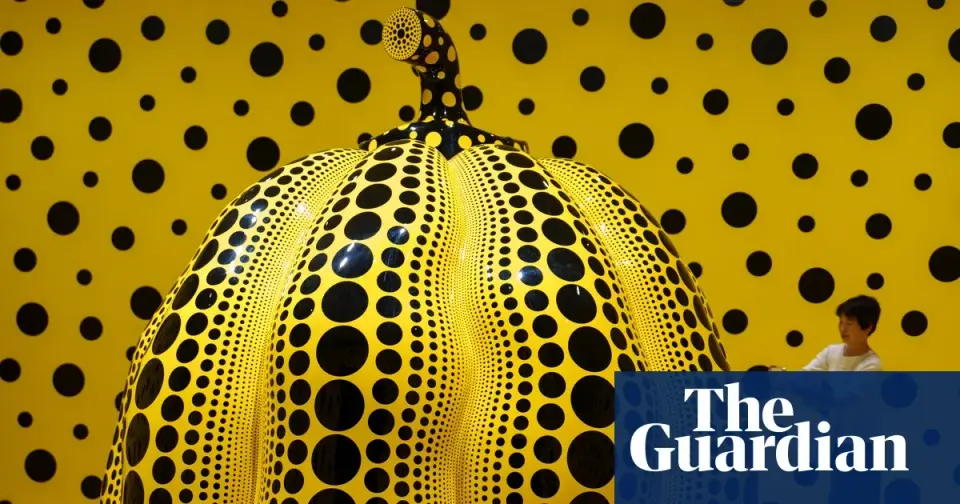
Japanese artist Yayoi Kusama has died at age 97, prompting global reflection on her evolution from a radical 1960s avant-garde figure to a ubiquitous pop-culture icon. While her Infinity Mirror Rooms reshaped museum attendance and social media engagement, critics debate whether her later work prioritized commercial branding over artistic depth. Her early performances, including protests against the Vietnam War and gender norms, remain central to understanding her legacy.
Key points
- Kusama died at 97 in Tokyo after decades of voluntary residence in a psychiatric hospital, where she continued creating art.
- Her Infinity Mirror Rooms, first created in 1965, became massive commercial successes by the 2010s, with the Hirshhorn Museum reporting 475,000 visitors in 2017.
- Early works included 'Accumulations' (soft sculptures with phallic shapes) and performances painting dots on naked bodies, challenging art markets and gender norms.
- Kusama’s rise to fame was slow; she struggled for recognition in the US until a 1993 Venice Biennale representation and later social media virality.
- Her work influenced a new era of 'experiums' and immersive art, though some critics argue this diluted her original conceptual intent.
Background
Kusama’s death was announced in August 2026, following a career spanning over six decades. She moved to the US in the late 1950s, where she was largely overlooked by the art establishment despite her active participation in the pop art movement. Her return to Japan in the 1970s marked a period of personal struggle, but her international reputation grew significantly after 1993. The current coverage focuses on the duality of her legacy: the profound artistic innovation of her early career versus the mass-market appeal of her later installations.
How outlets are covering it
Outlets present divergent views on Kusama’s impact. The Guardian highlights personal, emotional connections, with readers describing her work as a source of peace, inspiration for weddings, and a bridge for non-art enthusiasts. CNN emphasizes the structural shift in museum culture, noting how her work created a 'camera-ready' participatory art model that led to record-breaking crowds and the rise of immersive 'experiums.' The Atlantic offers a critical perspective, arguing that Kusama’s later work represented the collapse of the avant-garde, transforming her from a radical artist into a 'highly profitable brand' that lost its oppositional energy. BBC provides a factual overview of her global reach, noting her exhibitions in major cities and her status as a pop art pioneer who achieved mass audience appeal.
Why it matters
Kusama’s death marks the end of an era in contemporary art, highlighting the tension between artistic integrity and commercial success. Her ability to make high art accessible to millions through immersive experiences has permanently altered how museums engage with the public. Furthermore, her life story, encompassing mental health struggles and gender-based discrimination in the art world, continues to influence discussions on neurodiversity and representation in creative fields.
What to watch
Museums are already planning new exhibitions to capitalize on ongoing interest, with shows scheduled at the Stedelijk Museum in Amsterdam and other major institutions. The art world may see a continued trend of immersive, 'Instagrammable' installations, though critics may scrutinize whether these new works maintain the conceptual depth of Kusama’s original Infinity Mirror Rooms.
- ‘She inspired my proposal’: Readers on Yayoi Kusama The Guardian
- In pictures: The dotty world of Japanese artist Yayoi Kusama BBC
- The Limits of Yayoi Kusama���s Infinity The Atlantic
- For better or worse, Yayoi Kusama’s Infinity Rooms reshaped the world CNN
- Yayoi Kusama’s psychedelic art was at its best when taken in high doses The Guardian
Want the full story? Read the original reporting
Read on The Guardian