
Kusama’s Final Years: A Paradox of Isolation and Record-Breaking Success
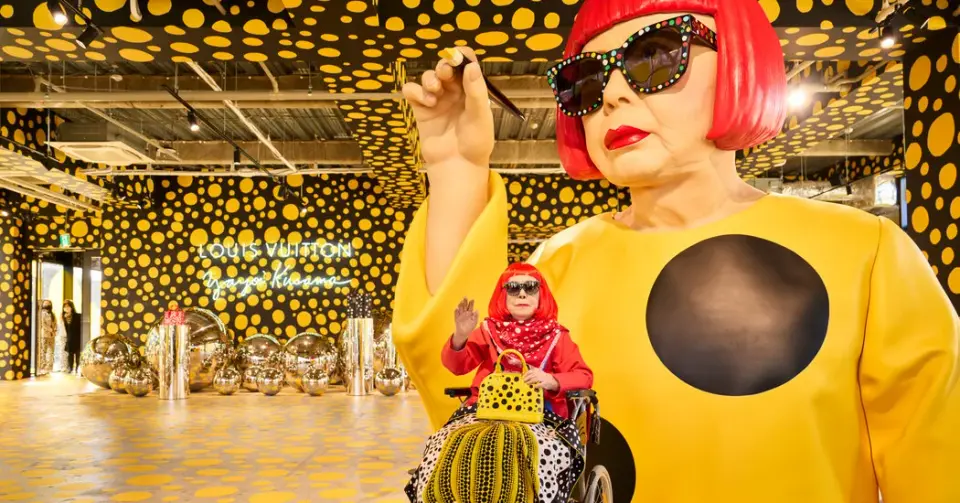
Yayoi Kusama died at 97 in August 2026, marking the end of a career that saw her most prolific and profitable decade coincide with severe isolation. While she spent her final seven years in declining health and seclusion, her market value soared, with a painting selling for $10.5 million and a Louis Vuitton collaboration yielding high-priced items. David Zwirner described this period as her most extraordinary, while Louis Vuitton honored her as a 'legend' whose influence on experiential art remains immeasurable.
Key points
- Kusama died on August 14, 2026, at age 97 from multiple organ failure.
- Her final seven years were characterized by isolation and declining health, yet were her most commercially successful.
- A 2023 Louis Vuitton partnership produced items including a $150,000 purse and a $50,000 surfboard.
- David Zwirner plans to exhibit her final works in New York in April 2027.
- Louis Vuitton CEO Pietro Beccari praised her 'extraordinary freedom' and 'singular vision'.
Background
Kusama’s death was announced in late August 2026, confirming earlier reports of her passing in Tokyo. While previous coverage highlighted her global fame and the impact of her Infinity Mirror Rooms, the focus now shifts to the paradox of her final decade. Archive notes indicate she continued painting until shortly before her death, a fact corroborated by her gallery. The recent surge in her market value and high-profile collaborations occurred during a period when she was largely out of public view, creating a stark contrast between her private suffering and public acclaim.
How outlets are covering it
The New York Times emphasizes the tension between Kusama's physical isolation and her commercial peak, noting that her final decade was her most profitable despite her seclusion. WWD focuses on the commercial and institutional tribute, highlighting Louis Vuitton's praise and the high resale value of her collaborative designs. The Guardian provides a humanistic perspective through reader testimonials, illustrating how her work created intimate, personal connections for the public, such as proposals in infinity rooms. While the NYT frames the final years as a 'mysterious' and 'lonely' chapter, WWD frames it as a period of peak cultural influence and 'legendary' status. The ABC News source was unavailable, offering no additional perspective.
Why it matters
Kusama’s death marks the end of an era in contemporary art, but her final decade challenges the narrative of the 'reclusive genius.' It highlights how an artist can achieve unprecedented commercial success and cultural relevance while being physically absent from the public sphere. The high prices of her works and the major institutional tributes suggest that her legacy is being solidified not just through her art, but through the market mechanisms that valued her presence even in her absence. This period also underscores the growing intersection of high art and luxury fashion, with her collaborations becoming key assets in the luxury market.
What to watch
David Zwirner will exhibit a selection of Kusama’s final works in New York in April 2027. Louis Vuitton is expected to continue honoring her legacy through its brand channels, potentially influencing the resale market for her collaborative pieces. The art world will likely see a surge in interest in her 'Infinity Mirror Rooms' and other immersive works as part of retrospective tributes. There may also be renewed academic and public interest in the relationship between mental health, isolation, and artistic productivity, given the details of her final years.
- The Mysterious and Lonely Final Decade of Yayoi Kusama’s Life The New York Times
- Louis Vuitton Pays Tribute to ‘Legend’ Yayoi Kusama WWD
- Yayoi Kusama, Pop Artist Who Expanded and Endured, Dies at 97 The New York Times
- ‘She inspired my proposal’: Readers on Yayoi Kusama The Guardian
- Car rams pedestrians in northern France, killing 2 and injuring 9 before suspected driver's arrest ABC News - Breaking News, Latest News and Videos
Want the full story? Read the original reporting
Read on The New York Times