
Kusama’s Final Decade: A Reassessment of Her Art, Legacy, and Mental Health
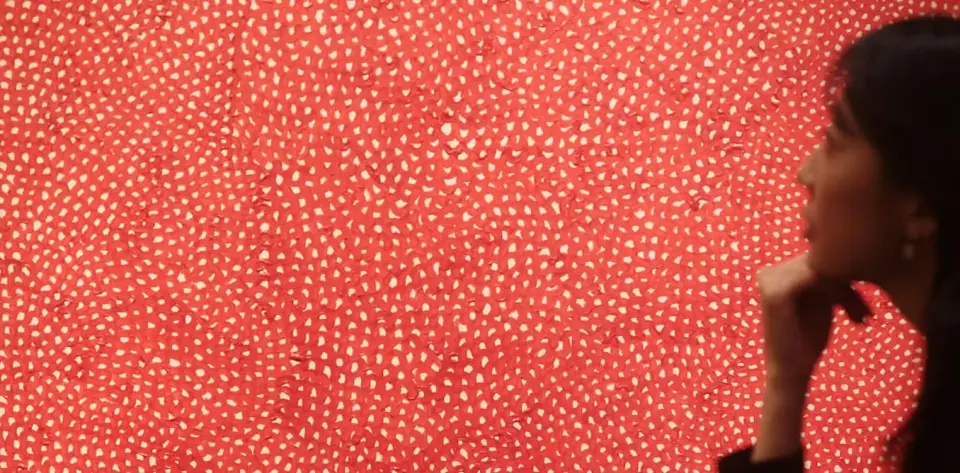
Yayoi Kusama died at 97 on Aug. 14, 2026, from multiple organ failure. While her final years were marked by isolation and declining health, they were also her most commercially successful, highlighted by a lucrative Louis Vuitton partnership. Recent scholarship challenges the narrative that her mental illness was the sole driver of her 'infinity' aesthetic, pointing instead to her 1957 trans-Pacific journey as a key creative catalyst. Her legacy continues to influence how the art world views neurodivergence and mental health.
Key points
- Kusama died in Tokyo on Aug. 14, 2026, at age 97, with David Zwirner citing multiple organ failure as the cause.
- Her final decade was her most commercially successful, including a 2023 Louis Vuitton collaboration that produced items priced over $150,000.
- Art historian Audrey Storm argues that Kusama’s 1957 trip to the US and her painting 'The Pacific Ocean' were crucial precursors to her infinity works, predating her 1958 move to New York.
- Kusama’s work is increasingly viewed through the lens of neurodiversity, with advocates noting her influence on how the art world accommodates artists with mental health challenges.
- Gallerist David Zwirner confirmed she continued painting until shortly before her death, describing her final decade as her most extraordinary.
Background
Kusama’s death on Aug. 14, 2026, triggered widespread tributes, including from Louis Vuitton, which called her a 'legend.' Earlier coverage noted her global fame, with exhibitions at Tate Modern and the Hirshhorn drawing record crowds. Her 2023 Louis Vuitton collaboration, conducted via Zoom during the pandemic, was a major commercial success. The art world has increasingly recognized her as a pioneer for neurodivergent artists, following the 2025 Turner Prize win by autistic artist Nnena Kalu.
How outlets are covering it
The New York Times emphasizes the commercial peak of Kusama’s final decade, noting her isolation and declining health contrasted with high auction prices and luxury collaborations. The Conversation challenges the dominant narrative that her mental illness was the primary source of her infinity aesthetic, highlighting the 1957 'Pacific Ocean' paintings as a crucial, often overlooked origin story. The Guardian focuses on her legacy in the context of neurodiversity, arguing her work helped shift perceptions of mental health in the art world. WWD highlights the commercial impact of her Louis Vuitton collaborations, noting the high resale value of her designs.
Why it matters
Kusama’s death marks the end of an era for contemporary art, but her legacy extends beyond her works. Her life challenges the simplistic narrative that mental illness is the sole driver of artistic genius, offering a more nuanced view of creativity, survival, and the intersection of art and mental health. Her commercial success also underscores the growing value of artist-luxury collaborations in the contemporary art market.
What to watch
David Zwirner plans to exhibit a selection of Kusama’s final works in New York in April 2027. The art world will likely continue to reassess her legacy in the context of neurodiversity and mental health, with more attention to the broader implications of her work for artists with similar experiences.
- Before the infinity nets, there was ‘The Pacific Ocean’ – what origin stories focusing on Yayoi Kusama’s mental illness miss about her art The Conversation
- The Mysterious and Lonely Final Decade of Yayoi Kusama’s Life The New York Times
- Louis Vuitton Pays Tribute to ‘Legend’ Yayoi Kusama wwd.com
- ‘I fight pain and fear with art’: how Yayoi Kusama blazed a trail for neurodivergent artists The Guardian
- What origin stories focusing on Yayoi Kusama’s mental illness miss USC Dornsife
Want the full story? Read the original reporting
Read on The Conversation