
Newsom Signs 'Leno’s Law,' Phasing in Smog Exemptions for 1976–1985 Collector Cars
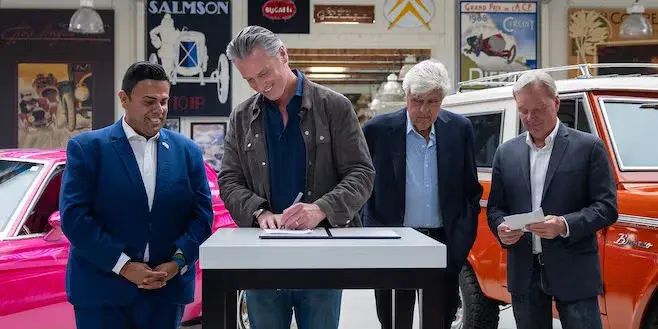
California Governor Gavin Newsom signed Senate Bill 1392, known as 'Leno’s Law,' on September 16, 2026, at Jay Leno’s Burbank garage. The law creates a phased smog-check exemption for collector cars built between 1976 and 1985, starting January 1, 2028. Eligibility requires collector insurance or driving fewer than 1,000 miles annually. Newsom also signed Assembly Bill 2541, establishing a specialty license plate to honor California’s lowrider heritage.
Key points
- SB 1392 phases in exemptions for model years 1976–1980 by 2028, expanding one year annually until 1985 models are covered by 2033.
- Vehicles must be insured as collectors or driven under 1,000 miles per year to qualify, limiting the impact on the overall vehicle fleet.
- The bill was authored by Senator Dave Cortese (D-San Jose) and Senator Shannon Grove (R-Bakersfield), reflecting bipartisan support.
- Newsom also signed AB 2541, creating a lowrider specialty license plate, and SB 1069 to expedite aftermarket parts approval.
- The signing event took place at Jay Leno’s garage, with the comedian praising the governor for following through on the legislation.
Background
California previously exempted vehicles from smog checks once they reached 30 years of age, but replaced this system in 2004 with a cutoff for pre-1975 models due to air quality concerns. Prior attempts to expand exemptions, including SB 712 in 2025, failed in committee. The current legislation follows a years-long campaign by car enthusiasts and lowrider communities, who argued that strict emissions testing made it difficult to preserve and display culturally significant vehicles.
How outlets are covering it
Supporters, including Jay Leno and Senator Cortese, emphasized the cultural and historical value of classic cars, noting that the exemption applies to a small share of the fleet and addresses high costs and long wait times for emissions testing. The Los Angeles Times highlighted the bill’s significance for the lowrider community, which submitted over 1,700 letters in support. Conversely, environmental groups like the American Lung Association and Sierra Club opposed the measure, arguing it prioritizes wealthy collectors over public health and increases harmful emissions. The Mercury News noted that the revised bill narrowed the scope to appease environmental concerns, while the California State Portal framed the law as a balance between clean air goals and cultural preservation.
Why it matters
The legislation resolves a long-standing conflict between environmental regulations and automotive heritage in California. By creating a narrow, phased exemption, it allows classic car owners to maintain and display their vehicles without facing prohibitive costs or legal risks, while attempting to minimize environmental impact through strict usage and insurance requirements. The accompanying lowrider license plate also signals a broader state effort to recognize and protect specific cultural traditions within the state’s transportation policies.
What to watch
The smog-check exemptions will take effect in stages, beginning with pre-1981 models on January 1, 2028. The lowrider specialty license plate program will also begin implementation, though specific timelines for plate availability were not detailed in the sources. Stakeholders will monitor the environmental impact and administrative feasibility of the new exemptions as they roll out over the next five years.
- ‘Leno’s Law’ Is Official: California Governor Gavin Newsom Signs Classic Car Smog Exemption Into Law Road & Track
- Newsom Signs Jay Leno’s Classic Car Bill Over Environmentalist Objections The New York Times
- Newsom signs ‘Leno’s Law,’ easing smog checks for some classic cars The Mercury News
- Governor Newsom visits Jay Leno’s Garage to sign legislation celebrating and preserving California’s classic car and lowrider heritage California State Portal | CA.gov
- Some California cars will get to skip smog checks. What to know about Jay Leno’s Law Los Angeles Times
Want the full story? Read the original reporting
Read on Road & Track