
South Korea's Costliest Film Yet, 'Hope,' Divides Critics Over Its Wild, Uneven Execution
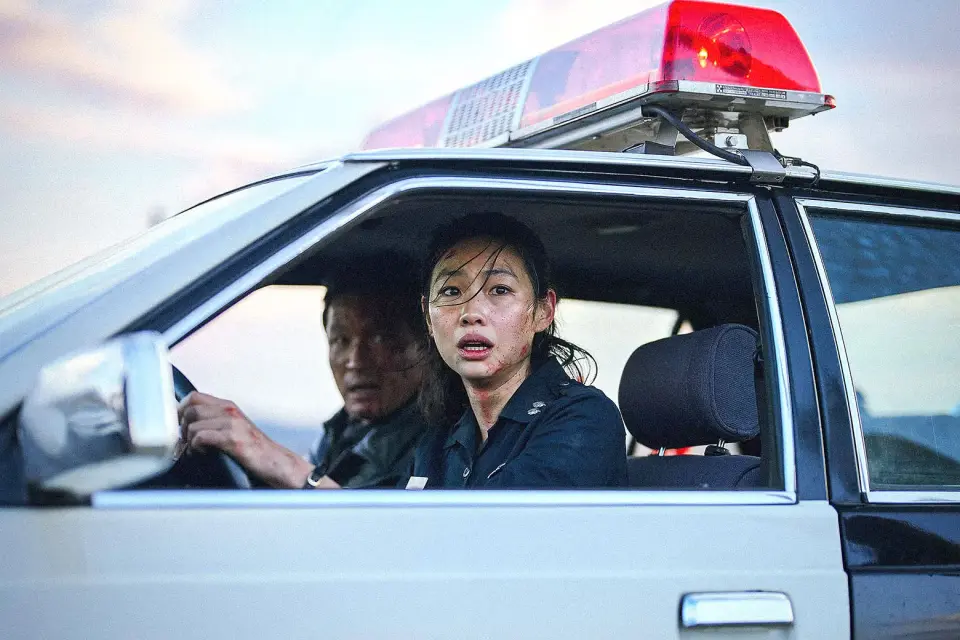
Na Hong-jin's sci-fi monster thriller 'Hope' has opened in the US as South Korea's most expensive film ever, featuring a massive budget and wide release. While the film's first hour is praised for its tense, comedic action, critics are split on its overall quality due to mixed reviews of its CGI and tonal shifts.
Key points
- Directed by Na Hong-jin, 'Hope' is a 156-minute sci-fi thriller released by Neon, marking his first feature in over a decade since 'The Wailing'.
- The film is reportedly the most expensive Korean production ever, with a budget of approximately $46 million, and is opening on 1,560 US screens, the widest release for a Korean film since 'Parasite'.
- The plot centers on police chief Bum-seok (Hwang Jung-min) and his deputy defending the remote village of Hope Harbor from a mysterious creature, with wildfires isolating the town from backup.
- The cast includes international stars Michael Fassbender, Alicia Vikander, Taylor Russell, and Cameron Britton, alongside veteran Korean actors.
- The film grossed $36 million in South Korea in July and earned $1.1 million in its US opening weekend, including previews.
- Critics praise the first hour for its effective tension and humor but criticize the later CGI monster sequences and the film's tonal inconsistencies.
Background
Na Hong-jin is known for the 2016 horror film 'The Wailing,' which received universal critical acclaim. 'Hope' represents his return to feature filmmaking after a ten-year hiatus. The film's release coincides with a broader trend of high-budget international productions receiving wide US theatrical runs, including premium formats like 4DX.
How outlets are covering it
Slate's Nadira Goffe argues that 'Hope' is a 'wild, messy monster' that is 'deeply entertaining' despite its flaws, praising its 'masterful comedic epic' opening and the 'thrill of the adventure.' She notes that the film's 'vacillation between being actually good and so bad it winds up good' makes it a potential 'cult classic.' In contrast, The Atlantic's David Sims feels the film is 'too big for its own good,' stating that while the first hour is a 'robust monster thriller,' the overall epic aspirations are not met, and the film 'can't live up to its own epic aspirations.' The Washington Post's Gene Park calls it the 'weirdest blockbuster in a long time,' giving it 3.5 stars, and highlights its 'bold blend of horror, sci-fi and comedy' but notes 'CGI quirks.' Deadline provides box office data, confirming the $1.1 million US opening and $36 million South Korean gross, but does not offer a critical assessment. All outlets agree on the film's high budget and wide release, but disagree on its artistic success, with Slate and The Post leaning positive on its entertainment value, while The Atlantic is more critical of its execution.
Why it matters
'Hope' represents a significant financial and cultural investment for South Korean cinema, with the highest budget ever for a Korean film and the widest US release since 'Parasite.' Its mixed critical reception and strong box office performance in South Korea suggest a potential for a cult following despite polarizing reviews. The film's success or failure could influence future high-budget international productions and the willingness of studios to invest in large-scale monster thrillers from non-Hollywood markets.
What to watch
Na Hong-jin has reportedly already written a sequel to 'Hope,' suggesting the film may become part of a franchise. The US theatrical run will continue, with box office performance to be monitored in the coming weeks. The film's critical reception may influence future projects by Na Hong-jin and the broader South Korean film industry's approach to high-budget monster thrillers.
- In a Year of Great Horror Movies, This One’s Opening May Be the Most Thrilling of All Slate
- ‘Hope’ is the weirdest blockbuster in a long time The Washington Post
- South Korean Monster Thriller ‘Hope’, Andrew Garfield In ‘The Uprising’, Doc ‘Black Zombie’ & Comedy ‘On A String’ — Specialty Preview Deadline
- How to Kill a Franchise Before It Even Starts The Atlantic
- Movie Review: The Korean thriller ‘Hope’ is a creature feature to the tilt AP News
Want the full story? Read the original reporting
Read on Slate