
Whalefall: A Grief-Driven Survival Thriller Sparks Debate on 2026's 'Daddy Issues' Trend
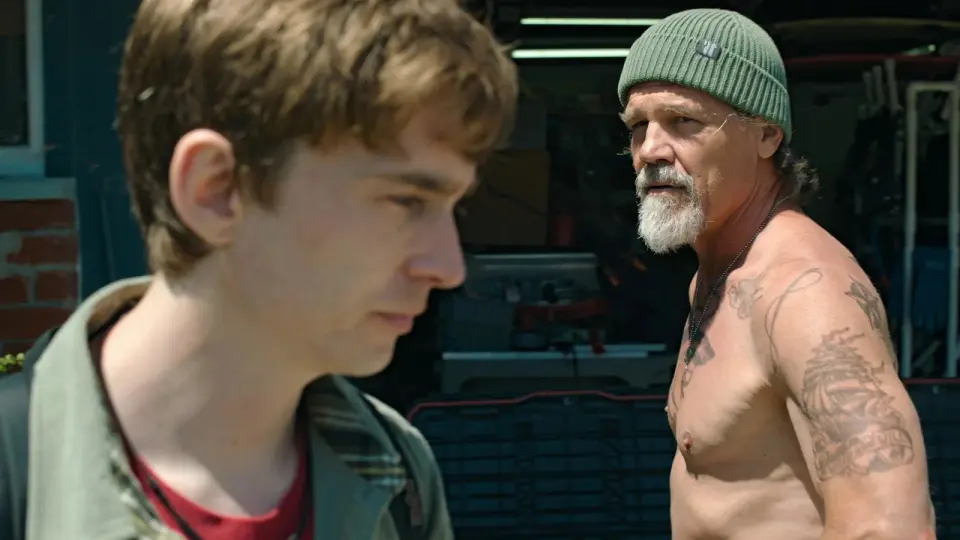
20th Century Studios' 'Whalefall' follows a son trapped in a sperm whale's stomach while processing his father's suicide. Critics and cultural commentators are debating whether the film's literal take on grief is a melodramatic misstep or part of a broader 2026 trend of genre films exploring paternal loss and reconciliation.
Key points
- The film, directed by Brian Duffield and based on Daniel Kraus's novel, stars Austin Abrams as Jay Gardiner, who is accidentally swallowed by a sperm whale after a squid encounter while searching for his father's remains.
- Jay's father, Mitt (Josh Brolin), committed suicide by drowning after a mesothelioma diagnosis, a plot point that anchors the film's themes of toxic masculinity and unresolved grief.
- Science Friday consulted whale biologist Shane Gero, who confirmed that while a human being swallowed by a sperm whale is not documented, it is scientifically plausible given the animal's 30-40 cm esophagus and four-chambered stomach.
- Production involved complex practical effects, including a 12-foot-tall whale head built by StudioArt & Technology and stomach sets constructed by Weta Workshop in New Zealand.
- SlashFilm identifies 'Whalefall' as part of a 2026 trend of genre films focusing on the loss of flawed fathers, linking it to titles like 'Greenland 2: Migration' and 'The Odyssey'.
Background
Our archive from October 15, 2026, noted that 'Whalefall' received largely negative reviews for its implausible premise and tonal inconsistencies, with critics praising the visual effects but criticizing the melodramatic father-son subplot. This briefing synthesizes those early reviews with new cultural and scientific analysis.
How outlets are covering it
The New York Times critic Ben Kenigsberg argues the film is 'too literal for its own good,' viewing the whale as a clumsy metaphor for grief. In contrast, SlashFilm's Bill Bria frames the movie as a necessary cultural artifact for Gen X and Millennials processing parental loss, suggesting the trend reflects a collective need for reconciliation with the past. Science Friday provides a technical perspective, validating the film's biological accuracy while noting the extreme improbability of survival. Deadline highlights the production's collaborative effort, emphasizing how the physical constraints of the whale set mirrored the emotional constraints of the father-son relationship.
Why it matters
The film serves as a focal point for a cultural conversation about how modern genre cinema is addressing the psychological impact of paternal loss and the transition from idealized pasts to uncertain futures. It also demonstrates the increasing intersection of scientific accuracy and narrative fiction in blockbuster filmmaking.
What to watch
The film is currently in wide release. Upcoming cultural analysis may continue to track the 'daddy issues' trend in 2026 releases, including 'Avengers: Doomsday' and 'Werwulf,' as noted by SlashFilm. Audiences will continue to debate the efficacy of literal metaphors in dramatic storytelling.
- Whalefall Continues One Of 2026's Most Surprising (And Dark) Movie Trends SlashFilm
- ‘Whalefall’ Review: In the Belly of the Beast The New York Times
- Could a whale swallow a human, ‘Whalefall’ style? Science Friday
- ‘Whalefall’s Father-Son Relationship Unpacked By Director & Author During Set Visit Deadline
- In the New Movie 'Whalefall,' a Cetacean Swallows a Diver Whole. The Sperm Whale's Remarkable Anatomy and Feeding Habits Shape the Survival Thriller Smithsonian Magazine
Want the full story? Read the original reporting
Read on SlashFilm