
Berg's 'The Mosquito Bowl' Hits Theaters Amid Sharp Critical Divide
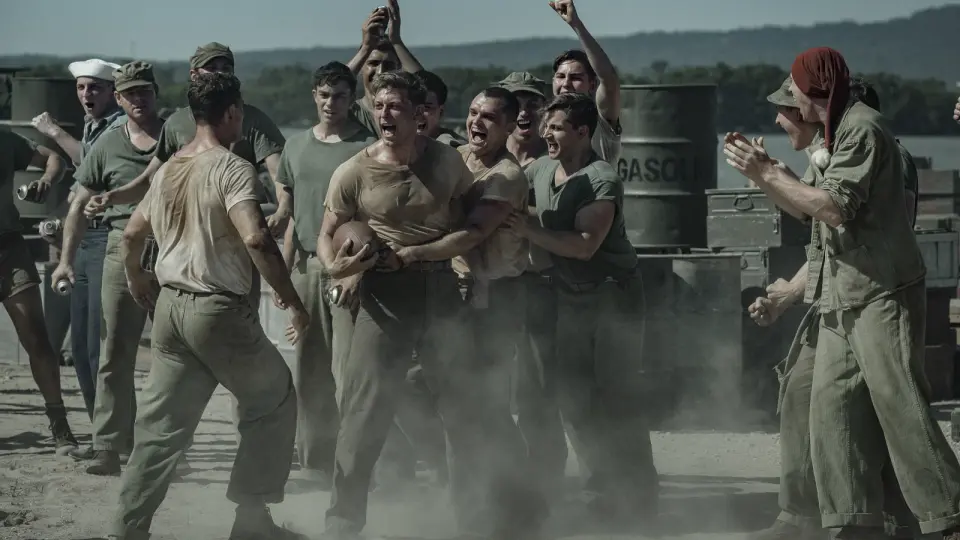
Peter Berg's new film, 'The Mosquito Bowl,' opens in U.S. theaters on October 30 and arrives on Netflix on November 25. Adapted from Buzz Bissinger's 2022 book, the 126-minute R-rated drama chronicles four elite college football players who enlist in the Marines after Pearl Harbor. The story centers on a morale-boosting football game played on Christmas Eve 1944 on Guadalcanal, followed by the devastating Battle of Okinawa. While the film is praised for its visceral combat sequences and technical proficiency, critics are sharply divided, with many arguing it lacks emotional depth and character development.
Key points
- The film follows Tony Butkovich, Dave Schreiner, Bob Baumann, and John McLaughry, real-life college football stars who served in the 6th Marine Division.
- The titular game was a scoreless tie between the 4th and 29th regiments, watched by thousands of Marines; 15 of the 65 players died within a year during the Battle of Okinawa.
- Cast includes Nicholas Galitzine, Bill Skarsgård, Ray Nicholson, Tom Francis, and Pat McAfee, who plays a drill sergeant in his first acting role.
- The movie was filmed in Australia and features a desaturated color palette and aggressive sound design by Explosions in the Sky.
- Berg, whose father was a Marine, aims to highlight the human cost of war and the fleeting nature of happiness in conflict.
Background
This release follows Berg's previous work on 'Friday Night Lights' and 'American Primeval.' The film is part of a broader trend of adapting sports and military narratives, similar to the upcoming 'Call of Duty' film Berg is developing for 2028. The story was brought to wider attention through Bissinger's 2022 book, which explored the obscure history of the Guadalcanal game.
How outlets are covering it
USA TODAY emphasizes the film's thematic focus on sacrifice and the human cost of war, noting Berg's personal connection to the Marine Corps. Variety criticizes the film as 'emptily macho,' arguing that the characters are interchangeable and the script relies on jingoistic tropes without challenging the racism or brutality depicted. IndieWire calls it a 'formulaic' war movie that fails to distinguish itself from the 'Saving Private Ryan' template, noting that the football game is trivialized in favor of generic combat scenes. The Hollywood Reporter praises the technical execution and immersive combat sequences but criticizes the film for being 'emotionally hollow' and lacking narrative cohesion, describing the characters as underdeveloped. All outlets agree on the film's technical proficiency but disagree on its emotional impact and narrative structure.
Why it matters
The film highlights the intersection of sports and war, using a historical event to explore the human cost of conflict. It also showcases the potential of adapting niche historical stories into mainstream cinema, though it faces criticism for relying on familiar war-drama tropes. The release reflects ongoing debates about how to portray war and sacrifice in film, with some viewers seeking emotional depth and others valuing visceral realism.
What to watch
The film will be available on Netflix starting November 25. Berg is set to direct a 'Call of Duty' film for Paramount Pictures, scheduled for release in June 2028, which will focus on the psychological burden of war. The film's performance in theaters and on streaming will determine its impact on future adaptations of historical and sports narratives.
- ‘Mosquito Bowl’ was just a football game. What came next made it unforgettable USA Today
- ‘The Mosquito Bowl’ Review: Blood Sport The New York Times
- ‘The Mosquito Bowl’ Review: Football Heroes Take to the Battlefield in Peter Berg’s Emptily Macho WWII Epic Variety
- ‘The Mosquito Bowl’ Review: ‘Friday Night Lights’ Meets ‘Five Came Back’ in Peter Berg’s Formulaic Netflix Movie About a World War II Football Game IndieWire
- 'The Mosquito Bowl' Review: Peter Berg's Netflix Football War Drama The Hollywood Reporter
Want the full story? Read the original reporting
Read on USA Today