
Chronovisor Turns Academic Obsession Into a 16mm Noir Thriller
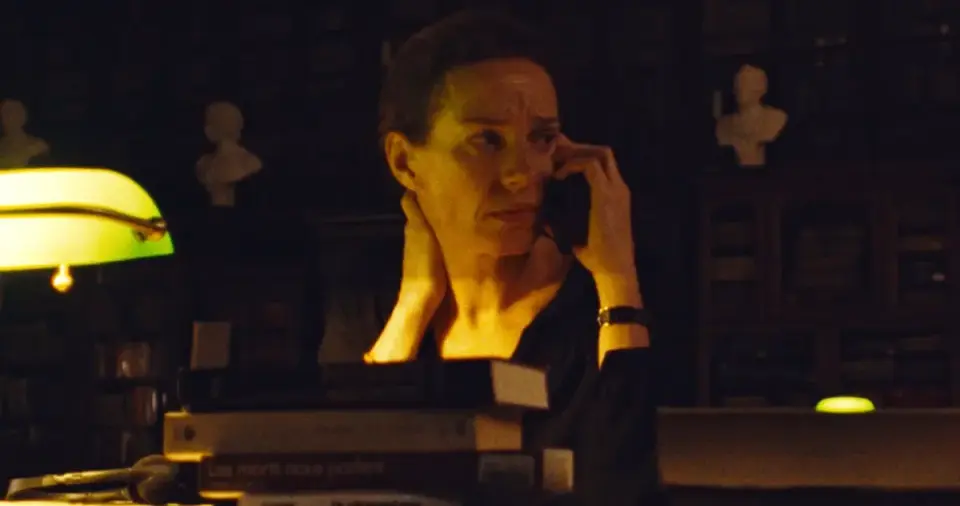
The indie film Chronovisor follows Beatrice Courte, a Columbia professor obsessed with the alleged time-viewing device of 19th-century monk Pellegrino Ernetti. Shot on 16mm and driven by archival text, the movie uses a minimalist, research-heavy structure to explore the line between historical fact and conspiracy. Critics praise its atmospheric tension and unique visual style, though some note the plot’s predictable conclusion.
Key points
- Beatrice Courte, played by Anne-Laure Sellier, is a Columbia professor studying memory who becomes fixated on the chronovisor, a device claimed by real historical figure Father Pellegrino Ernetti to have captured images of the past.
- The film is the directorial debut of Jack Auen and Kevin Walker, who used a 'measure twice, cut once' approach, editing text sequences to Gustav Holst’s music before shooting on 16mm to manage a tight budget.
- Cinematographer Leo Zhang shot the film in warm, grainy 16mm, creating a visual aesthetic that mimics the analog nature of the archival materials Beatrice investigates, including books, tapes, and microfiche.
- The narrative relies heavily on on-screen text and highlighted documents, a technique the directors designed to mimic the rhythm of research and create a hypnotic, suspenseful experience for the viewer.
- While the chronovisor is fictional, the film is based on real historical rumors surrounding Ernetti, who claimed to have photographed the crucifixion of Christ, blending academic inquiry with supernatural conspiracy.
Background
Chronovisor was previously covered in our archive as a dense, noir-tinged sci-fi thriller that satisfies intellectual ambitions through a gripping descent into obsession. The film has been described as a 'miniature masterpiece' of the dark academia genre, leveraging its low-budget constraints to create a rich, atmospheric experience that feels like an artifact from another time.
How outlets are covering it
Vulture’s Alison Willmore emphasizes the film’s aesthetic beauty and the 'dark academia' vibe, praising the 16mm photography and the way the city looks 'magical and forbidding' at night. Roger Ebert’s review highlights the film’s commitment to the act of research, comparing the pacing to Michael Snow’s visual experiments and noting the 'cosmic horror' of Beatrice’s inevitable descent into madness. IndieWire’s interview with directors Jack Auen and Kevin Walker focuses on the technical craft, explaining how they used digital pre-production to time text reveals to Holst’s music, ensuring a one-to-one shooting ratio on film. While Vulture and Ebert focus on the emotional and atmospheric impact, IndieWire provides insight into the logistical and creative decisions that allowed the film to succeed despite its limited budget. All sources agree on the film’s unique approach to using text and archival material as the primary engine of the narrative.
Why it matters
Chronovisor demonstrates how low-budget independent films can achieve high artistic impact through formal innovation rather than production scale. By prioritizing the visual presentation of text and archival materials, the film challenges traditional narrative structures and offers a fresh perspective on the 'dark academia' genre. Its success suggests that audiences are receptive to slow-burn, intellectually driven thrillers that rely on atmosphere and pacing over action or spectacle.
What to watch
The film is currently playing in theaters. Given its critical acclaim and unique style, it may be a contender for independent film awards or festival recognition in the coming months. The directors’ success with this project may lead to further collaborations or similar projects that explore the intersection of history, technology, and obsession.
- ‘Chronovisor’ Is a Miniature Masterpiece of Dark Academia Vulture
- ‘Chronovisor’ Review: A Late-Night Occult Mystery The New York Times
- ‘Chronovisor’ Review: A Consuming Conspiracy WSJ
- Chronovisor review: Sci-fi research thriller gets deep in the weeds Roger Ebert
- ‘Chronovisor’ Directors Measured Twice and Cut Film Once to Tell a Text-Based Thriller IndieWire
Want the full story? Read the original reporting
Read on Vulture