
Fielder Defends Holmes Doc’s Unconventional Methods Amid Oscar Eligibility Debate
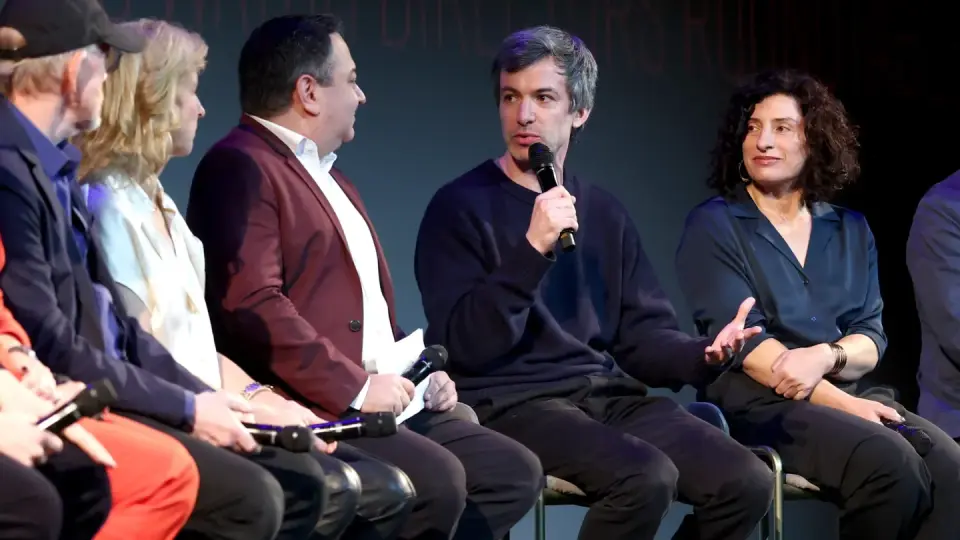
Nathan Fielder and Lance Oppenheim defended their unconventional documentary techniques at the SCAD Savannah Film Festival, arguing that reenactments and on-camera presence were necessary for honesty. The film has grossed nearly $50 million, sparking debate within the Academy’s documentary branch over whether popular, formally innovative films should be recognized.
Key points
- Fielder and Oppenheim stated that unconventional techniques, such as reenactments and Fielder’s on-camera presence, evolved organically to capture the truth of Elizabeth Holmes’s final days before prison.
- The film has grossed nearly $50 million, marking the highest-grossing opening weekend for a documentary since 2004.
- Academy documentary branch members, including Chai Vasarhelyi and Amir Bar-Lev, praised the film’s formal innovation while acknowledging the branch’s historical resistance to popular or unconventional documentaries.
- Fielder negotiated a 'kill switch' with A24, allowing the team to abandon the project if it failed to find a compelling narrative, which he said provided creative freedom.
- The filmmakers admitted they still lack clarity on Holmes’s motives, describing the filming process as a 'mindfuck' where Holmes and her partner repeatedly insisted they stay despite the tension.
Background
The film has been a cultural phenomenon since its release, dominating box office charts and sparking debates over its classification as a documentary. Previous coverage highlighted its record-breaking performance and the controversy surrounding its Oscar eligibility, particularly regarding the Academy’s tendency to overlook popular or formally experimental documentaries. The film also generated discussions about its ethical implications and the inclusion of staged scenes, with some critics arguing it blurred the lines between reality and performance.
How outlets are covering it
The Hollywood Reporter highlighted the debate within the Academy’s documentary branch, noting that members like Amir Bar-Lev and Chai Vasarhelyi supported the film’s unconventional methods, arguing that truth in documentary filmmaking is not limited to traditional verite techniques. Gold Derby focused on the filmmakers’ process, emphasizing how they adapted to Holmes’s behavior and the lack of clarity in her responses. A.V. Club underscored the filmmakers’ admission that they still do not understand Holmes’s motives, framing the experience as a strange, unresolved narrative. Variety highlighted the 'kill switch' provision, which allowed the filmmakers to abandon the project if it failed, providing them with creative freedom and reducing pressure.
Why it matters
The film’s success challenges traditional definitions of documentary filmmaking and raises questions about the Academy’s criteria for recognizing popular and formally innovative works. It also highlights the evolving nature of documentary storytelling, where unconventional techniques may be necessary to capture complex, ambiguous narratives.
What to watch
The film’s performance at the box office and its reception by the Academy’s documentary branch will likely influence future discussions about the definition and eligibility of documentaries. The filmmakers may continue to address the ethical and artistic implications of their methods in upcoming interviews and panels.
- Nathan Fielder on Unconventional Doc Techniques in You Can See Everything The Hollywood Reporter
- ‘You Can See Everything’ filmmakers: ‘We were responding to a real-life human optical illusion’ Gold Derby
- Nathan Fielder and Lance Oppenheim Go Deep on the Twisty Ride of ‘You Can See Everything’ — and How Audiences Are Reacting IMDb
- Nathan Fielder and Lance Oppenheim have no more "clarity" on Elizabeth Holmes' motives now than when they started A.V. Club
- Nathan Fielder Negotiated a 'Kill Switch' on 'You Can See Everything' Variety
Want the full story? Read the original reporting
Read on The Hollywood Reporter