
Greengrass’s ‘The Uprising’ Links 1381 Peasants’ Revolt to Robin Hood Origins
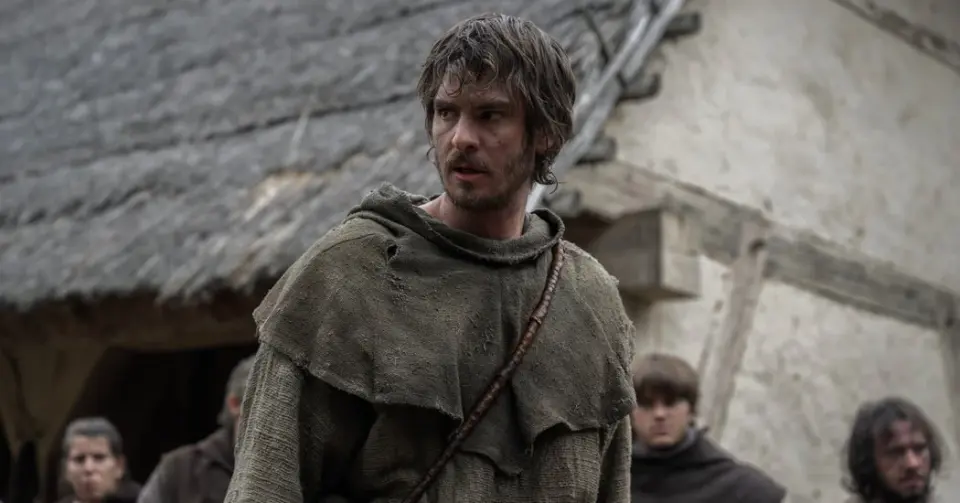
Paul Greengrass’s new historical epic, 'The Uprising,' dramatizes the 1381 English Peasants’ Revolt through the lens of a fictional farmer, Ploughman, played by Andrew Garfield. The film, which opened in theaters on September 10, 2026, is a 2-hour, 7-minute R-rated drama that blends historical accuracy with a fictional origin story for the Robin Hood legend. Critics and the director emphasize the film’s parallels to modern economic anxieties, while marketing controversies surrounding the late reveal of the Robin Hood connection have drawn mixed reactions.
Key points
- The film is directed by Paul Greengrass and stars Andrew Garfield as 'Ploughman,' a serf grieving the loss of his family to the Black Death.
- It depicts the 1381 Peasants’ Revolt against King Richard II, focusing on the impact of punitive taxes and labor conditions on the English peasantry.
- The narrative concludes with Ploughman transforming into a figure resembling Robin Hood, suggesting the legend arose from the aftermath of the rebellion.
- Greengrass began writing the screenplay, originally titled 'The Hood,' during the second day of the 2020 pandemic lockdown.
- The film was released by Focus Features and received a 'Critic’s Pick' from The New York Times, though IndieWire noted the marketing strategy for the Robin Hood twist was controversial.
Background
Paul Greengrass is known for historical and political dramas such as 'Bloody Sunday' and 'United 93.' His previous work often explores ordinary people resisting oppressive systems, a theme consistent with his earlier 'Bourne' films. The Peasants’ Revolt of 1381 is a significant event in English history, marked by widespread rebellion against feudal taxation following the demographic collapse caused by the Black Death. The film’s development spanned five years, with production greenlit by Focus Features in 2025 as the themes of economic inequality became increasingly relevant to contemporary audiences.
How outlets are covering it
The New York Times critic Jeannette Catsoulis praised the film as a 'Critic’s Pick,' highlighting Greengrass’s ability to handle mass upheaval and Garfield’s portrayal of a traumatized serf. IndieWire’s Christian Zilko gave the film a 'B' grade, commending the historical recreation and battle sequences but criticizing the marketing strategy for spoiling the Robin Hood twist, which he felt diminished the surprise factor. The Hollywood Reporter’s Brian Davids noted Greengrass’s defense of the marketing campaign, arguing that the reveal was necessary to entice audiences, and emphasized the film’s contemporary relevance. All sources agree on the film’s core premise but differ on the effectiveness of its promotional strategy and the balance between historical fact and fictional embellishment.
Why it matters
The film serves as a cultural commentary on modern economic disparities, drawing direct parallels between 14th-century feudal oppression and 21st-century income inequality. By linking the historical Peasants’ Revolt to the origin of the Robin Hood myth, it offers a narrative framework for understanding populist movements and the psychological impact of systemic injustice. The controversy over its marketing also highlights the ongoing tension between preserving cinematic surprise and the industry’s need for clear promotional hooks in a saturated media landscape.
What to watch
The film is currently in wide theatrical release. Greengrass has indicated that the film was not designed to launch a franchise, despite the Robin Hood ending. Audiences are expected to debate the historical accuracy of the Robin Hood origin theory and the film’s political messaging. Future coverage may focus on box office performance and critical reception in relation to other historical epics like 'The Death of Robin Hood,' which Greengrass noted as a thematically complementary but distinct project.
- ‘The Uprising’ Review: Sackcloth and Clashes The New York Times
- ‘The Uprising’ Review: Paul Greengrass Turns the Peasants’ Revolt of 1381 Into an Unapologetic Work of 21st Century Populism IndieWire
- Movie Review: Medieval action drama 'The Uprising' struggles under a Robin Hood origin twist AP News
- Paul Greengrass Talks ‘The Uprising,’ Robin Hood and the Timeless Power of Rebellion The Hollywood Reporter
- Why ‘The Uprising’ Is a Fitting September 11 Release The Gospel Coalition
Want the full story? Read the original reporting
Read on The New York Times