
Gyllenhaal Confronts Venice Jury on Gender Gap and Political Role of Cinema
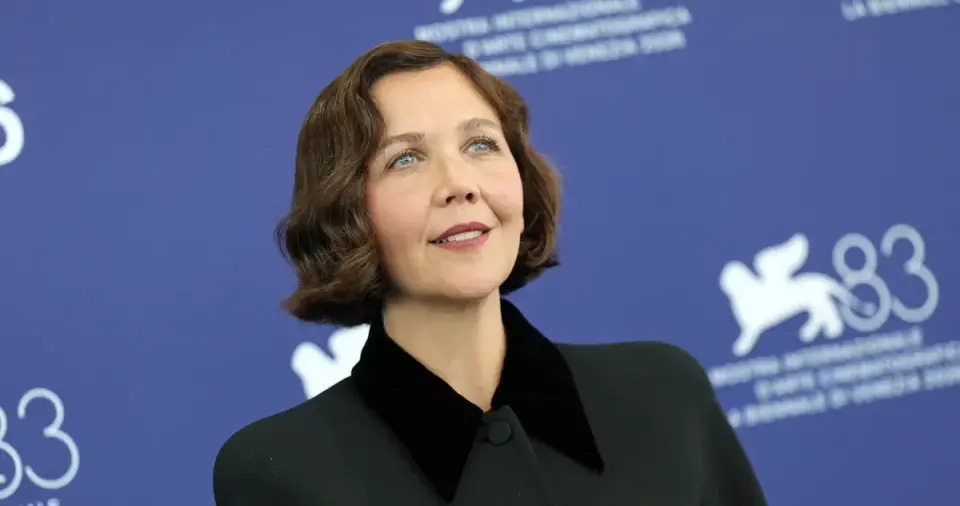
Maggie Gyllenhaal, presiding over the 83rd Venice Film Festival jury, addressed the scarcity of female directors in the main competition and asserted that cinema is inherently political. She highlighted systemic financing barriers for women and defended the role of empathy in filmmaking, following a brief controversy over the festival's initial decision to cancel its opening press conference.
Key points
- Gyllenhaal stated that films are 'fundamentally, unavoidably political' and serve as a vehicle for empathy, allowing audiences to engage with diverse perspectives, including those of 'corrupt' or 'perverse' characters.
- She criticized the lack of female directors in the Golden Lion competition, noting that only one film, 'Woman Unknown' by May El-Toukhy, was solely helmed by a woman, and called the disparity a 'systemic problem' related to financing difficulties.
- Gyllenhaal questioned whether the industry's definition of 'high art' excludes stories that women, due to their different life experiences, wish to tell, challenging who decides what is valuable in cinema.
- The festival initially canceled its traditional opening jury press conference citing 'scheduling conflicts,' but reinstated it after backlash, with Gyllenhaal representing the seven-member jury alongside artistic director Alberto Barbera.
- The jury includes Kaouther Ben Hania, Johnnie To, Shahrbanoo Sadat, Xavier Giannoli, Daniel Blumberg, and Francesco Casetti, with Gyllenhaal noting the significance of her appointment as the first woman to lead the main competition jury in recent years.
Background
The 83rd Venice Film Festival opened on September 2, 2026, with Danny Boyle's 'Ink' as the opening film. The festival runs through September 12 and features 21 in-competition titles. Gyllenhaal's comments come amid broader debates at film festivals about the intersection of politics and art, particularly following controversy at the Berlin International Film Festival earlier in the year, where jury president Wim Wenders suggested filmmakers should 'stay out of politics.' The Venice festival also faced pressure from the Venice4Palestine collective, which called for 'concrete action' in support of Palestine and the flying of the Palestinian flag during the event.
How outlets are covering it
Vulture framed the event as part of a broader debate on whether film festival press conferences should address political issues, noting that Venice's initial cancellation of the press conference was perceived as an attempt to avoid political scrutiny. Variety emphasized Gyllenhaal's assertion that cinema is 'fundamentally, unavoidably political' and highlighted her critique of the gender gap in the competition lineup, while also noting the festival's response to the Venice4Palestine open letter. Deadline focused on Gyllenhaal's call for empathy and her identification of a 'systemic problem' in financing for women-directed films, while also detailing the jury composition and the reinstatement of the press conference after backlash. All three outlets agreed on the core facts of Gyllenhaal's statements but differed in emphasis: Vulture contextualized the event within the festival politics debate, Variety highlighted the political and gender dimensions, and Deadline focused on the practical implications of the gender gap and the jury's composition.
Why it matters
Gyllenhaal's comments underscore ongoing challenges in the film industry regarding gender equality and the political role of cinema. Her critique of financing barriers for women-directed films highlights systemic issues that affect representation in major festivals. The debate over whether film festivals should address political issues reflects broader tensions in the industry between artistic expression and political engagement, with implications for how films are perceived and received by audiences and critics.
What to watch
The Venice Film Festival will continue through September 12, 2026, with the main competition jury evaluating 21 films for the Golden Lion. Gyllenhaal's comments may influence future discussions on gender equality and political engagement in film festivals. The festival's response to the Venice4Palestine open letter and the reinstatement of the press conference may set precedents for how other festivals handle political issues in the future.
- Maggie Gyllenhaal Isn’t Thrilled With How Few Female Directors Are at Venice This Year Vulture
- Venice's Gyllenhaal says women directors face 'systemic' barriers Reuters
- Venice Jury President Maggie Gyllenhaal Says Films Are ‘Fundamentally, Unavoidably Political’ and Questions Lack of Female Directors in Competition: ‘There’s a Systemic Problem’ Variety
- Venice: Maggie Gyllenhaal Addresses Dearth Of Women In Competition Deadline
- Italy Venice Film Festival Jury Photo Call Bluefield Daily Telegraph
Want the full story? Read the original reporting
Read on Vulture