
Gyllenhaal Discards AI Marilyn Monroe Experiment, Praises Johnson’s Human Performance
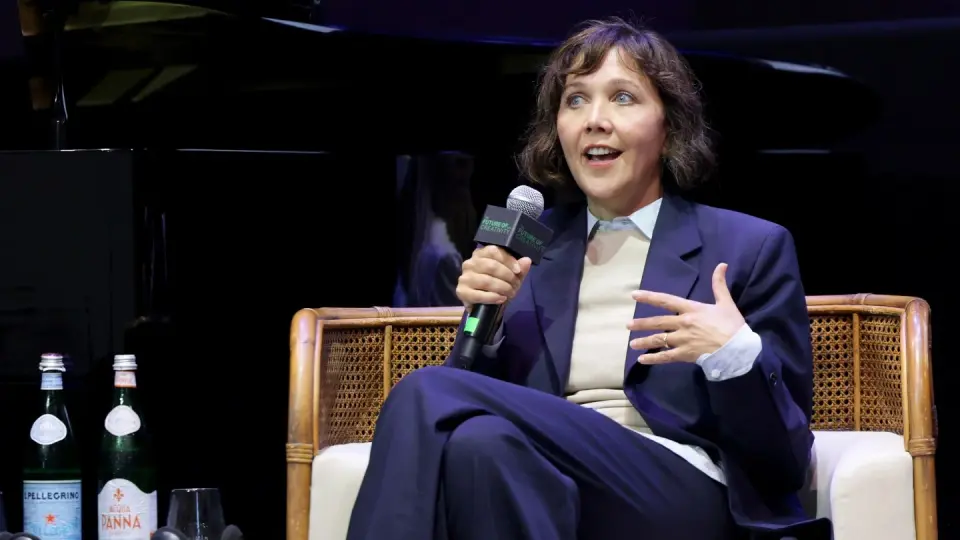
Maggie Gyllenhaal revealed at the Venice Film Festival that she attempted to use AI to recreate Marilyn Monroe for her short film 'Flesh Impact' but discarded the result, stating it lacked the humanity of Dakota Johnson’s live performance. The director criticized AI’s environmental impact and economic implications for traditional filmmaking, arguing that the technology undermines the value of human artistry.
Key points
- Gyllenhaal tried using licensable AI trained on Monroe films to overlay Monroe’s face onto Johnson’s performance but rejected the final output.
- The director stated the AI version 'fundamentally did not work' and killed the emotional core of the project.
- Gyllenhaal raised concerns about AI’s environmental costs, citing data center water usage, and questioned the economic 'democratization' narrative.
- The short film 'Flesh Impact' premiered at Venice on Sept. 7, featuring Johnson and Ellen Burstyn as two versions of Monroe.
- The comments went viral, with Variety and THR reporting on the director’s critique of AI’s role in cinema.
Background
This story follows earlier coverage of 'Flesh Impact,' a 17-minute short film honoring Marilyn Monroe’s centennial, which debuted at the 2026 Venice Film Festival. The project, backed by Genesis and produced for The Cut, features Dakota Johnson as a younger Monroe and Ellen Burstyn as an older version, exploring identity and legacy. Gyllenhaal’s comments come amid broader industry debates about AI’s impact on creative jobs and artistic integrity, as noted in previous festival coverage.
How outlets are covering it
The Hollywood Reporter and Variety both reported Gyllenhaal’s direct quotes, emphasizing her rejection of AI as a creative tool and her concerns about its economic and environmental impact. Vulture highlighted the contrast between AI’s limitations and Johnson’s performance, framing it as a victory for human artistry. The Cut focused on Gyllenhaal’s open-minded approach to testing AI but ultimately dismissing it as inferior. All outlets agreed on the core facts but differed in emphasis: THR and Variety stressed the industry implications, while Vulture and The Cut focused on the artistic outcome.
Why it matters
Gyllenhaal’s public rejection of AI in a high-profile film project signals a growing resistance among filmmakers to AI-driven production, particularly when it undermines human performance. Her critique of AI’s environmental and economic impacts adds to the broader debate about the technology’s role in the creative industries, potentially influencing how studios and producers approach AI integration in the future.
What to watch
The Venice Film Festival concludes on Sept. 12, with awards to be announced. 'Flesh Impact' will continue its festival run, and Gyllenhaal’s comments may spark further discussion at industry events about AI’s place in filmmaking. The project’s reception will likely influence how other directors and producers approach AI in creative projects.
- Maggie Gyllenhaal Was Asked to Use AI to Recreate Marilyn Monroe. But It Flopped Compared to Dakota Johnson The Hollywood Reporter
- AI Can’t Turn Dakota Johnson Into Marilyn Monroe Vulture
- Maggie Gyllenhaal Says She Tried Using AI to Turn Dakota Johnson Into Marilyn Monroe for Short ‘Flesh Impact’ — Then Scrapped It: ‘Fundamentally Did Not Work’ Variety
- Maggie Gyllenhaal Wasn’t Impressed With AI The Cut
- Maggie Gyllenhaal tinkered with AI on her new Marilyn Monroe short film A.V. Club
Want the full story? Read the original reporting
Read on The Hollywood Reporter