
Greengrass’s 'The Uprising' Blends 1381 Revolt with Robin Hood Origin Story
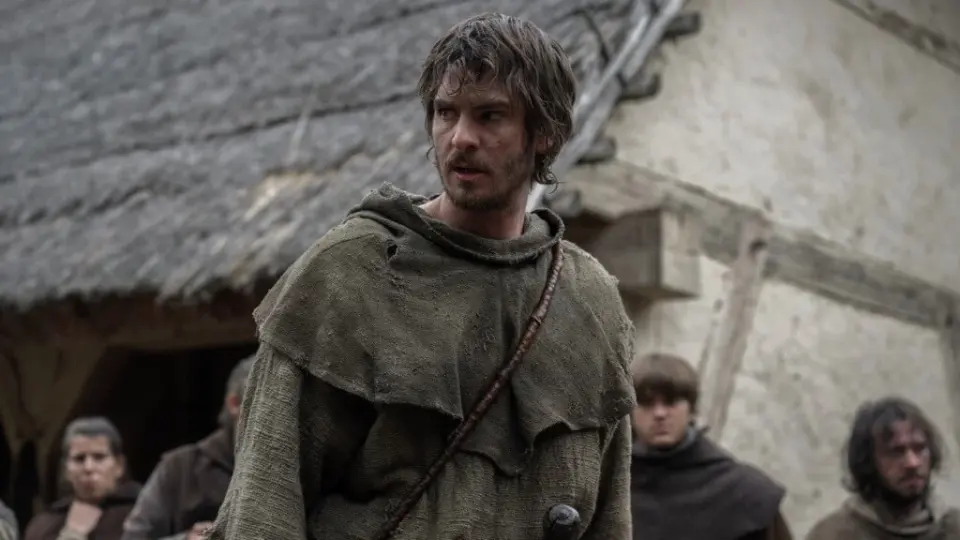
Paul Greengrass’s 'The Uprising' dramatizes the 1381 English Peasants' Revolt through the lens of a fictional serf, Andrew Garfield, who eventually transforms into Robin Hood. While the film uses gritty, handheld cinematography to highlight class warfare and post-plague trauma, critics are divided on whether its modern political parallels and chaotic style effectively convey the historical narrative or dilute its impact.
Key points
- The film centers on a fictional character, Ploughman (Andrew Garfield), and historical leader Wat Tyler (Cosmo Jarvis) during the 1381 revolt.
- Greengrass employs his signature shaky-cam style, which some critics find nauseating and others view as an authentic reflection of mass tumult.
- The narrative concludes with Ploughman adopting the Robin Hood persona, a twist that was a source of marketing confusion prior to release.
- The story highlights the aftermath of the Black Death, where surviving serfs rebel against punitive taxes and labor demands imposed by King Richard II.
- Critics note the film’s attempt to draw parallels between medieval exploitation and modern economic inequality, though execution varies in effectiveness.
Background
Our earlier coverage noted that marketing materials for 'The Uprising' caused confusion by shifting between a historical epic and a Robin Hood tie-in, with UK distributors initially denying the latter connection. Additionally, Andrew Garfield has been involved in other projects this year, including a family adventure and an AI drama, but 'The Uprising' stands out for its gritty, historical focus.
How outlets are covering it
Reviews are sharply divided on the film’s execution. The New York Times critic Jeannette Catsoulis praised the film as a 'Critic’s Pick,' highlighting its grim realism and the powerful, restrained performance by Garfield. In contrast, AV Club’s Jacob Oller gave it a 'D,' arguing that Greengrass’s handheld camera work creates 'nauseating visual noise' and that the film’s attempt to link medieval serfs to modern 'deplorables' feels forced and cringe-inducing. IndieWire’s Christian Zilko offered a more balanced 'B' grade, acknowledging the film’s competent recreation of the historical event but criticizing the 'Robin Hood' epilogue as a contrived attempt to provide a hopeful ending to a historically tragic event. AP News noted the blend of medieval history with a folk hero tale, though the review text was largely obscured by technical data in the source.
Why it matters
The film’s reception highlights the ongoing debate over how historical dramas can effectively translate past events into modern political commentary. The mixed reviews suggest that while audiences may be interested in stories of class struggle, the method of execution—particularly the use of modern slang and chaotic cinematography—can undermine the intended emotional impact. Furthermore, the marketing confusion surrounding the Robin Hood connection illustrates the risks of ambiguous branding for historical films that blend fact and fiction.
What to watch
The film is currently in wide release in the United States. Future discussions may focus on whether the 'Robin Hood' epilogue will lead to further franchise development or if it will remain a standalone historical drama. Additionally, the film’s performance at the box office will be watched to see if its gritty, political tone resonates with general audiences or if it remains a niche historical piece.
- The Uprising turns a medieval insurrection into chaotic modern myth A.V. Club
- ‘The Uprising’ Review: Sackcloth and Clashes The New York Times
- ‘The Uprising’ Review: Paul Greengrass Turns the Peasants’ Revolt of 1381 Into an Unapologetic Work of 21st Century Populism IndieWire
- Movie Review: Medieval action drama 'The Uprising' struggles under a Robin Hood origin twist AP News
- The Uprising review – the peasants are revolting in muddled historical epic The Guardian
Want the full story? Read the original reporting
Read on A.V. Club