
Araki Returns with 'I Want Your Sex,' a Satirical Look at Generational Intimacy
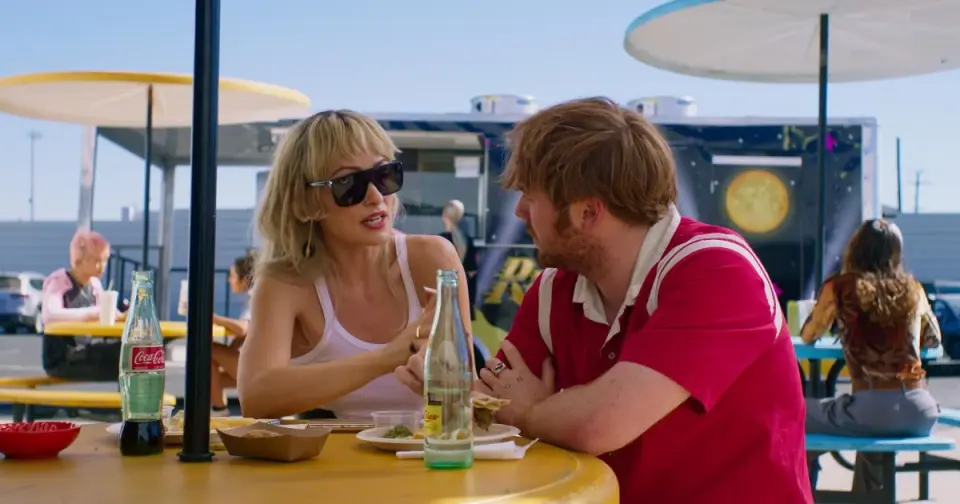
Gregg Araki returns to feature filmmaking after a 12-year hiatus with 'I Want Your Sex,' a provocative comedy starring Olivia Wilde and Cooper Hoffman. The film explores a power-imbalanced relationship between a dominant pop artist and her submissive assistant, using it to critique modern sexual anxiety and generational divides. Critics praise the bold performances and satirical edge, while the director frames the project as an invitation to embrace messy, imperfect human experiences rather than curated perfection.
Key points
- The film, co-written by Araki and Karley Sciortino, opens in wide release on July 31, 2026.
- Olivia Wilde plays Erika Tracy, a manipulative and sardonic celebrity artist, while Cooper Hoffman plays Elliot, a 23-year-old UCLA graduate and studio assistant.
- The narrative centers on a BDSM dynamic where Erika dominates Elliot, contrasting with his submissive relationship with a medical student played by Charli XCX.
- Araki flipped the original gender roles of the script to avoid depicting a woman being dragged by her hair, creating a female dominatrix/male submissive dynamic.
- The movie includes sarcastic wraparound scenes with Elliot explaining the affair to detectives played by Johnny Knoxville and Margaret Cho.
- Araki cites reports that 30% of Gen Z has not had sex in a year as a primary inspiration for the film's themes.
Background
This release marks Araki's first feature film since 'White Bird in a Blizzard' (2014). Recent coverage highlighted the film's premiere in Los Angeles and discussions around Wilde's role in age-gap romances. Earlier reports noted Cooper Hoffman's family reactions to the graphic nature of the scenes, contrasting with his view of the film as a study in vulnerability. The project has been in development for over a decade, evolving from a 'Secretary'-style concept into a satire of the art world and modern dating.
How outlets are covering it
The Los Angeles Times critic Amy Nicholson views the film as a 'devilish caper' that celebrates 'sloppy mistakes,' praising Wilde's performance as a modern vixen and Hoffman's commitment to playing a 'simp.' She notes the film's artificiality in its sexual scenes, suggesting Araki critiques the characters' tactics. GQ reporter Ariel LeBeau emphasizes Araki's intent to provoke conversation about Gen Z's sexual caution, framing the film as a 'sincere invitation' to reject perfectionism. LeBeau highlights Araki's casting choices, noting his long-standing admiration for Wilde and his surprise at Hoffman's gravitas. While the LA Times focuses on the film's satirical and aesthetic elements, GQ centers on the director's philosophical arguments regarding intimacy and generational anxiety.
Why it matters
The film serves as a cultural touchstone for debates surrounding generational attitudes toward sex, power dynamics, and vulnerability. It challenges contemporary 'think pieces' about predatory grooming by presenting a complex, non-condemnatory view of a flawed relationship. The release also signals a shift in Hollywood's approach to erotic comedy, moving away from traditional male-dominated narratives toward more nuanced explorations of female dominance and male submission, reflecting broader changes in audience expectations and industry standards.
What to watch
The film is currently in wide release in the US. Araki has indicated he is not returning to shooting on celluloid, marking a shift in his production methods. The success of this film may influence future projects involving Wilde and Hoffman, both of whom are noted for their willingness to take creative risks. The ongoing discourse around the film's themes may continue to shape conversations about intimacy and generational differences in media and culture.
Want the full story? Read the original reporting
Read on latimes.com