
The Social Reckoning Opens to Praise for Dialogue but Criticism for Lack of Tension
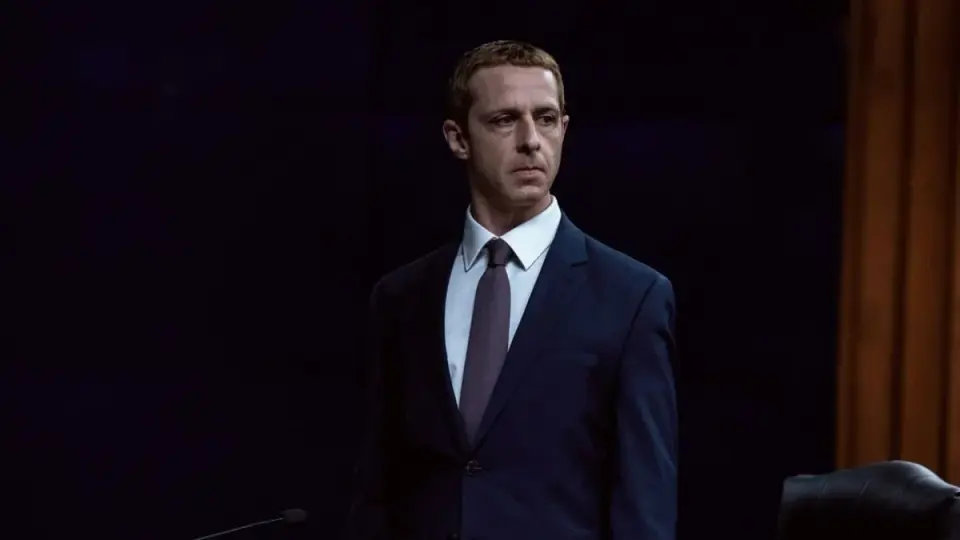
Aaron Sorkin’s new film, The Social Reckoning, opens in US and UK theaters on October 9, 2026. The movie dramatizes the 2019-2021 period involving whistleblower Frances Haugen and journalist Jeff Horwitz, who exposed internal Facebook documents known as the 'Facebook Files.' While critics acknowledge the relevance of the subject matter and the sharp dialogue, reviews are largely negative, citing a lack of narrative tension, visual flatness, and a weak performance by Jeremy Strong as Mark Zuckerberg. The film is viewed as a disappointing sequel to the 2010 hit The Social Network, lacking the dynamic direction of David Fincher and the dramatic urgency of its predecessor.
Key points
- The Social Reckoning, written and directed by Aaron Sorkin, releases on October 9, 2026, in the US and UK.
- The film centers on Frances Haugen (Mikey Madison) and Jeff Horwitz (Jeremy Allen White), dramatizing the leak of internal Facebook documents in 2021.
- Jeremy Strong plays Mark Zuckerberg, a role critics describe as 'dead-eyed' and lacking the inner life of Jesse Eisenberg’s 2010 performance.
- The narrative structure alternates between 2019 and 2021, including a recreation of the January 6 Capitol riot, but is criticized for being static and lacking tension.
- The film faces a crowded market of tech-critical releases, including documentaries on Elon Musk and biopics of Sam Altman and Elizabeth Holmes.
- Critics note that while the film exposes Facebook’s algorithmic harms, it fails to deliver a satisfying 'reckoning' or significant narrative climax.
Background
The Social Reckoning is a quasi-sequel to the 2010 film The Social Network, which was directed by David Fincher and written by Aaron Sorkin. The original film focused on the founding of Facebook and the legal disputes among its creators. Sorkin had previously directed Molly’s Game in 2017 and has been approached multiple times for a Facebook sequel before finalizing this project. The film arrives amid a wave of media scrutinizing tech giants, including Luca Guadagnino’s Artificial and Alex Gibney’s documentary Musk. Earlier archive coverage noted Sorkin’s tendency to uplift institutions and the film’s release amidst mixed reviews regarding its polemical tone.
How outlets are covering it
AV Club critic Monica Castillo rates the film a B-, praising Mikey Madison’s nuanced performance but calling Jeremy Strong’s portrayal of Zuckerberg a 'career-worst' and 'lobotomized.' She notes the film feels like a 'punchy two-hour episode of television' due to its reliance on exposition-heavy dialogue. The Atlantic’s David Sims argues the film lacks the 'alienation' that powered The Social Network, describing it as a 'perfunctory coda' with visually 'flat and gray' cinematography. WIRED’s Miles Klee suggests the film 'already feels irrelevant' given the current political climate, though he acknowledges the bravery of the whistleblower narrative. BBC critic Nicholas Barber gives the film two stars, stating it is 'unlikely to influence anyone' and lacks the urgency of investigative dramas like Spotlight. All outlets agree that while the subject matter is significant, the execution fails to match the energy of its predecessor or the gravity of the real-world events depicted.
Why it matters
The film highlights the ongoing public debate over social media’s impact on mental health, political polarization, and misinformation. It serves as a cultural touchstone for the 'tech reckoning' era, reflecting societal anxieties about corporate power and the role of journalism in holding tech giants accountable. The mixed critical reception underscores the difficulty of translating complex, real-world scandals into compelling cinematic narratives without losing dramatic tension.
What to watch
The film is currently in wide release in US and UK cinemas. Box office performance will be monitored against other tech-critical films like Digger and Artificial. Industry analysts will watch whether the film’s critical reception impacts its long-term cultural impact or if it remains a niche entry in the broader discourse on social media regulation.
- Mark Zuckerberg disappears from his own story in The Social Reckoning A.V. Club
- What Aaron Sorkin Forgot About ‘The Social Network’ The Atlantic
- ‘The Social Reckoning’ Already Feels Irrelevant WIRED
- The Social Reckoning review: Aaron Sorkin's drama puts Facebook on trial, but it won't change anyone's minds ★★☆☆☆ BBC
- The Social Reckoning review – Aaron Sorkin’s jittery sequel with all-new evil puppet Zuckerberg The Guardian
Want the full story? Read the original reporting
Read on A.V. Club