
Critics Praise Visuals but Condemn 'By Any Means' for Historical Inaccuracy and Racial Tropes
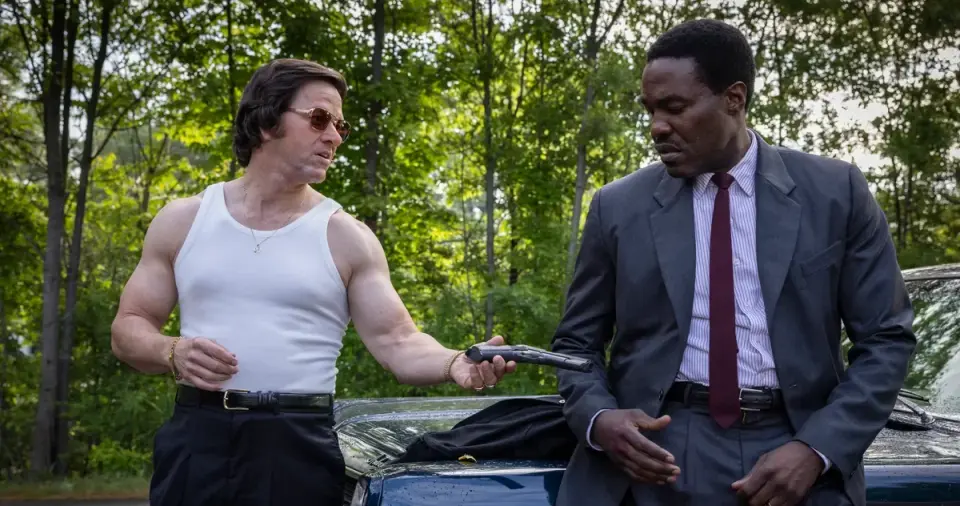
Elegance Bratton’s new film 'By Any Means' has drawn sharp criticism for its historical inaccuracies and reliance on 'white savior' tropes, despite praise for its cinematography. The movie, starring Mark Wahlberg and Yahya Abdul-Mateen II, depicts a fictional partnership between a mob enforcer and an FBI agent in 1960s Mississippi. While the visual style is lauded, critics argue the script undermines its themes by prioritizing violent action over nuanced character development, and relatives of the real-life victims have called for a boycott.
Key points
- The film is directed by Elegance Bratton and written by Sascha Penn, marking Bratton’s second narrative feature after 'The Inspection.'
- It is based on the real-life murder of civil rights activist Vernon Dahmer in 1966, but introduces a fictional FBI agent, Wayne Strider, played by Yahya Abdul-Mateen II.
- Mark Wahlberg plays Gregory Scarpa, a real-life mob enforcer who allegedly worked with the FBI, but the film depicts him using torture to extract information, a method not historically confirmed for this specific case.
- Critics note that the film’s central conflict between nonviolent resistance and violent retribution is handled reductively, with the protagonist’s conversion to violence serving as the primary narrative arc.
- Relatives of Vernon Dahmer have criticized the film as 'mostly fiction' and have called for a boycott, citing 'white hero savior' tropes.
Background
Elegance Bratton’s previous feature, 'The Inspection' (2022), was a semi-autobiographical drama about a gay Black man in the Marines, praised for its spiky and unpredictable nature. 'By Any Means' is his second feature, produced by Paramount Pictures. The film’s script previously appeared on the Black List. The real-life Gregory Scarpa died in 1994, and while his involvement with the FBI is widely reported, the agency has never officially acknowledged the specific collaborations depicted in the film.
How outlets are covering it
Vulture’s Alison Willmore criticizes Mark Wahlberg’s performance as hammy and unconvincing, noting that his prosthetic nose and bulked-up physique do not successfully transform him into the character. She argues that the film fails to explore the moral complexities of using violence against oppression, instead presenting a 'mess of a thing' burdened by poor acting. The New Yorker’s Richard Brody acknowledges the film’s powerful moments but criticizes it for 'convenient incompetence,' where the plot ignores realistic consequences of violence. He notes that the film’s depiction of a functioning federal government in the 1960s feels like 'agonizing nostalgia' compared to the current political climate. The Guardian’s reviewer praises the film’s visual flair and grim effectiveness but criticizes it for embellishing history, such as depicting the death of Ellie Dahmer, who is actually alive. Variety’s Natalia Winkelman compares the film unfavorably to 'Green Book,' calling it a 'downright relic' that relies on crude racial healing tropes and fails to provide depth to its characters, despite Bratton’s strong cinematography.
Why it matters
The film highlights ongoing debates about the portrayal of civil rights history in cinema, particularly regarding the use of violence and the representation of Black characters. The backlash from the Dahmer family underscores the sensitivity of depicting real-life tragedies and the potential for historical revisionism in entertainment. The film’s reception also reflects broader criticisms of Hollywood’s tendency to prioritize action over nuance in historical dramas, raising questions about the ethical responsibilities of filmmakers when adapting true stories.
What to watch
The film is currently in theaters in the US, having opened on September 4, 2026. It is expected to face continued controversy from the Dahmer family and civil rights advocates. Critics will likely monitor its box office performance and any potential awards recognition, particularly given Mark Wahlberg’s previous Oscar nominations. The film’s release may also spark further discussions about the accuracy of historical dramas and the impact of 'white savior' narratives on public perception of civil rights history.
- Mark Wahlberg Wishes He Were Unrecognizable in By Any Means Vulture
- ‘By Any Means’ Review: Bending the Law to Enforce It The New York Times
- The Principled Cynicism of “By Any Means” The New Yorker
- By Any Means review – Mark Wahlberg and Yahya Abdul-Mateen II drama provokes with horror of 1960s racism theguardian.com
- 'By Any Means' Review: A Bluntly Drawn Historical Thriller variety.com
Want the full story? Read the original reporting
Read on Vulture