
Andrew Haigh's 'A Long Winter' Transplants 1950s Grief to the Rockies
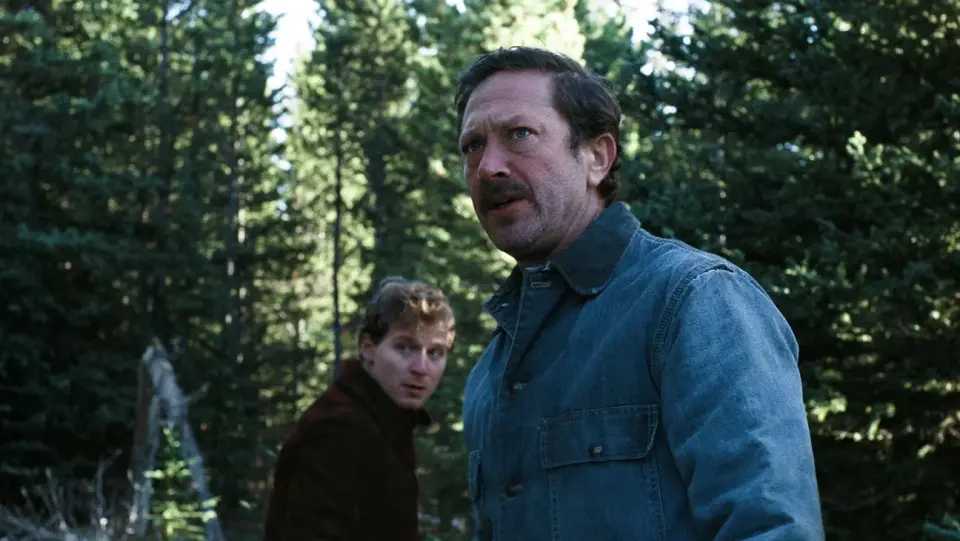
Andrew Haigh’s new drama, 'A Long Winter,' premiered at the Telluride Film Festival, adapting Colm Tóibín’s novella from the Spanish Pyrenees to 1950s Colorado. The film follows a family in a remote cabin after the mother’s disappearance, focusing on the son’s queer awakening and the father’s rigid isolation. Critics praised the restrained performances and cinematography but debated whether the slow pace suffocates the narrative.
Key points
- The film is distributed by Mubi and produced by The Bureau and Nomadic Pictures.
- It relocates the original story’s setting from the 1930s Spanish Pyrenees to the 1950s Rocky Mountains, filmed in the Canadian Rockies.
- Fred Hechinger stars as Mike, a young man navigating his sexuality and family dynamics after his mother, Louise, vanishes during a snowstorm.
- Ebon Moss-Bachrach plays Lester, the stoic father, while Caitríona Balfe appears as the alcoholic mother Louise.
- The runtime is 1 hour and 59 minutes, with cinematography by André Turpin and music by Paul Haslinger.
Background
Andrew Haigh previously directed 'All of Us Strangers' and 'Lean on Pete,' both noted for their intimate character studies. This project marks his first feature since 'All of Us Strangers,' continuing his exploration of queer identity and grief in isolated settings. The adaptation rights were secured nearly two decades ago, well before Haigh’s recent critical successes.
How outlets are covering it
The Hollywood Reporter’s David Rooney praised the film as 'restrained but deeply felt,' highlighting the ensemble’s performances and the immersive sense of place. The Guardian’s review emphasized the 'subversive' nature of the grief, noting a 'bizarre and parodic new mood of bachelor freedom' that emerges after the mother’s disappearance. IndieWire’s David Ehrlich argued that Haigh’s signature restraint 'suffocates' the protagonist, making the film too constrictive to support the character’s growth. Variety’s Owen Gleiberman described it as a 'moody act of cinematic storytelling,' praising the cinematography but noting the austere tone risks alienating audiences. All outlets agreed on the strong performances, particularly Hechinger and Moss-Bachrach, but diverged on whether the slow pace enhanced or hindered the emotional impact.
Why it matters
The film offers a nuanced portrayal of queer identity in a pre-Stonewall era, avoiding typical melodrama in favor of subtle, internal conflict. It highlights the tension between traditional masculinity and emerging self-discovery, providing a fresh perspective on 1950s American life through a contemporary lens. The critical debate over its pacing reflects broader discussions about the balance between artistic restraint and narrative momentum in independent cinema.
What to watch
Mubi will handle distribution, though no specific release date has been announced. The film’s reception at Telluride may influence its trajectory at upcoming festivals, including the New York Film Festival, which is currently running. Industry attention will focus on whether the critical praise translates to audience engagement and potential awards recognition.
- 'A Long Winter' Review: Fred Hechinger in Tender Andrew Haigh Drama The Hollywood Reporter
- A Long Winter review – hope, desire and subversion in Andrew Haigh’s beautiful winter western The Guardian
- ‘A Long Winter’ Review: Andrew Haigh Goes Cold with an Immaculately Crafted Coming-of-Age Story Too Restrained for Its Own Good IndieWire
- 'A Long Winter' Review: The Vultures Are Circling In Andrew Haigh's Middling Drama [Telluride] The Playlist
- 'A Long Winter' Review: A Moody Act of Cinematic Storytelling Variety
Want the full story? Read the original reporting
Read on The Hollywood Reporter