
Storms and Rising Costs Shape Final Days of New York State Fair
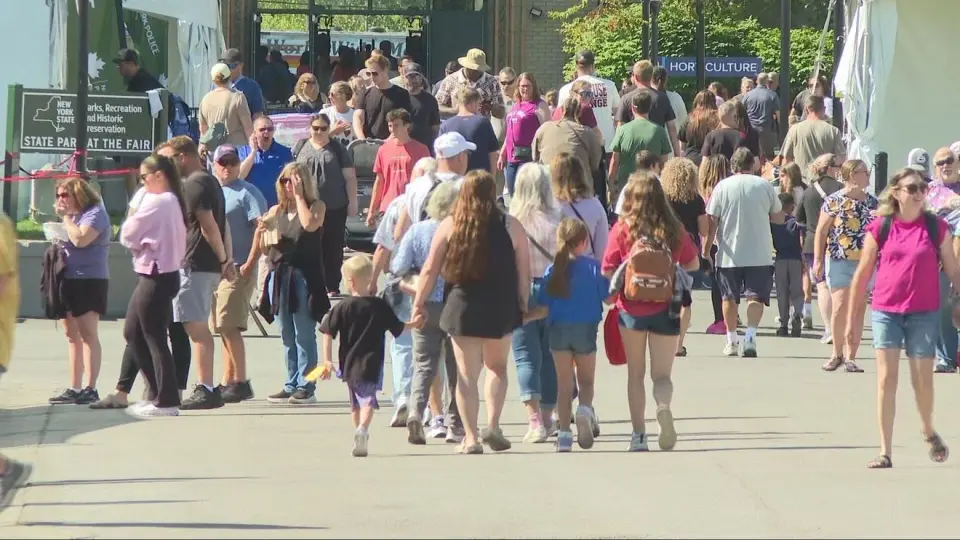
The 2026 New York State Fair in Syracuse concluded with attendance figures approaching 2025 levels, despite severe weather disruptions and rising operational costs for vendors. The 13-day event, which ran from August 26 through September 7, drew over one million visitors and featured a headline performance by Third Eye Blind, which attracted approximately 49,000 attendees. While storms caused temporary flooding in the Restaurant Row area and forced brief gate closures, the fair maintained its status as the cheapest state fair in the nation, with admission prices remaining lower than pre-pandemic levels. Fair Director Julie LaFave highlighted the event's focus on accessibility and local agricultural promotion, noting that 100% of wine and 90% of beer sold must be New York-made. Although some vendors reported shrinking profit margins due to inflation, the fair successfully balanced traditional low-cost entry with new initiatives, including expanded sensory spaces and a retired alcohol tax that benefited local producers.
Key points
- Attendance for the 2026 New York State Fair approached the 2025 benchmark, with the event drawing over one million visitors across 13 days.
- Third Eye Blind performed for a crowd of approximately 49,000 people, marking a significant draw for the fair's final weekend.
- Severe storms caused flooding in the Restaurant Row area, leading to brief gate closures and early evening shutdowns, though the fair generally remained open.
- Fair Director Julie LaFave emphasized that admission prices remain lower than pre-pandemic levels, maintaining the fair's status as the most affordable in the country.
- Vendors reported increased costs for labor and insurance, though the removal of a 25% alcohol tax in 2026 provided some financial relief.
- The fair expanded its accessibility features, including three sensory spaces and the nation's first fully accessible restroom with an attendant.
Background
The New York State Fair is a long-standing tradition dating back to 1841, typically held in Syracuse over a two-week period in late August and early September. Recent archive coverage notes that while other state fairs, such as the Minnesota State Fair, have set record attendance highs in 2026, the New York fair has faced its own challenges, including weather-related disruptions earlier in the season. Previous reports indicated that gates were briefly closed due to flooding and severe thunderstorm forecasts, highlighting the logistical difficulties of hosting a large-scale outdoor event in the region. The fair operates under the New York State Department of Agriculture and Markets, aiming to showcase local agricultural products and small businesses while maintaining low entry costs for residents.
How outlets are covering it
WSTM reported that overall crowds were near 2025 levels and highlighted the impact of storms on the Restaurant Row area, alongside the large turnout for Third Eye Blind. Spectrum News focused on the economic pressures facing vendors, noting that rising food costs and labor expenses have squeezed profit margins, though the removal of a 25% alcohol tax in 2026 offered some relief. City & State New York provided a broader perspective through an interview with Fair Director Julie LaFave, emphasizing the fair's commitment to accessibility, local sourcing, and maintaining low admission prices despite inflation. While WSTM and Spectrum News highlighted specific operational and financial challenges, City & State focused on the strategic and logistical efforts to keep the event inclusive and affordable for New Yorkers.
Why it matters
The New York State Fair serves as a major cultural and economic hub for the region, drawing over one million visitors annually. Its ability to maintain low admission prices and support local vendors despite rising costs and severe weather underscores the importance of public subsidies and strategic planning in sustaining traditional community events. The fair's focus on accessibility and local agricultural promotion also reflects broader state priorities in supporting small businesses and ensuring inclusive public spaces. As inflation and extreme weather events become more frequent, the fair's performance offers a model for how large-scale public events can adapt to economic and environmental pressures while preserving their cultural significance.
What to watch
Fair Director Julie LaFave indicated that the fair will continue to evolve, with plans to celebrate the 100th anniversary of the Haudenosaunee village and the agricultural museum in future years. The fair is expected to maintain its low admission prices and continue expanding accessibility features, including sensory spaces and sign language interpretation. Vendors may face ongoing challenges related to inflation, but the fair's commitment to supporting local New York producers and small businesses is likely to remain a central focus. Future events may also incorporate new competitions and exhibits to align with national themes, such as America 250, while maintaining traditional attractions like the butter sculpture and low-cost food items.
- Fair crowds near 2025 mark as storms flood Restaurant Row, Third Eye Blind draws 49K WSTM
- More than 960,000 people visit the 2026 NYS Fair, most since before Covid pandemic syracuse.com
- Retired alcohol tax among interesting factors for food vendors at New York State Fair Spectrum News
- Last day at the Fair: 5 Hidden gems to find before the New York State Fair comes to an end WSYR
- Meet the brains behind the State Fair City & State New York
Want the full story? Read the original reporting
Read on WSTM