
New Bacterial Defense System Uses Decoy Cyclic Nucleotides to Fight Phages
TL;DR Summary
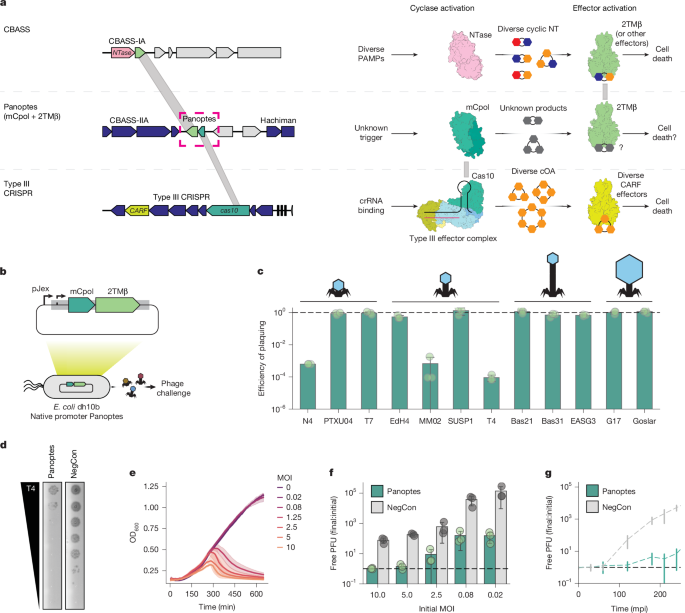
A miniature CRISPR–Cas10 enzyme called mCpol produces cyclic di-AMP to inhibit a bacterial toxin, 2TMβ, thereby conferring antiphage immunity through a toxin–antitoxin mechanism that detects phage anti-immunity proteins and prevents cell death during infection.
- A miniature CRISPR–Cas10 enzyme confers immunity by inhibitory signalling Nature
- The Panoptes system uses decoy cyclic nucleotides to defend against phage Nature
- Bacterial Defense Mechanism Identified Using CRISPR-Cas10-Related System with mCpol and 2TMβ geneonline.com
- Panoptes Deploys Decoy Cyclic Nucleotides Against Phages Bioengineer.org
- Phages Use Decoy Cyclic Nucleotides to Evade Bacterial Panoptes Defense System geneonline.com
Reading Insights
Total Reads
0
Unique Readers
14
Time Saved
64 min
vs 65 min read
Condensed
100%
12,929 → 34 words
Want the full story? Read the original article
Read on Nature