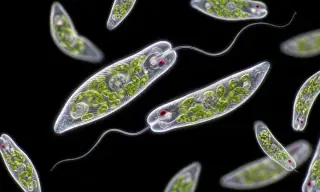
A routine sequencing experiment revealed that a freshwater protist, Oligohymenophorea sp. PL0344, uses two genetic stop signals to code for different amino acids, challenging the assumption that these signals evolve together.
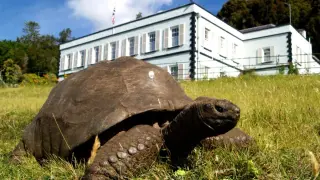
Scientists have sequenced the genome and epigenome of Jonathan, the 194-year-old giant tortoise on Saint Helena, finding that his mitochondrial genes remain genetically youthful. This research, published in Science Advances, suggests that stable epigenetic patterns may help explain his extreme longevity and could inform future human anti-aging therapies.
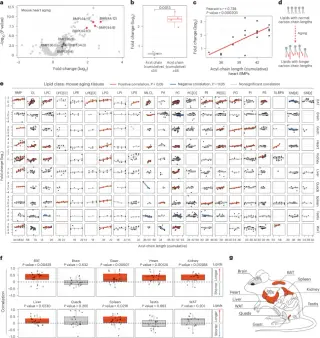
A study in Nature Aging identifies the lengthening of lipid acyl chains as a conserved hallmark of aging in mice, worms, flies, and humans. The research links this molecular shift to the gene Plb1, which regulates lipid remodeling. Interventions that shorten lipids, such as dietary restriction or genetic knockdown, extend lifespan, suggesting a causal link between lipid chain length and longevity.
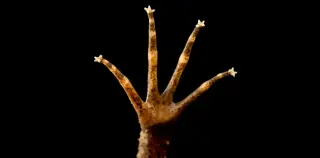
A new analysis highlights how amphibians and reptiles possess specialized sensory organs that detect stimuli humans cannot perceive, including infrared radiation, magnetic fields, and subtle water vibrations. These adaptations allow animals like the Surinam toad and pit vipers to hunt and navigate effectively in low-visibility environments. The findings emphasize that biological sensing extends far beyond the traditional five senses, with species evolving unique mechanisms to interact with their physical surroundings.
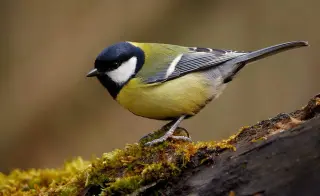
Great tits (Parus major) exhibit complex behaviors including predation on bats, cultural conformity, and urban adaptation. Research shows they hunt hibernating bats during food scarcity, kill competitors for nest sites, and develop local traditions through social learning. Urban environments influence their song pitch, plumage color, and sleep patterns, while genetic factors contribute to boldness and extra-pair paternity.
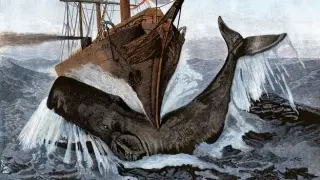
New research confirms that the spermaceti organ in sperm whales' heads functions as a battering ram, capable of delivering impacts strong enough to sink ships. This validates a theory proposed by 19th-century whaler Owen Chase, who survived the sinking of the Essex, the incident that inspired Herman Melville's Moby Dick. While the organ was historically harvested for oil, its role in combat and social behavior is only now being fully understood through modern drone footage and biomechanical analysis.
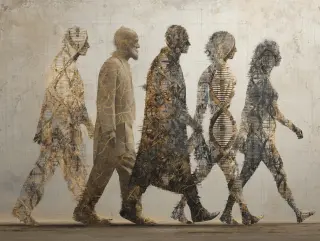
University of Maine researchers Timothy Waring and Zachary Wood argue that human evolution is shifting from genetic to cultural mechanisms, with institutions and technology now driving adaptation faster than natural selection. While they propose this could lead to a 'cultural superorganism,' peer-reviewed critiques challenge whether human societies meet the biological criteria for such an evolutionary transition.
Louisiana State University has secured a $20 million grant to investigate the biological mechanisms behind some of nature’s fastest organisms. The funding aims to unlock secrets related to speed in biological systems, potentially advancing fields such as robotics, medicine, or materials science. This significant investment highlights LSU’s growing role in cutting-edge scientific research within the Baton Rouge area.
Anthropic announced that its AI model, Claude, autonomously discovered a new enzyme system in bacterial DNA that resembles the CRISPR gene-editing mechanism. The discovery, made over 21 hours by nearly 950 AI agents, is the first result from Anthropic’s new life sciences laboratory. While the system shares structural similarities with CRISPR, its function remains unproven, and experts are divided on its scientific significance.
Discover Wildlife highlights ten animal species that engage in autophagy, the consumption of their own body parts. Examples include lizards eating shed tails, spiny mice gnawing off skeletal remains, and octopuses consuming tentacles. Other cases involve snakes eating their tails, mammals eating placentas, ladybirds consuming non-viable eggs, primates eating nasal mucus, crickets eating wings, and spiders gnawing off reproductive organs. These behaviors serve various functions, from resource recycling and infection prevention to nutritional recovery and mate competition.
Anthropic announced that its AI model Claude autonomously discovered a new enzyme system in bacteriophages, a finding the company compares to the development of CRISPR. The discovery, made by nearly 950 AI agents over 21 hours, is the first result from Anthropic’s new wet lab and aims to demonstrate the model’s scientific utility ahead of its public listing.
A newly identified amoeba, Incendimentoeba cascadensis, has broken the previous temperature limit for eukaryotic life by surviving and reproducing at 63°C (145°F). Discovered in geothermal streams at California’s Lassen Volcanic National Park, this organism challenges previous assumptions about the thermal stability of complex cell membranes and offers new insights into the potential for life in extreme environments.
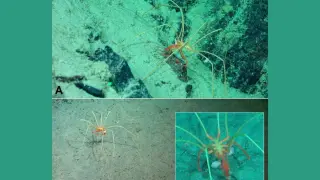
Scientists using a robotic submersible observed amphipods riding on a giant sea spider (Colossendeis colossea) about 10,000 feet beneath the Chilean margin, marking the first direct observation of mobile hitchhiking between these species. The researchers suggest the behavior could aid dispersal, mating, or foraging, pointing to a potentially common but underrecognized deep-sea ecological strategy and highlighting the need for more in‑situ studies.
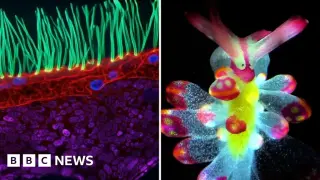
Nikon's Small World In Motion invites global entries to showcase micro-life on film. The winner, Dr Ning Xu of Tsinghua University, magnified a sample 100× to reveal cilia in the airways of a child with a rare genetic disease, using colored light waves; runners-up included a roundworm vs. a single-celled organism and jellyfish larvae in droplets, with other notable clips like bioluminescent algae and a tiny sea slug.
Addy Pross argues that life may be viewed as a fourth, dynamic state of matter—an open, energy-driven system with continual molecular turnover that self-organizes toward function. While solids, liquids, and gases follow kinetic theory and phase transitions, living systems exhibit directed self-assembly, replication, and energy dissipation that current physical theory cannot fully explain. Advances in non-equilibrium thermodynamics and chemical theory suggest reframing life as a dynamic state rather than a specific material, offering a path to unify physics and biology.