
Submucosal fibroblasts drive early oncofetal plasticity at the invasive front in colorectal cancer
TL;DR
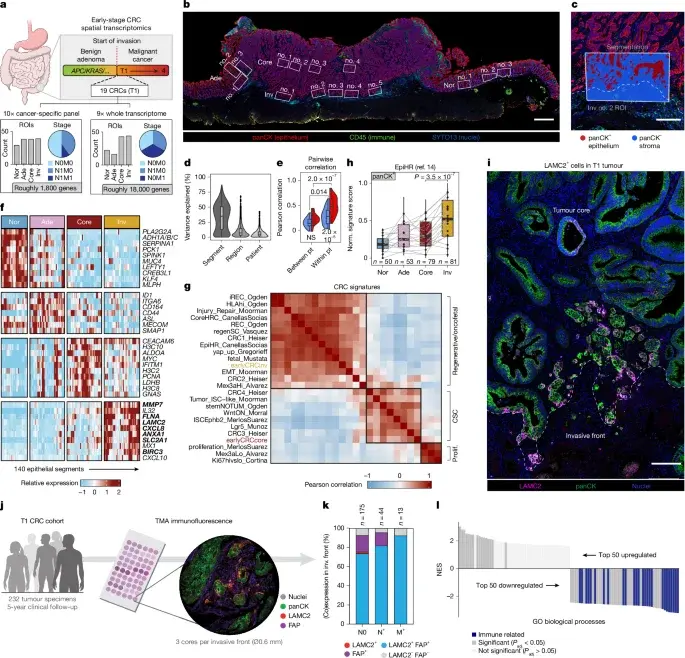
The study shows that metastasis-associated oncofetal cell states arise at the very onset of invasion in colorectal cancer and are shaped by interactions with submucosal fibroblasts. Using multiregional organoids, spatial transcriptomics, and organoid–fibroblast co-cultures, it demonstrates that trophocyte-like cancer-associated fibroblasts at the invasive front induce these fetal-like states, establishing that microenvironmental context—not just tumor genetics—dictates when and where oncofetal plasticity first appears. Although common in early cancers, additional bottlenecks such as immune evasion explain why many lesions do not metastasize.
Topics:healthcancer-research#cancer-associated-fibroblasts#cancer-research#colorectal-cancer#invasive-front#oncofetal-plasticity#tumor-microenvironment
Want the full story? Read the original reporting
Read on Nature