
Cary Student Wins $5,000 Scholarship for AI Alzheimer’s Detection Research
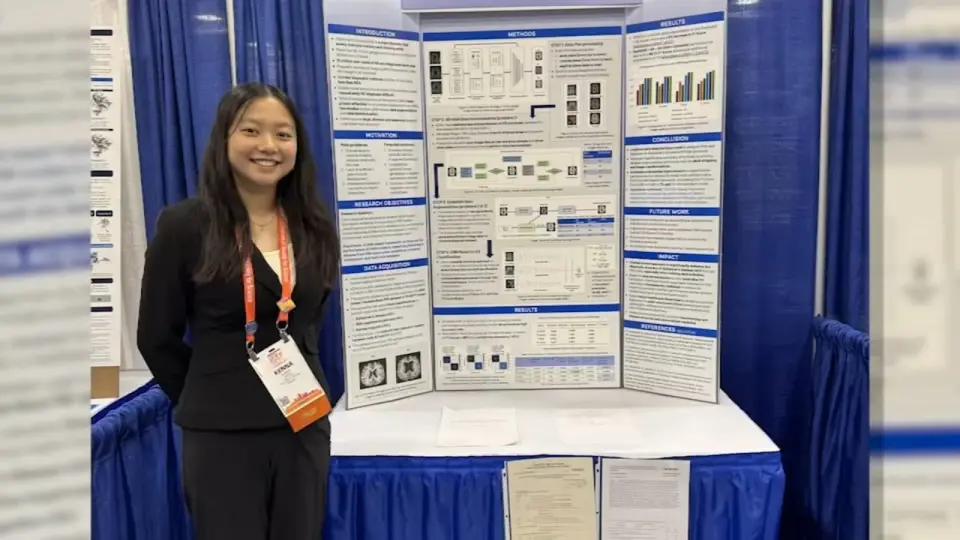
Kenna Zhang, a recent Cary Academy graduate, won the top prize in the Alzheimer's Foundation of America’s 2026 Teen Alzheimer’s Awareness Scholarship Contest. The award includes a $5,000 grant and national recognition for her work in using artificial intelligence to improve early detection of the disease. Zhang, who is set to attend MIT this fall, developed her research after her grandmother was diagnosed at a late stage. Her projects focus on reducing bias in AI diagnostics and improving screening access in rural areas. The foundation noted that over 1,400 students competed for the awards, which totaled more than $73,000 across 96 winners.
Key points
- Kenna Zhang won first place in the video category of the 2026 Teen Alzheimer’s Awareness Scholarship Contest, receiving a $5,000 scholarship.
- Zhang is a recent graduate of Cary Academy and will begin studies at the Massachusetts Institute of Technology in the fall.
- Her motivation stems from her grandmother’s late-stage diagnosis, which Zhang believes could have been detected earlier.
- During high school, Zhang completed three independent research projects focused on using AI to detect Alzheimer’s disease more accurately.
- One project addressed potential biases in AI systems regarding patient biological or genetic characteristics.
- Another project explored training AI models for rural clinics with limited patient data.
Background
Recent public attention on Alzheimer’s disease has increased, highlighted by Captain Chesley Sullenberger’s announcement of his early-stage diagnosis in August 2025. His disclosure emphasized the importance of awareness and the potential for treatments to slow symptom progression. Additionally, in August 2026, concerns arose regarding the cancellation of NIH grants related to brain health and discrimination, highlighting the political sensitivity surrounding Alzheimer’s research funding. Scientific advancements, such as UK research showing that blocking brain immune cells can restore sleep in mouse models, also underscore the ongoing search for new therapeutic targets and biomarkers.
Why it matters
Early detection of Alzheimer’s disease is critical for managing symptoms and improving patient outcomes. Zhang’s work addresses gaps in diagnostic accessibility, particularly for rural and underserved populations, by leveraging artificial intelligence to analyze diverse data types. Her recognition highlights the potential for young researchers to contribute to solving complex medical challenges through innovative technology. The scholarship also serves as a model for how personal experiences can drive scientific innovation in public health.
What to watch
Zhang will begin her studies at MIT in the fall, where she intends to continue her research on improving early Alzheimer’s diagnosis. She aims to expand access to screening tools in underserved communities and further develop methods that combine different forms of medical data for more accurate machine-learning diagnoses. Her work may contribute to broader efforts in neurodegenerative disease diagnosis and public health advocacy.
Want the full story? Read the original reporting
Read on ABC11 News