Researchers at University College London have identified a previously unknown network of microscopic channels in the brain that may facilitate the removal of toxic proteins. This discovery, detailed in a preprint on bioRxiv, suggests a new mechanism for clearing waste like amyloid beta and tau, potentially offering insights into Alzheimer's disease progression.
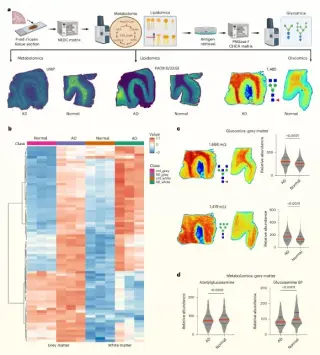
A new study from the University of Florida suggests that glucosamine, a common over-the-counter joint supplement, may accelerate cognitive decline in individuals with Alzheimer’s disease or mild cognitive impairment. Researchers found that glucosamine use is associated with a 25% higher risk of progressing to dementia and increased mortality in dementia patients. The study links this to 'hyperglycosylation,' an overactive sugar-tagging process in the brain, though it notes that observational data cannot prove causality and calls for clinical trials.
A University of Florida study published in Nature Metabolism finds that glucosamine use is associated with a 25% higher risk of progression from mild cognitive impairment to dementia. The research suggests the supplement may disrupt glycosylation, a process where sugar chains attach to proteins, potentially interfering with nerve cell communication in brains already affected by Alzheimer's-like changes. While observational data cannot prove causality, the findings highlight a potential safety signal for individuals with existing cognitive issues.
A new study published in Nature Metabolism indicates that glucosamine, a widely used joint supplement, is associated with a 25% higher risk of progression from mild cognitive impairment to dementia. Researchers at the University of Florida found that the supplement may exacerbate abnormal sugar-tagging processes in the brain, though causality remains unproven.
Recent studies link specific dietary habits to increased dementia risk. Consuming 25 grams of processed meat daily is associated with a 44% higher risk of all-cause dementia and a 52% higher risk of Alzheimer's. Other risk factors include sugar-sweetened beverages, fried fish, refined carbohydrates, and high saturated fat intake. Experts suggest replacing 10% of ultra-processed food calories with whole foods could lower dementia risk by 19%.
Recent research indicates that obstructive sleep apnea (OSA) in older adults often presents with memory loss and poor concentration rather than typical daytime sleepiness. This atypical presentation can lead to misdiagnosis as age-related cognitive decline or dementia. Experts warn that untreated OSA disrupts deep sleep, potentially allowing amyloid plaques to accumulate in the brain. While OSA does not guarantee dementia, treating it with CPAP therapy may reverse cognitive symptoms, as seen in a case study involving a 66-year-old patient.
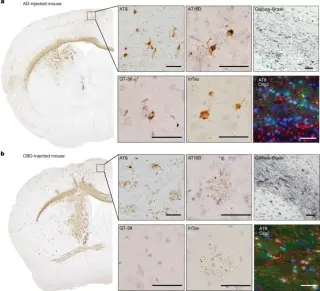
Researchers demonstrated that tau filaments from human Alzheimer’s and corticobasal degeneration brains can seed the formation of identical structures in mouse brains. This confirms that distinct tau folds act as prion-like strains, retaining their structural identity during transmission and driving disease-specific pathology.
Alzheimer’s research has shifted from treating symptoms to preventing cognitive decline. New blood tests can detect the disease up to ten years before symptoms appear, while early-stage trials for drugs like trontinemab aim to stop the disease before it starts. Although current treatments only modestly slow decline, experts believe acting earlier in the disease process could prevent many cases.
A new study in Nature Metabolism finds that glucosamine, a widely used joint supplement, is associated with a 25% higher risk of progression from mild cognitive impairment to dementia. Researchers at the University of Florida suggest the supplement may exacerbate abnormal sugar-tagging processes in the brain, though causality remains unproven.
A new observational study from Emory University indicates that older adults with mild cognitive impairment and sleep disturbances may experience better cognitive performance when taking high daily doses of vitamin D. The research, published in the journal Sleep Medicine, suggests that supplementing with 5,000 international units or more daily is associated with higher scores on standard cognitive assessments. While the study does not prove causation, it highlights vitamin D as a potentially modifiable factor for supporting brain health in individuals at elevated risk for progressing to Alzheimer's disease.
Two major studies published in September 2026 link the timing and biological markers of menopause to long-term brain health. An 18-year longitudinal study of 2,603 women found that earlier natural menopause is associated with faster cognitive decline and increased white matter damage. A separate proteomics study identified 16 blood proteins that spike during menopause, correlating with a 15% higher risk of Alzheimer's disease decades later. These findings suggest menopause is a critical midlife window for identifying dementia risk.
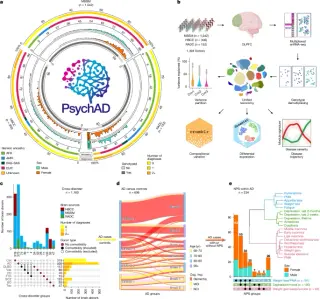
Researchers have published a comprehensive map of gene activity in the human prefrontal cortex, analyzing over 6.3 million cells from 1,494 deceased donors. This detailed atlas, developed through nine studies, identifies molecular changes associated with aging and disorders like Alzheimer's, Parkinson's, and schizophrenia. By pinpointing specific cell types and biological processes affected by these conditions, the research aims to accelerate the development of targeted therapies and distinguish normal aging from disease-related decline.
A new study from Washington University in St. Louis reveals that immune cells causing brain damage in Alzheimer’s disease are activated outside the brain, specifically in lymph nodes. By blocking these signals in mice, researchers prevented neurodegeneration and preserved cognitive abilities, even without removing toxic tau protein tangles. This suggests future treatments could target the immune system peripherally, bypassing the difficult blood-brain barrier.
A University of Florida study published in Nature Metabolism finds that glucosamine use is associated with a 25% higher risk of mild cognitive impairment progressing to dementia. While lab tests suggest the supplement may worsen abnormal sugar-tagging in the brain, researchers emphasize that observational data cannot prove causality and that clinical trials are required.
A coordinated series of nine papers led by the PsychAD Consortium has released the largest single-cell transcriptomic atlas of the human brain to date. The primary study, published in Nature, analyzes over 6.3 million nuclei from 1,494 donors to map molecular changes across eight brain disorders, including Alzheimer’s, Parkinson’s, and schizophrenia. The research identifies shared cellular vulnerabilities across diseases, particularly in immune and vascular cells, while distinguishing specific signatures for neurodegenerative versus psychiatric conditions. Complementary studies link genetic risk variants to specific cell types and develop AI frameworks for personalized Alzheimer’s progression. The findings suggest that while many brain disorders share common molecular pathways, distinct cellular responses drive individual disease trajectories, offering new targets for therapeutic intervention.