
Quinone-Transporting Filaments Extend Respiration in Gram-Positive Bacteria
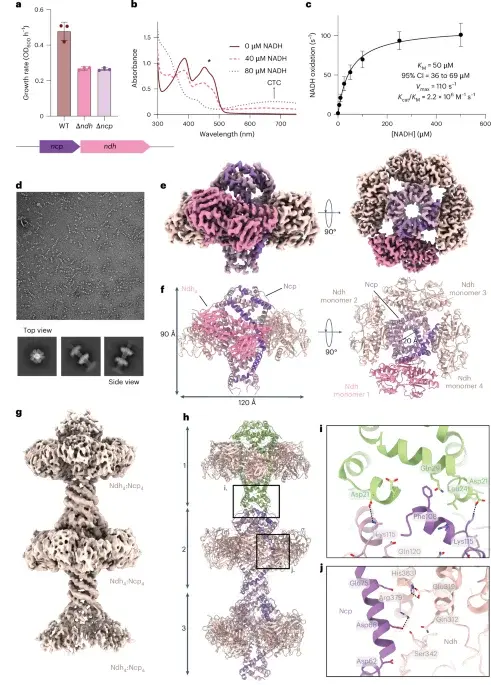
Bacillus subtilis forms filamentous Ndh–Ncp pseudomembranes that assemble as 4:4 complexes into lipid-filled tubes, creating a solvent-free hydrophobic conduit that sequesters and shuttles respiratory quinones (MK-7/MK-8 and UQ-8) from the membrane to NADH dehydrogenase. These filaments can chain into longer structures, extend the quinone pool far beyond the single Gram-positive membrane, and sustain NADH oxidation beyond bilayer limits. Lipids line the interior, Quinones occupy both the canonical and central sites, and MD simulations plus lipidomics support a protein–lipid architecture that facilitates long-range quinone diffusion. Electrochemical assays confirm NADH-driven quinone turnover at membranes stabilized by MK-7, and phylogenetic analysis shows this mechanism is widespread across Bacillota, representing a general strategy to boost bioenergetic capacity without expanding membrane area.
Want the full story? Read the original reporting
Read on Nature