
Raleigh Shelley Lake bat rescue ends in confirmed rabies case
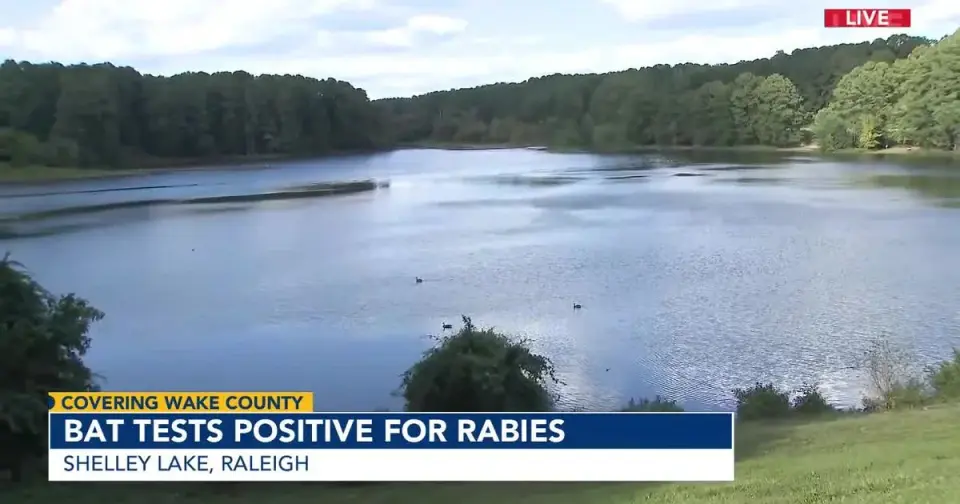
A bat rescued from Shelley Lake in Raleigh tested positive for rabies, marking the city's third confirmed case this year. Two individuals attempted to transport the drowning animal to a wildlife rehabilitator in Charlotte, but it died in transit and was returned to Raleigh for testing. Health officials report minimal to no contact between the bat and the rescuers, though both have been notified. Wake County officials urge residents to avoid unknown animals and ensure pets are vaccinated, following a recent statewide scare involving rabid goats from a mobile petting zoo.
Key points
- A bat found drowning in Shelley Lake, Raleigh, tested positive for rabies on September 6, 2026.
- The incident is the second rabid bat detected in Raleigh this year and the third confirmed rabies case overall in the city.
- Two people rescued the bat and attempted to drive it to a wildlife rehabilitator in Charlotte, but the animal died during the trip.
- The bat was brought back to Raleigh, where Animal Control submitted it for testing, which confirmed the presence of the virus.
- Raleigh Police and health officials state there was little to no physical contact between the bat and the two rescuers.
- Both individuals involved in the rescue have been notified of the positive test results by local health authorities.
Background
This local incident occurs amid a broader pattern of rabies detections across the United States in 2026. Recent archive reports highlight rabies-positive bats in Michigan, Olympic National Park, and Yosemite, where delayed public alerts sparked criticism. In North Carolina, the current Shelley Lake case follows a significant public health alert in late August regarding a mobile petting zoo. That earlier incident involved four baby goats from Farm Adventures Mobile Petting Zoo that contracted rabies after exposure to a skunk in July. The infected goats traveled to various private events, including in Durham County, leading to over 100 reported possible exposures across impacted counties. State Veterinarian Michael Martin previously emphasized that while human transmission risk is low, rabies is lethal and requires serious attention.
How outlets are covering it
WRAL and The News & Observer report consistent facts regarding the Shelley Lake incident, confirming the positive test, the failed transport to Charlotte, and the lack of significant contact between the bat and rescuers. WRAL places greater emphasis on the emotional reaction of local residents, quoting visitors who expressed concern about wildlife safety but stated they would continue visiting the lake. The News & Observer provides more specific logistical details, noting that the bat was submitted for testing by Animal Control officers after being brought back to Raleigh. Both outlets contextualize the event within the broader North Carolina rabies scare involving the mobile petting zoo, though WRAL highlights the total number of exposures in Durham County while The News & Observer focuses on the timeline of the goat infection. Neither outlet reports on the medical status of the two rescuers, only that they were notified.
Why it matters
The confirmation of rabies in a bat at a popular public park underscores the ongoing risks associated with wildlife interactions in urban areas. Although the immediate risk to the two rescuers appears low due to minimal contact, the incident serves as a reminder that rabies is a fatal disease with no cure once symptoms appear. It reinforces the importance of prompt medical evaluation for any potential exposure and highlights the need for residents to maintain up-to-date vaccinations for their pets. The case also illustrates the challenges of wildlife rescue, where well-intentioned attempts to help animals can inadvertently complicate public health tracking if the animal dies before testing. As North Carolina manages multiple rabies incidents simultaneously, public vigilance and adherence to health guidelines are critical to preventing further transmission.
What to watch
Health officials in Wake County will continue to monitor the two individuals who rescued the bat, although no immediate treatment may be required if contact was truly minimal. Residents are advised to report any animals displaying unusual behavior to Raleigh Police Department Animal Control. The city will likely maintain its current public health advisories regarding pet vaccination and avoiding stray animals. No further action is expected regarding the Shelley Lake incident unless additional exposures are reported, but the case will remain part of the city's annual rabies surveillance records.
Want the full story? Read the original reporting
Read on WRAL